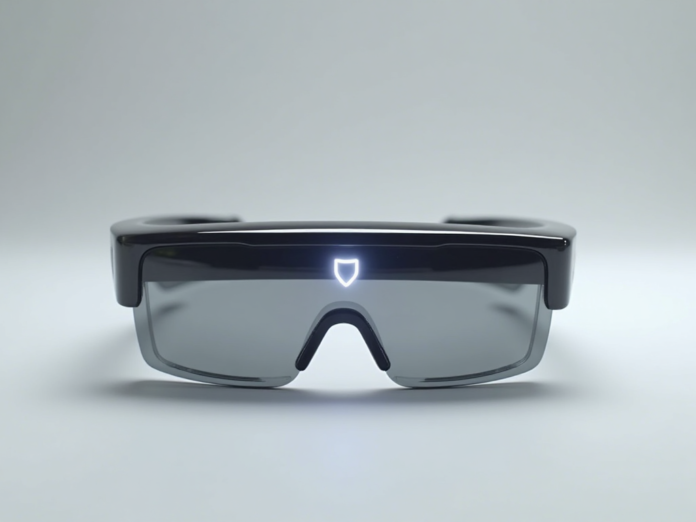

In a wearable market increasingly defined by convenience-over-privacy tradeoffs, Apple is preparing to steer a drastically different course. According to Bloomberg’s Mark Gurman, the company is planning to announce its first smart glasses at WWDC in June 2027, with a commercial launch slated for later that year. And if there is one feature Apple is betting on above all else, it is privacy — a message the company has been cultivating for well over a decade.
On-Device Processing at the Core
Apple’s smart glasses are expected to process data entirely on-device, eliminating the need to send sensitive information to cloud servers. This approach mirrors the privacy architecture the company has already deployed in the iPhone, Apple Watch, and AirPods. By keeping audio analysis, visual data, and contextual awareness workloads local to the device, Apple can offer intelligent experiences without compromising user confidentiality.
The on-device processing model also minimizes latency — a critical factor for a hands-free wearable where split-second responsiveness matters. Whether users are asking for directions, identifying objects, or getting calendar reminders, the processing happens in milliseconds, right on the frame.
What Apple Won’t Do
Perhaps the most revealing aspect of Apple’s strategy is what the company is deliberately leaving out. According to Gurman, Apple’s smart glasses will skip facial recognition entirely, a feature that competitors have embraced despite growing public skepticism. The company is also omitting always-on recording — a stark contrast to what Meta calls “smart sensing” on its Ray-Ban Stories line.
Furthermore, Apple has committed to never using customer recordings or data from the glasses to train its AI models. This policy directly addresses one of the most significant concerns surrounding wearable AI: who owns the data captured through a device worn on your face. Apple is signaling that the answer is unequivocally the user, and only the user.
The No-Camera Option
In a move that underscores just how seriously Apple is taking this privacy-first philosophy, the company is even considering releasing a version of its smart glasses without a camera entirely. While a no-camera wearable would have limited functionality compared to full-featured models, it would appeal to users in privacy-sensitive environments — corporate campuses, government facilities, healthcare settings, and anyone who simply prefers the peace of mind that comes with a lens-free frame.
This optionality is unprecedented in the smart glasses market, where cameras have been a standard inclusion from day one.
A Decade of Privacy Messaging
Apple has spent over ten years building privacy into its brand identity, starting with the introduction of differential privacy in iOS 10 and culminating in features like App Tracking Transparency, on-device Siri processing, and Privacy Labels on the App Store. The smart glasses represent the logical next step — a category where privacy is not an afterthought but the fundamental design principle.
In a market where Meta, Google, and Snap have often prioritized feature velocity over user confidentiality, Apple’s approach could carve out a distinct niche. If consumers trust Apple’s privacy promises more than those of its rivals — and current survey data suggests they do — the glasses could become a meaningful differentiator in the emerging wearable AI space.
Looking Ahead to WWDC 2027
With WWDC 2027 likely serving as the launch platform, Apple is expected to reveal developer tools, companion APIs, and integration details for the smart glasses. The product reportedly builds on lessons learned from the Apple Watch, AirPods, and the Vision Pro, aiming for something lighter, more wearable, and more socially acceptable than a full mixed-reality headset.
If Apple executes on this privacy-first vision, the smart glasses could mark a turning point for the wearable category — proving that advanced capabilities and user privacy are not a tradeoff, but a combined selling point.


