
Microsoft is working on something unusual: an Android-based operating system designed not for apps, but for AI agents. Called Project Solara, it’s still very much in the concept phase — “none of it works yet,” as Microsoft itself admits — but the company is committed to spending money on it as part of its broader AI development plans.
Two Concepts, One Vision
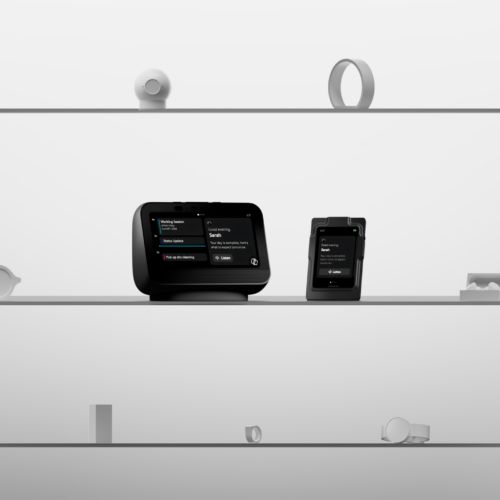
Microsoft has shown two concept devices that illustrate where it hopes to take Project Solara.
The Desk Concept looks like a conventional smart display. It has a touchscreen, microphones, and a camera. When you sit at your desk, this device keeps you informed about what your AI agents are doing on your behalf. It can act as a secondary monitor or even become a standalone Windows PC through Windows 365 cloud computing. This concept is built around MediaTek IoT chips.
The Badge Concept is more subtle — and arguably more ambitious. Imagine your work badge had a touchscreen, 5G connectivity, a camera, microphones, and a fingerprint scanner. That’s the idea. The badge runs the same Solara software, piping generative interfaces from your chosen AI agent. Microsoft envisions this Qualcomm-based device offering biometric-authenticated access to your agents — just tap the sensor and start telling your personal AI what to do. It could also record and summarize meetings, and use its camera to “take action on the environment.”
What It Means
Project Solara represents a fundamental shift in how Microsoft thinks about operating systems. Instead of organizing the interface around apps you tap and launch, Solara organizes around AI agents that act on your behalf. It’s a vision where the OS becomes invisible — a thin layer that connects you to intelligent assistants rather than a grid of icons.
Both concepts are early, and there’s no guarantee either will ship as a product. But the direction is clear: Microsoft is betting that the future of personal computing is agent-driven, not app-driven.


