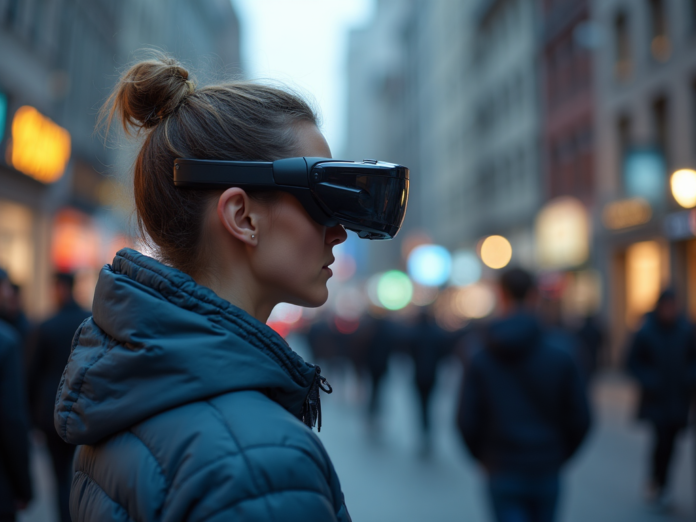

Meta has filed a patent that should terrify anyone who values privacy. The 44-page application, submitted to the USPTO in February and published this week, details smart glasses equipped with AI-powered facial recognition that can identify people, record video, and pull data from online services—all without consent.
What the Patent Actually Says
The filing describes eyewear that combines Meta’s existing smart glasses platform with advanced facial recognition AI. The system would capture faces in real time, match them against databases, and assemble media profiles—including videos—tied to each identified person. Location data and online service inputs would enrich these profiles further, enabling what the patent calls “a wide range of content-creation activities” and deeper integration with Meta’s ecosystem.
CN<|reserved_token_163632|>ET reviewed the full application. Meta has not commented publicly.
Privacy Advocates Sound the Alarm
The Center for Democracy & Technology called the patent an escalation of privacy harms. Project lead Ariana Aboulafia warned that even “relatively innocuous use cases” could enable stalking, domestic violence tracking, and the surveillance of marginalized communities.
“No one wants to be forced to constantly wonder whether the person next to them at a party, in the doctor’s office, or on the subway is silently recording, identifying, and storing data about them.”
Ariana Aboulafia, CDT
Meta’s Track Record Doesn’t Inspire Confidence
This isn’t Meta’s first facial recognition controversy. Earlier this year, Wired and the Electronic Frontier Foundation uncovered dormant facial recognition code shipped to all Meta AI app users—code Meta later removed after backlash. The company also faced scrutiny for testing facial recognition tools from a vendor with military and police contracts.
Meta isn’t alone in this space. Flock Safety, a license plate reader company, has faced similar criticism over law enforcement misuse and safeguard bypasses. The pattern is clear: surveillance tech marketed for safety routinely expands into territory its creators swore it wouldn’t.
What Happens Next
Patent approval timelines are unpredictable. Granting could take years—or never happen. But the filing signals intent. Meta is building the architectural blueprint for a world where anonymity in public spaces becomes technically impossible.
For now, the glasses remain a concept. But the patent makes one thing certain: the company that brought you “move fast and break things” wants to break the expectation of privacy in public life.


