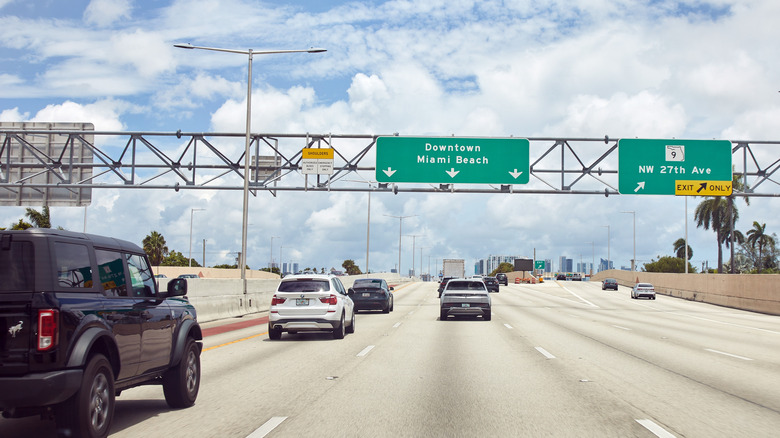

Why Sunshine State Driving Laws Might Put Your Pass in Peril
Did you know honking your horn near an after-hours sandwich shop could earn you a ticket in Arkansas? Florida, famous for its beaches, basks equally in quirky vehicle laws. These range from unusual license plate rules to specific statutes governing how drivers navigate highways. While all states enforce “keep right” laws for predictable passing on the left, passing on the right presents a murkier picture. In Florida, this maneuver isn’t entirely forbidden, but it’s wrapped in precise legal conditions riddled with ambiguity, directly impacting road safety and driver accountability. Understanding Florida Statute 316.084 isn’t just about avoiding fines; it’s critical for preventing collisions and ensuring smooth traffic flow across bustling interstates like I-95 and I-4.
Dissecting Florida Statute 316.084: Decoding Legal Right-Side Passing
Florida Statute 316.084 explicitly carves out only three narrow scenarios where overtaking a vehicle on the right side is legally sanctioned:
- When the Vehicle Ahead Turns Left: You may pass if the vehicle you are overtaking is actively signaling and commencing a left turn. Example: A car slows to turn into a driveway, and you proceed past them on the right within the designated travel lane.
- On Multi-Lane Roadways: Passing on the right is permitted on streets or highways with two or more unobstructed lanes of traffic moving in the same direction. This excludes roads blocked by parked cars or debris. Think I-75: If two adjacent lanes are clear, a driver can legally advance in the right lane past slower drivers in the middle lane.
- Designated One-Way Streets: Traffic moving on a one-way street with two or more lanes allows passing on the right. Miami’s multi-lane Brickell Boulevard would be a typical use case.
However, muddying these waters is the statute’s overarching caveat: passing is only permitted if it can be done “safely”. This term remains undefined by law, relying heavily on subjective judgment by drivers in the moment and ultimately, law enforcement. Factors like weather, visibility, proximity to intersections, pedestrian activity, or unpredictable driver behavior instantly complicate assessing “safety”. Unlike clear metrics like speed limits, this ambiguity shifts the boundary between a legal pass and a potential moving violation, creating significant room for interpretation—and dispute. Was traffic weaving? Did the driver check their blind spot adequately? These unquantifiable judgments become pivotal.
Navigating Significant Blind Spots: The Risks of Right-Side Passing
Even within the legal boundaries, maneuvering past vehicles on the right introduces inherent dangers not present when overtaking on the standard left side:
- Driver Blind Spots: Vehicles have larger blind spots on their right side. Passing here increases the risk the overtaken driver won’t see the passing vehicle if they make a sudden lane change.
- Unexpected Obstacles: Pedestrians,


