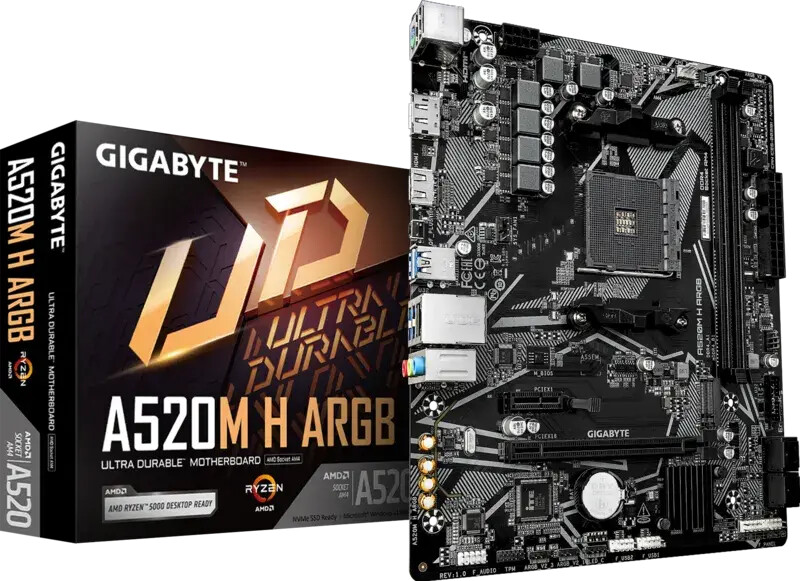

The DDR4 Renaissance: Why Gigabyte’s New AM4 Boards Signal a Budget-Revolt in PC Gaming
Is chasing the bleeding-edge tech always worth it? With DDR5 memory prices soaring and shortages persisting, a growing wave of PC builders are defiantly turning back the clock – embracing battle-tested DDR4 platforms for unbeatable value. This strategic retreat to affordability isn’t a sign of stagnation, but a smart market response. Riding this wave, industry giant GIGABYTE has strategically dropped four new Socket AM4 AMD motherboards, catering explicitly to gamers and budget-conscious builders seeking high performance without the DDR5 premium. These latest releases underscore the enduring relevance and surprising vitality of AMD’s incredibly long-lived socket, proving that for many, the path to gaming excellence lies firmly with mature, cost-effective DDR4 motherboards – skipping the costly DDR5 requirement entirely.
Navigating the Changing Landscape: DDR4’s Enduring Appeal
The excitement surrounding DDR5’s launch was palpable. Promises of significantly higher bandwidth and efficiency seemed to herald a new era. However, reality unfolded differently. Global component supply chains faced unprecedented disruption, and manufacturing DDR5 modules presents unique complexities compared to DDR4. This convergence created a DDR5 shortage pushing prices significantly higher than DDR4 equivalents. Simultaneously, the performance delta, particularly in gaming scenarios (often heavily reliant on GPU performance rather than peak RAM bandwidth), hasn’t always justified the steep cost jump for many users. As highlighted in reports analyzing consumer trends, this acute scarcity and cost imbalance are driving consumers back towards older platforms that generously support DDR4 memory.
AMD’s strategic foresight shines here. Despite launching their DDR5-exclusive Socket AM5 platform, they haven’t abandoned AM4. Consistent releases of new Ryzen 5000-series processors breathe fresh life into motherboards users invested in years ago. Intel followed a different tactic: supporting DDR4 alongside DDR5 on their latest LGA1700 platform (covering 12th to 14th Gen Core processors), acknowledging the market’s fragmentation. Motherboards leveraging Intel’s 600 and 700-series chipsets with affordable DDR4 slots remain plentiful choices. This dual-path approach from both major CPU giants validates the ongoing demand for DDR4 systems. GIGABYTE’s move isn’t anomaly; it’s responding validated market signals.
Decoding Gigabyte’s DDR4 Motherboard Arsenal
GIGABYTE’s quadruple launch zeroes in on the value segment, offering refreshed options across different form factors and features. These aren’t flagship boards; they’re sensible solutions for pragmatic PC builders.
-
Compact Value Powerhouse:
B550I AORUS Pro AX (rev. 1.4)- Chipset: AMD B550 (Mid-range)
- Form Factor: Mini-ITX (ITX)
- Key Features: PCIe 4.0 support for both the x16 graphics slot and M.2 NVMe storage slot. Includes cutting-edge Wi-Fi 6E connectivity for ultrafast, low-latency wireless networking. Enhanced VRM cooling for stable power delivery, crucial for potent CPUs like the Ryzen 7 5800X3D popular among small form factor gamers.
- Target Audience: Enthusiasts building compact gaming rigs or HTPCs who desire modern connectivity (Wi-Fi 6E, PCIe Gen4) but prioritize DDR4 affordability. It’s the premium choice in Gigabyte’s new AM4 lineup.
-
Mid-Range Mainstream Workhorse:
B550M H ARGB- Chipset: AMD B550 (Mid-range)
- Form Factor: Micro-ATX (mATX)
- Key Features: Features PCIe 4.0 connectivity for graphics card and primary SSD. Includes ARGB lighting headers for customizable aesthetics. Designed for solid gaming builds needing decent expansion without excessive bulk or cost.
- Target Audience: Gamers seeking a core-performing motherboard supporting newer Ryzen CPUs with PCIe Gen4 benefits, in the popular micro-ATX form factor for tower builds. The DDR4 compatibility keeps the overall budget in check.
| Gigabyte AM4 DDR4 Motherboard Comparison |||||
|—|—|—|—|—|
| Model | Chipset | Form Factor | PCIe Generation (GPU/M.2) | Wi-Fi Generation | Target Segment |
| B550I AORUS Pro AX 1.4 | B550 | Mini-ITX | PCIe 4.0 / PCIe 4.0 | Wi-Fi 6E (802.11ax) | Premium Mini-PC |
| B550M H ARGB | B550 | Micro-ATX | PCIe 4.0 / PCIe 4.0 | None (Typically) | Mid-Range Gaming |
| A520M H ARGB | A520 | Micro-ATX | PCIe 3.0 / PCIe 3.0 | None (Typically) | Strict Budget |
| A520I AC 1.5 | A520 | Mini-ITX | PCIe 3.0 / PCIe 3.0 | Wi-Fi 5 (802.11ac) | Entry-Level Mini-PC |
-
Entry-Level Essential:
A520M H ARGB- Chipset: AMD A520 (Entry-level)
- Form Factor: Micro-ATX (mATX)
- Key Features: Utilizes the cost-efficient A520 chipset. Supports PCIe 3.0 for graphics card and storage. Includes HDMI output and ARGB headers. Offers broad compatibility out-of-the-box with the full Ryzen 5000 series and older AM4 processors.
- Target Audience: Users building ultra-budget systems, home/office PCs, or starter gaming rigs where PCIe 4.0 performance isn’t critical, but reliability and basic functionality are paramount. DDR4 keeps costs minimal.
-
Affordably Compact:
A520I AC (rev. 1.5)- Chipset: AMD A520 (Entry-level)
- Form Factor: Mini-ITX (ITX)
- Key Features: An intriguing entry-level compact solution. Based on PCIe 3.0 technology across the board. Includes integrated Wi-Fi connectivity, albeit the previous-generation Wi-Fi 5 (AC), not the newer Wi-Fi 6. Highly cost-focused VRM.
- Target Audience: Shoppers prioritizing the smallest possible size and absolute lowest price above all else. Ideal for basic computing tasks, media streaming PCs, or very budget constrained gaming setups utilizing lower-TDP Ryzen chips like the Ryzen 5 5600. Its VRM design emphasizes affordability over heavy overclocking headroom (Referencing VRM design basics: Wikipedia – Voltage Regulator Module).
The Strategic Layers: Chipset Nuances
Understanding the underlying A520 and B550 chipsets (TechPowerUp Chipset Database provides detailed comparisons) reveals the rationale behind pairing each with specific motherboards:
- AMD B550: Offers broader PCIe Gen4 connectivity directly from the CPU (to GPU and one M.2 slot), better support for faster USB ports (including potential USB 3.2 Gen 2), often enhanced power delivery systems needed for high-core-count chips, and more flexible multi-GPU/expansion configurations. It enables DDR4 systems with features approaching modern AM5 boards. Key Advantage: PCIe 4.0 speeds essential for top-tier NVMe SSDs and avoiding GPU bottlenecks.
- **AMD


