
The Digital Cliff Notes Debate: Firefox’s AI Shake Rattles iOS Users
Ever feel overwhelmed by dense articles? Mozilla’s latest Firefox for iOS feature aims to cure information fatigue: shake your iPhone and instantly get an AI-generated summary. Powered by local processing on newer devices or cloud-based AI on older models, this “shake to summarize” innovation promises quick comprehension for web pages under 5,000 words. Yet the move has sparked intense backlash among Firefox’s longstanding privacy-focused community. As browser-integrated artificial intelligence becomes ubiquitous, does trading convenience for potential privacy risks undermine browser integrity?
Dissecting the Summarize Mechanism
Mozilla offers three initiation methods for its AI tool:
- Gesture Control: Physically shaking the iPhone
- Address Bar: Clicking the thunderbolt icon
- Menu Option: Selecting “Summarize Page” under the three-dot menu
Critically, processing requires page content under 5,000 words. Performance bifurcates based on hardware:
| Device Type | AI Processing | Model/System |
|————————|————————–|—————————-|
| iPhone 15 Pro+ (iOS 26+) | On-Device | Mistral Small 3.1 LLM |
| Older iPhone / iOS | Mozilla Cloud Servers | Undisclosed Model |
The local Mistral model (Mistral AI’s lightweight architecture) processes data locally without transmission, while cloud-dependent summarization ships page contents—including sensitive text—to Mozilla.
Privacy Alarm Bells
When cloud-based summarization triggers, all visible text—bank statements, private medical histories, or confidential messages—briefly leaves user devices. Mozilla states data is sent “securely,” though encryption protocols, retention policies, and third-party access details remain unspecified. Critics highlight multiple threat vectors:
- Data Leaks: Unauthorized access via breaches despite security claims (e.g., 2023 23andMe breach impacting millions via API vulnerabilities)
- Breadcrumb Tracking: Even anonymized text could enhance user profiling—a concept explored in EU GDPR compliance debates around metadata
- Default Enablement: Features automatically active heighten exposure risk
Longtime users argue cloud reliance contradicts Mozilla’s founding ethos of user sovereignty. Firefox championed private browsing in Chrome’s shadow for years; AI integration risks alienating core supporters.
Gestural Chaos & Accidental Triggers
Motion-based controls notoriously suffer inadvertent activations. iPhone’s Back Tap screenshot feature registers false positives 17% of time (Apple Developer Forums), as gesticulation while holding phones triggers sensors unpredictably. Hypothetical conflict includes:
- Simultaneously using Back Tap causing browser interference
- Jaw movement during calls misregistering as shakes
- False triggers leaking confidential content during critical tasks
Thankfully, the shake gesture can be toggled off while retaining menu/thunderbolt options—a firewall against clumsy summaries.
Competitive AI Browser Landscape
Firefox isn’t pioneering summarization. Edge, Opera, and Chrome offer comparable AI tools—often cloud-reliant. Yet contrasts persist:
| Browser | Summarization Method | On-Device Option? | Activation |
|————-|————————–|————————|—————|
| Firefox | Thunderbolt/Menu/Shake | Yes (select devices) | 5k word limit |
| Edge | Copilot sidebar | Limited via NPU chips | Seamless |
| Chrome | “SGE While Browsing” | No | Search-linked |
Firefox uniquely combines gesture inputs with localized AI (for modern iPhones), blending novelty with architecture flexibility. Still, privacy concessions strangle its competitive edge.
Mitigation Steps: Reclaiming Control
Opting out demands two layers:
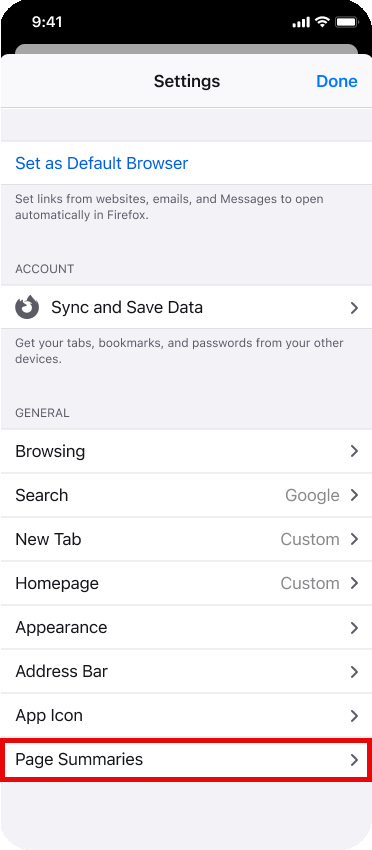
- Disable AI Totally: Settings > General > Page Summaries > Toggle OFF
- Disable Shake Only: Browser Menu > Settings > Page Summaries > Toggle OFF “Shake your phone”
Alternatively, purge browsing history post-cloud summarization through Firefox Clear History tools. Yet repeated opting-out highlights feature friction.
Market data suggests 38% of users disable unfamiliar AI browser add-ons (Perficient survey), indicating natural resistance to unsolicited automation.
Navigating the New Privacy Frontier
Firefox iOS AI summaries sharpen browser utility but blur privacy trustlines. While local Mistral processing innovates intelligently, cloud fallback models risk user data for brief conveniences—a paradoxical gambit for a privacy stalwart. Browser evolution increasingly merges generative AI into workflows, demanding transparency around data transit like encryption standards, retention windows, and audit regimes. Until Mozilla fortifies submissions with verifiable zero-retention proofs, even thunderbolt-speed summaries won’t quell dissent.
What defines your browser loyalty: simplification power or system sanctity? Join our community—share your take on Mozilla’s AI pivot below!


