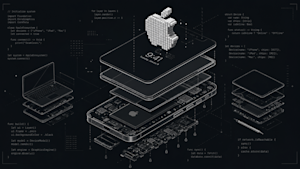

At WWDC 2026, Apple unveiled what it’s billing as its biggest AI launch to date — and it’s called Siri AI. But this isn’t just a smarter voice assistant. Apple is positioning Siri AI as an entirely new layer for how users interact with their devices and, crucially, with third-party apps.
Powered by a partnership with Google Gemini, the new Siri can surface information buried deep in your inbox and message history, use what Apple calls “on-screen awareness” to provide context about what you’re looking at, and pull near-instant up-to-date information from the web. Chat histories are saved so users can revisit past conversations across devices.
The enterprise angle is where things get interesting. By embedding AI capabilities at the operating system level rather than through individual apps, Apple is positioning itself as the gatekeeper for AI-powered app interactions. For third-party developers whose apps currently reach users through the App Store, this presents both an opportunity and a potential threat — Apple’s on-device AI could fulfill many of the same functions without users ever launching a separate app.
Craig Federighi, Apple’s SVP of software engineering, addressed the company’s deliberate pace during the keynote: “Some seem to be racing forward, seemingly pursuing AI for the sake of AI, without clear regard for the people it’s ultimately supposed to serve.”
The contrast with competitors is instructive. OpenAI has struggled to define its audience, oscillating between consumers and enterprises. Meta is pouring billions into AI without a clear connection to its core advertising business. Apple’s measured approach — spending roughly $14 billion in capex this year versus $900 billion cumulatively from other tech giants — while still generating enormous profits from AI companies using its App Store, looks increasingly strategic.
Siri AI won’t be widely available until later this year as a beta. But Apple’s wager is clear: slow and steady may win this race after all.


