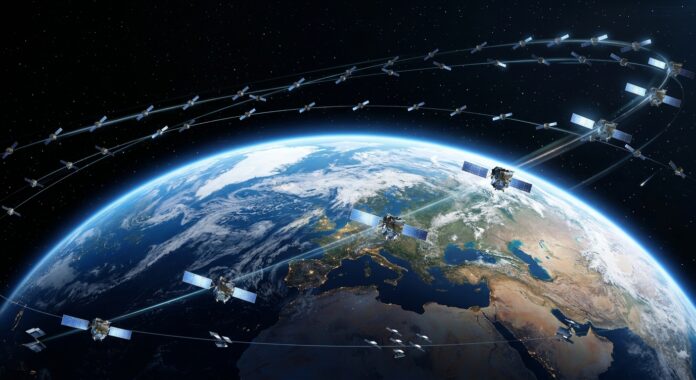

Amazon’s Starlink Competitor Is Almost Ready: Everything We Know About Project Kuiper
For years, the satellite internet race has had one clear leader: SpaceX’s Starlink. But a formidable challenger is finally nearing the starting line. Amazon’s ambitious low Earth orbit (LEO) constellation — officially called Project Kuiper (and internally nicknamed “Amazon Leo”) — is on the verge of becoming a real, commercial service. And according to the company’s top executive, it’s happening this year.
Here’s the full breakdown of what Amazon has planned, where things stand, and how it stacks up against Starlink.
Over 390 Satellites Already in Orbit
Chris Weber, Amazon’s Vice President in charge of the Leo project, recently announced a major milestone: more than 390 Kuiper satellites have already been deployed. That number, Weber says, is enough “to support continuous service across initial latitudes.”
To put that in context: Amazon’s original FCC license requires it to deploy half of its planned 3,236-satellite constellation by mid-2026, and the rest by 2029. With 390+ satellites already in orbit and more launches scheduled, the company is clearly on track — and accelerating.
Weber also confirmed that Amazon has completed “enough launches for initial service this year,” strongly hinting that Project Kuiper will become broadly available as a consumer service before the end of 2026.
Three Tiers of Hardware: Nano, Pro, and Ultra
One of the most interesting aspects of Project Kuiper is its three-tier hardware approach. Amazon is designing different satellite terminals to suit different needs and budgets:
- Kuiper Nano — A compact 7-inch by 7-inch terminal supporting download speeds up to 100 Mbps. Designed for basic home use, streaming, and browsing. Expected to be the most affordable option.
- Kuiper Pro — An 11-inch by 11-inch terminal supporting up to 400 Mbps. Built for households with heavier data needs, multiple users, and 4K streaming.
- Kuiper Ultra — A larger 20-inch by 30-inch terminal supporting up to 1 Gbps download speeds. Targeted at businesses, power users, and remote operations that need enterprise-grade connectivity.
This tiered strategy mirrors what Amazon has done with its other hardware lines — Echo, Fire, Kindle — offering something for every price point and use case.
How It Compares to Starlink
Starlink currently has over 6,000 satellites in orbit and serves millions of customers across more than 100 countries. Its standard dish delivers speeds between 50 and 200 Mbps, while Starlink Premium offers up to 500 Mbps for $500/month.
Project Kuiper’s Ultra tier (1 Gbps) would theoretically outperform Starlink’s top tier — but the real question is coverage. Starlink’s massive head start in satellite numbers means it can reach more remote areas today. Kuiper, with its smaller initial constellation, will likely focus on specific latitude bands first before expanding globally.
Pricing will be the key battleground. Amazon has not announced final pricing yet, but it has a history of aggressive pricing strategies to capture market share. If Amazon can undercut Starlink’s $120/month standard plan while matching or exceeding speeds, it could carve out a significant portion of the market quickly.
Why This Matters for the Internet
Competition in satellite internet is desperately needed. Currently, Starlink dominates the market with limited competitive pressure. A well-funded, technically capable competitor like Amazon entering the space means:
- Lower prices for consumers as both companies compete on value
- Faster innovation as each pushes the other on speed and latency
- Better availability in underserved and remote regions
- Redundancy — a backup option when one network faces issues
LeoSat, OneWeb, and other competitors have struggled or pivoted. Amazon has the resources — and the patience — to see this through.
When Can You Get It?
Amazon is currently running private beta tests with select enterprise partners. Consumer availability is expected before the end of 2026. If you’re interested in being among the first to try Leo, you can register for the official Project Kuiper waitlist.
Given Amazon’s logistics infrastructure (AWS cloud backbone, global delivery network, and existing customer base), the rollout could be faster than many expect once the satellite constellation reaches operational mass.
Bottom Line
Amazon’s Project Kuiper is no longer a distant promise — it’s a nearly-ready service with hardware in orbit, terminals on the production line, and a launch window that reads “this year.” For anyone stuck with slow or no internet, the arrival of a true Starlink rival is excellent news.
2026 is shaping up to be the year satellite internet finally gets real competition.


