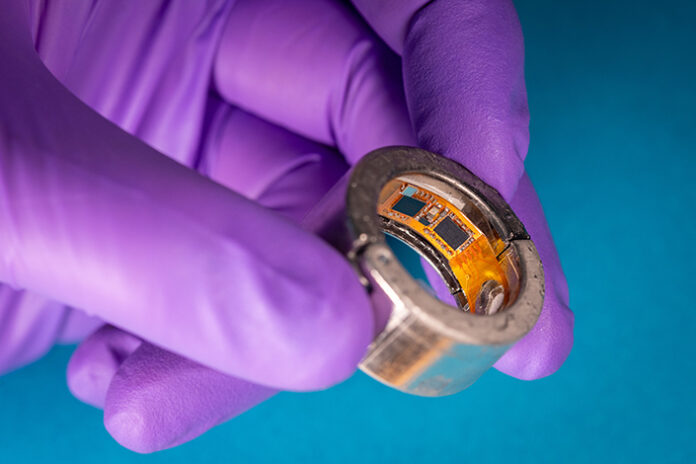

Today’s smart rings use tiny built-in sensors like photoplethysmography (PPG) light sensors to collect biophysical data, including your heart rate and blood oxygen levels. But engineers at the University of California, San Diego, believe they have created the first smart ring that uses finger sweat to track chemical biomarkers. The ring is currently a prototype, but it demonstrates the potential for future wearables to continuously monitor the body on a molecular level rather than relying solely on optical sensors.
In a paper published in Nature Communications on July 23, the engineering team reports that the new smart ring uses sweat to continuously track up to four biochemical measurements, including glucose, ketones, vitamin C, uric acid, lactate, and alcohol concentrations. Ketones are acids produced by the liver when it breaks down fat instead of glucose. Uric acid forms when your body breaks down purines found in foods like red meat, seafood, and beer. Lactate (lactic acid) is created when carbohydrates are broken down for energy.
How the Ring Works
The study authors say you do not need to exercise or exert yourself to produce the sweat required for the ring to work. Instead, the ring collects the small amount of sweat that naturally accumulates on your fingertip throughout the day. This passive approach means the device can provide continuous health monitoring without requiring any activity from the user.
The ring represents a significant shift in wearable technology. While devices like the Apple Watch and Oura Ring excel at measuring physical signals, they cannot directly measure what is happening inside your body at the molecular level. Sweat-based sensing opens up a new category of health data that was previously only available through blood tests.
If this technology proves reliable in larger studies and becomes commercially viable, it could transform how we monitor chronic conditions like diabetes, track hydration during athletic performance, and detect early signs of illness. The prototype is an early step, but it points toward a future where your ring knows more about your health than your doctor’s annual blood work.


