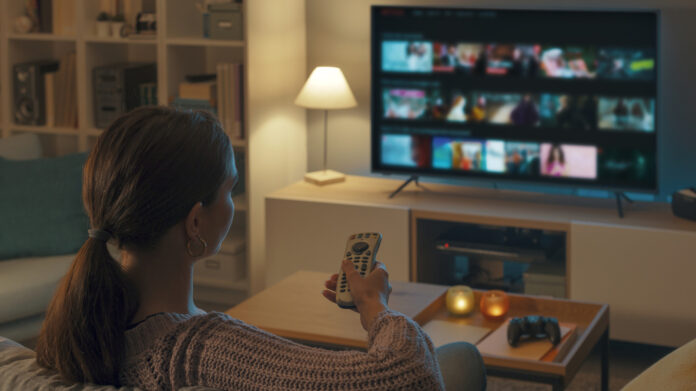

If you have shopped for a television recently, you might have noticed something different about the way they sit. Gone are the bulky center pedestals that dominated TV stands for decades. In their place sit two small feet positioned at the outer edges of the screen. It is a subtle design shift, but one that has reshaped the look of modern living rooms.
The change from center stands to wide-set legs is not arbitrary. Several factors have driven manufacturers toward this new approach, and understanding them reveals a lot about how television design has evolved alongside consumer habits.
The wall-mounting revolution
The single biggest reason for the shift is the growing popularity of wall mounting. According to industry surveys, a significant portion of new TV buyers now opt to mount their screens on the wall rather than placing them on furniture. When a television is mounted, the stand becomes irrelevant. It is simply an extra component that adds cost and bulk during shipping.
Manufacturers have responded by treating the stand as an accessory rather than a defining feature. The wide-set feet are designed to be easy to remove, and many are now adjustable to accommodate different furniture widths. Some televisions even ship with two sets of feet positions so buyers can choose between a narrow or wide stance depending on their media console.
Lighter TVs need less support
Modern televisions are dramatically lighter than their predecessors. A 55-inch LCD from a decade ago could weigh upward of 50 pounds. Today, the same size screen often weighs half that. LED backlighting, thinner glass, and streamlined internal components have made televisions far easier to support.
A heavy center pedestal was once necessary to prevent a bulky CRT or early flat-screen from tipping over. But modern sets are light enough that two small feet on the edges provide more than adequate stability. The engineering challenge has shifted from preventing the TV from crushing its stand to preventing it from being toppled by a curious toddler or a passing pet.
Safety concerns and tip-over prevention
That last point is worth dwelling on. The Consumer Product Safety Commission (CPSC) has long warned about the dangers of television tip-overs, which send thousands of children to emergency rooms each year. Wide-set feet provide a more stable base than a narrow center pedestal, especially when combined with an anti-tip strap anchored to the wall.
Ironically, some of the new designs have raised their own safety concerns. A television supported by two small feet can be more easily pushed off a narrow stand than one with a wide, heavy base. The industry response has been to recommend wall mounting wherever possible and to include tip-restraint hardware in the box.
The cost-cutting factor
While no manufacturer has publicly confirmed it, cost reduction almost certainly plays a role. A simple stamped metal foot is cheaper to produce than a machined center pedestal with multiple moving parts and a heavy base plate. The savings might be small per unit, but when multiplied across millions of televisions, they add up to real money.
This is the same logic that has driven the shift from metal to plastic in remote controls and from physical buttons to touch interfaces. Every component that can be simplified or eliminated is scrutinized for cost savings.
Aftermarket solutions
For those who miss the center stand or who find the wide-set feet incompatible with their furniture, there is good news. The aftermarket has stepped in with replacement stands that bolt directly into the VESA mounting holes on the back of the television. These range from simple center pedestals to articulated stands that add tilt and swivel functionality. They typically cost between $30 and $100 and are widely available online.
So while the era of the factory center stand may be fading, the option to use one has not disappeared. It has simply moved from being standard equipment to being a personal choice.


