
Beyond the Band: How Fitbit’s Bold Redefinition Puts Personalized AI Coaching Front and Center
Introduction
What if your fitness tracker could evolve from a silent data logger into a proactive, intuitive guide deeply attuned to your body’s unique rhythms? Fitbit app redesign is poised to do exactly that this October. Google’s announcement heralds more than just a visual refresh; it signals a fundamental shift towards making health insights instantly accessible and powerfully actionable. The new Material You-infused interface promises intuitive navigation, but the real revolution lies within: the debut of a sophisticated, Gemini-powered AI wellness coach exclusively available to Fitbit Premium subscribers. This move elevates personalization beyond generic metrics, positioning Fitbit not just as a tracker, but as an indispensable, AI-driven partner in holistic well-being – a leap forward demanding both excitement and scrutiny.
Body
1. Material You Meets Health Data: A Revamped, User-Centric Interface (H2)
The foundation of the October overhaul is Google’s Material 3 “Expressive” design language, recently showcased across Pixel devices and core Google apps. This isn’t merely an aesthetic choice; it’s a functional commitment to reducing friction.
- Simplicity First: The core mandate is “less poking around.” For many users, the current Fitbit app can feel information-dense but navigationally complex. The redesign aims to surface critical health stats (steps, heart rate, active minutes, sleep score) immediately upon opening, minimizing the taps needed to grasp your daily status. Think larger, bolder visualizations and logically grouped metrics.
- Personalization Beyond Data: Material You’s hallmark is system-wide theming based on your wallpapers and preferences. Translating this to Fitbit suggests a more “owned” experience, where the app’s look and feel resonate personally alongside the wellness data it presents. A study by the Nielsen Norman Group emphasizes that personalized UI aesthetics significantly enhance perceived usability and user satisfaction.
- Accessibility Gains: Cleaner layouts and more intuitive pathways are key advancements, ensuring users of all tech-savviness levels can find valuable information quickly. This addresses a longstanding critique of many health apps, where vital insights remain buried within sub-menus.
2. The AI Vanguard: Introducing Your Gemini-Powered Wellness Coach (H2)
While the UI refresh is significant, the transformative element is undeniably the integration of Gemini AI as a personal health and wellness coach. This isn’t just programmed responses; it’s continuous, adaptive intelligence – a core pillar of the new Fitbit app experience.
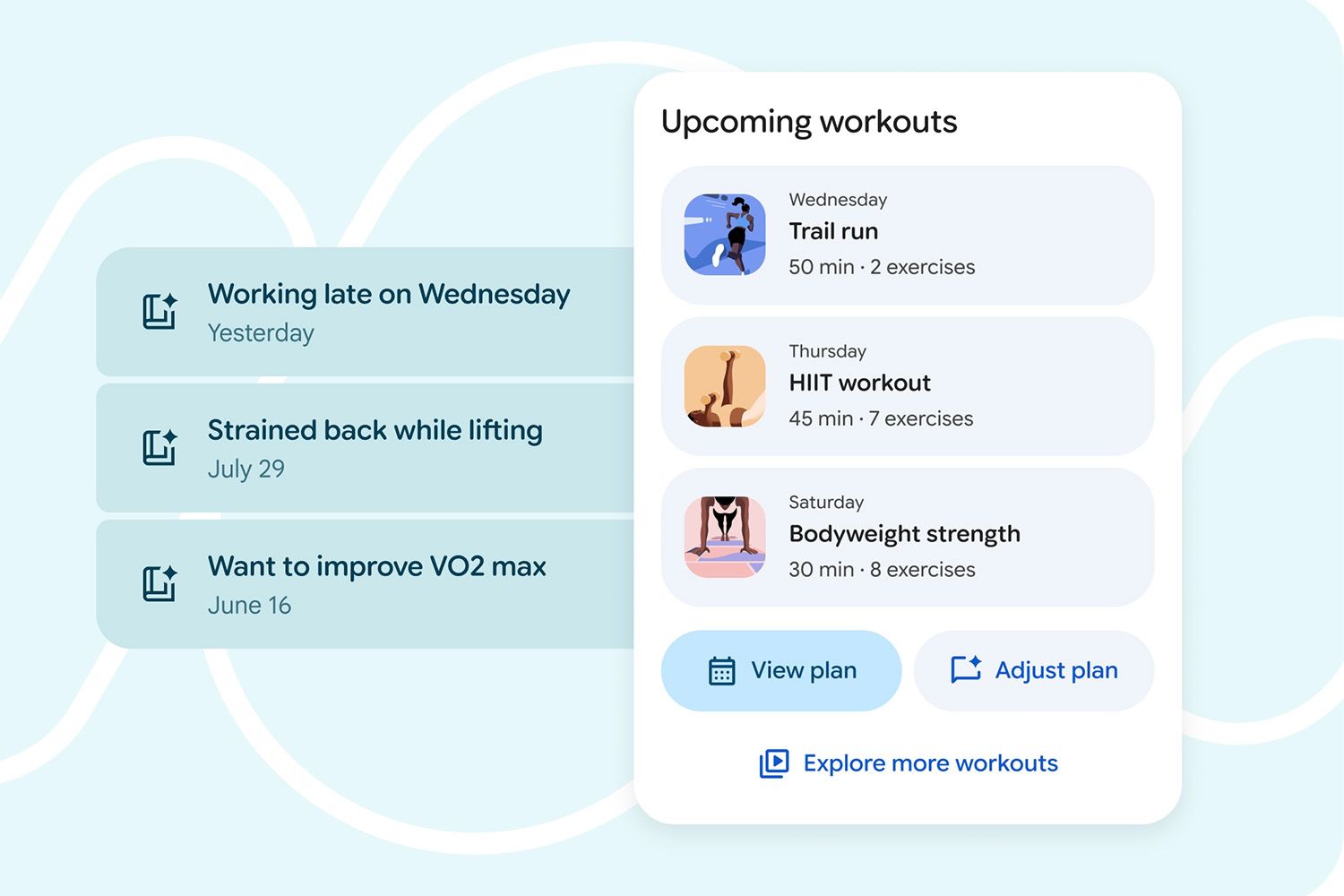
- Beyond Generic Plans: “Tailored training routines” imply dynamic workout suggestions that adapt based on continuously ingested data. Unlike static plans, AI could adjust intensity or duration in response to your recorded exertion levels, recovery metrics, and consistency. For instance, turning a planned high-intensity interval training (HIIT) session into a moderate cardio workout if sleep data indicates insufficient recovery.
- Holistic Context is King: The ability to offer “exercise recommendations based on restfulness” showcases true context awareness. The coach doesn’t operate in a vacuum; it synthesizes diverse biometric data points (sleep score, resting heart rate, heart rate variability). A Forrester report highlights that context-aware AI recommendations significantly outperform generic advice in driving user engagement and sustainable behavioral change.
- Sleep Optimization Elevated: Improving sleep advice moves beyond simplistic “get 8 hours” mantras. The example given – suggesting a bespoke adjustment like “adding an extra half hour” – indicates an AI learning your sleep patterns relative to your daily activity and stress, identifying personalized windows for better recovery.
3. Fitbit Premium: The Gateway to the AI Future (H2)
Crucially, the true potential of this AI revolution remains behind the Premium paywall. Access to the Gemini coach is reserved for subscribers.
-
Feature Breakdown Comparison:
| Feature | Fitbit App (Free) | Fitbit Premium (Required for AI Coach) |
| :————————— | :—————- | :————————————- |
| Material Design Redesign | ✅ Yes | ✅ Yes |
| Basic Health Stats | ✅ Yes | ✅ Yes |
| Hands-on Gemini AI Coach | ❌ No | ✅ Yes |
| Personalized Training Plans | Limited/Generic | ✅ AI Dynamic & Bespoke |
| Restfulness-Based Workouts | ❌ No | ✅ Yes |
| Advanced Sleep Coaching | Basic Insights | ✅ Deep Analysis & Custom Recs |
| Progress Deep Dives | ❌ No | ✅ AI-Powered Insights | -
Value Proposition Argument: Google justifies this gatekeeping by emphasizing the significant computational resources required for real-time, personalized AI coaching and the continuous model refinement using vast datasets. It positions Premium not just as extra stats, but as the entry fee for the future of personalized guidance. However, this raises questions about accessibility and widens the gap between free and paid experiences significantly.
-
Driving Subscriptions: This move is a clear strategy to boost the value of Fitbit Premium, converting users from the large base of free app users and competing more aggressively with platforms like Apple Fitness+ and Whoop that offer deep analytics and coaching as core (often paid) features.
4. Analysis & Implications: Potential and Pitfalls of the AI Coach (H2)
The Gemini AI coach holds immense promise but also warrants careful consideration.
- The Power of Personalization Done Right: If effective, personalized AI coaching could dramatically boost user outcomes. A 2022 study in JMIR Mhealth Uhealth found that personalized digital health interventions led to significantly higher adherence rates and better achievement of health goals compared to non-personalized approaches. Tailored advice could help users overcome plateaus and navigate setbacks more effectively.
- The “Black Box” Concern: How transparent will the AI’s reasoning be? Will users understand why it recommends “extra sleep” or a specific workout modification? Lack of explainability could breed mistrust. Terms like “bespoke” and “tailored” need concrete evidence to resonate.
- Data Privacy & Sensitivity: Processing such intimate health data (sleep patterns, exertion) requires robust security. Users must trust Google/Fitbit to handle this data responsibly. The integration also reinforces Google’s deepening role in personal healthcare data, a sensitive domain requiring utmost transparency (Governance frameworks like HIPAA in the US apply, though app-based wellness data has nuances).
- Human Touch vs. Algorithm: Can AI truly replicate the empathy, motivation, and nuanced understanding of a human coach? While AI excels at data processing, complex emotional states or highly individualized challenges might remain beyond its grasp. The best outcome is likely a synergistic combination.
- Accuracy & Reliability: AI systems are only as good as their training data and algorithms. Inaccurate sensor data or flawed recommendations could negatively impact user health and trust. Continuous validation and user feedback loops are paramount.
5. October Rollout: A Staged Evolution (H3)
Google’s rollout plan is strategic:
- Preview Launch in October: Fitbit Premium subscribers gain first access to the new AI-powered personal coaching features. This controlled launch allows early testing, user feedback collection, and issue resolution.
- App Redesign Follows: The wider Material Design overhaul will roll out “device-wide sometime after” the coaching preview. Prioritizing coach access allows Google to highlight its flagship AI advancement while managing the broader UI transition separately.
Conclusion
The October Fitbit app redesign represents far more than a fresh coat of digital paint; it’s a major pivot towards hyper-personalized, AI-driven wellness management. The integration of Google’s Gemini AI as an intelligent coach housed within a radically simplified Material You interface promises a future where insights are effortlessly clear and guidance is truly bespoke, dynamically adapting to our sleep, exertion, and recovery. However, the potent potential of this AI revolution is firmly placed behind the Fitbit Premium paywall, raising valid questions about accessibility and democratizing health tech. While the promise of tailored training, context-aware suggestions, and deeper sleep optimization is exciting, the ultimate success hinges on demonstrable accuracy, user-centric transparency, and navigating complex privacy expectations. Google is betting big on AI to redefine the wearable experience. Will this move elevate holistic health tracking or deepen the digital divide in personalized wellness? What potential benefits or concerns do YOU see in Fitbit’s AI-powered future? Share your thoughts below!
Sources & Further Reading:
Original article at www.lifewire.com


