
The Wow! Signal: Closer Than Ever to Solving Radio Astronomy’s Greatest Mystery?
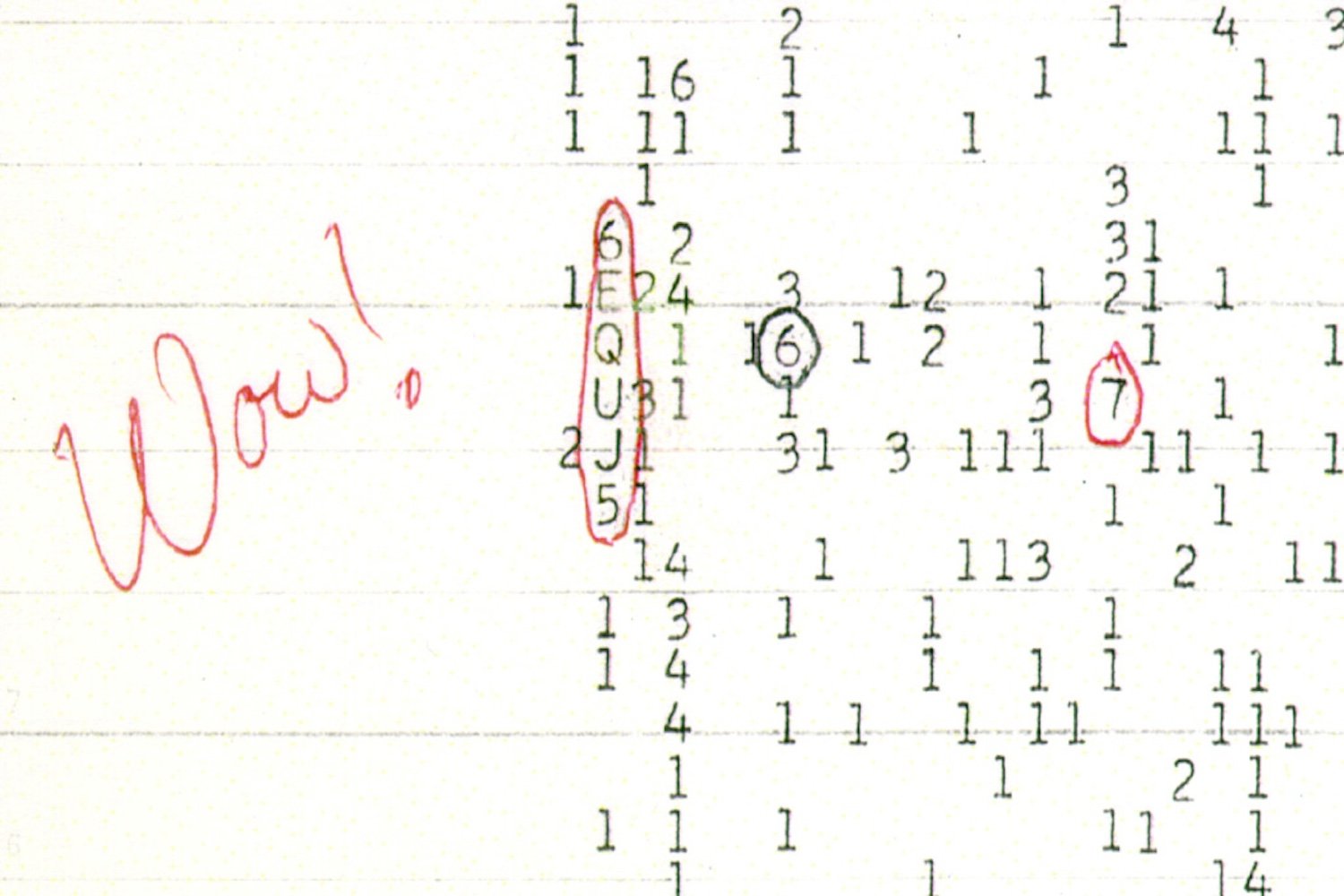
Was humanity’s brush with alien contact nearly 50 years ago just an extraordinary cosmic coincidence? On August 15, 1977, astronomer Jerry R. Ehman detected an exceptionally powerful, unexplained radio signal while scanning the stars for signs of extraterrestrial intelligence (SETI). So stunned was he by its intensity that he famously scribbled “Wow!” in red ink beside the readout. Dubbed the “Wow! Signal,” this fleeting cosmic beacon has remained one of the most enduring and provocative enigmas in astronomy. Was it an interstellar greeting from an advanced civilization, a bizarre cosmic glitch, or something entirely unexpected? Decades of speculation have swirled, with definitive answers elusive. Now, groundbreaking research using unprecedented archival access and modern analysis techniques has propelled scientists closer than ever to unraveling the secrets of the Wow! Signal.
The Wow! Signal: A Milestone Enigma in SETI History
- The Big Ear Discovery: The Wow! Signal was captured by Ohio State University’s now-defunct Big Ear radio telescope during a routine SETI survey. Scanning a region near the constellation Sagittarius, it peaked at astonishing strength – roughly 30 times louder than the background cosmic noise level.
- Unique Characteristics: The signal lasted the full 72-second window the Big Ear telescope observed that particular patch of sky before moving on. Crucially, it was observed in only one of the telescope’s two “feed horns” separated by just a few minutes, suggesting a point source that moved out of the beam rapidly. It also appeared centered at 1420 MHz, a frequency corresponding to the “hydrogen line” – the natural emission frequency of neutral hydrogen, the most abundant element in the universe. This specific frequency, long advocated by SETI pioneers like Frank Drake, was considered a potential “universal” channel for interstellar communication.
- Initial ET Buzz: The combination of extraordinary intensity, pinpoint directionality (though imprecise), coincidence with the “water hole” frequency (protected radio band near the hydrogen line deemed quiet for interstellar signals), and transient nature made the Wow! Signal instantly compelling for the SETI community. Could this be it? Ehman’s iconic “Wow!” annotation captured the collective hope and surprise.
- Failed Verification & Growing Mystery: Repeated, extensive searches using more powerful instruments, including later SETI projects like Project Phoenix, have never detected anything like it again from the same location. This failure to replicate the signal significantly increased the mystery and fueled speculation about its origin.
Mounting Doubts and the Shift Towards Natural Explanations
While the ET hypothesis initially captivated imaginations, decades of subsequent astronomical discovery and analysis have steadily shifted the weight of evidence towards natural astrophysical phenomena:
- Ruling Out Known Objects: Early suggestions focused on known transient sources or phenomena: cosmic rays affecting the detector? A passing satellite? An asteroid reflection? These were systematically ruled out.
- Interference Challenges: Terrestrial radio interference was always a strong contender. However, extensive analysis showed no known Earth-based signal matched the Wow! Signal’s unique profile, especially its movement relative to the fixed stars due to Earth’s rotation.
- Focus on Radio Natural Phenomena: Astronomers turned their attention to powerful, transient cosmic events. Gamma-ray bursts, solar flares reflected by asteroids or comets, and interstellar scintillation (amplification of a background signal passing through turbulent plasma) were explored, but none perfectly matched the Wow! Signal’s unique signature and intensity profile within the constraints of the Big Ear data.
The Magnetar Hypothesis Takes Shape
In August 2024, a significant step towards a solution emerged. Led by astrobiologist Abel Méndez, director of the University of Puerto Rico’s Planetary Habitability Laboratory and head of the Arecibo Wow! (AWOW) project, researchers proposed a compelling natural explanation:
- Concept: Méndez’s team suggested the Wow! Signal arose from the sudden brightening of a cold hydrogen cloud.
- The Triggering Mechanism: The key element? A transient burst of intense radiation hitting the cloud. Their prime candidate: a magnetar. These are highly magnetized neutron stars – the collapsed cores of massive stars – possessing magnetic fields trillions of times stronger than Earth’s. When a magnetar experiences a “flare” or quake, it can release colossal bursts of energy.
- The Emission Process: The intense radiation from such a flare could profoundly excite the hydrogen atoms within a nearby cloud. These excited atoms would then release their excess energy as radio waves (emission). Crucially, this emission occurs precisely at the 1420 MHz hydrogen line frequency – matching the Wow! Signal’s hallmark frequency.
- Transient Nature Explained: Magnetar outbursts are inherently brief and unpredictable, explaining both the signal’s short duration and why it was never detected again.
Game-Changing Reanalysis: Refining the Wow! Signal
Méndez and the AWOW team didn’t stop at the hypothesis. They embarked on a meticulous mission to re-analyze the Wow! Signal using far more sophisticated tools than existed in 1977, combined with decades of previously unpublished archival SETI data:
- Modern Tools & Unpublished Archives: Accessing old observation logs, raw data tapes, and calibration records was fundamental. Modern computing power and signal processing techniques allowed for a level of analysis impossible decades ago. “Having access to modern data analysis tools and recent observations was a ‘game changer’ for this study,” Méndez emphasized.
- Precision Tuning: The team rigorously re-assessed the signal’s parameters: its exact direction, intensity, and, critically, its frequency.
- Striking New Findings (August 2024 Preprint): Their findings (submitted to The Astrophysical Journal, currently on arXiv) yielded significant revisions:
- Intensity: They calculated a flux density approximately four times higher than initial estimates. This amplifies the required power source, making powerful natural events like magnetar flares even more plausible triggers.
- Frequency: The most surprising result. They pinned the precise frequency at 1420.726 MHz – much higher than previous, less constrained estimates. This specific value provides crucial new information about the source.
- Key Consequences: These refined parameters led the team to a profound inference: the signal source is within our Milky Way galaxy, and it must have been moving faster than previously thought when emitting the signal. This galactic location and implied motion align perfectly with compact, fast-moving objects like magnetars contributing to transient hydrogen cloud illumination.
Comparison of Wow! Signal Parameters: Initial vs. AWOW Reanalysis (August 2024)
| Parameter | Initial Observation (1977) | AWOW Reanalysis (2024) | Significance |
|---|---|---|---|
| Flux Density (Intensity) | Estimated ~30x background noise | Revised to ~120x background noise (4X higher) | Requires a significantly more powerful source; strengthens natural event models. |
| Center Frequency | ~1420 MHz | Precisely 1420.726 MHz | Higher than anticipated; critical for identifying emission mechanisms & source properties. |
| Signal Duration | ~72 seconds (within beam passage) | Confirmed ~72 seconds | Consistent with transient events. |
| Location Precision | Broad region near Sagittarius | Refined directional constraints | More precise sky location aids in searching for potential natural sources. |
| Implied Source | Unknown (ET candidate) | Likely Galactic (Milky Way) source, high relative motion | Rules out stationary extragalactic sources; favors compact, fast-moving objects like magnetars. |
Is the Mystery Solved? We’re Getting Closer…
While the AWOW project’s findings offer the most robust evidence to date supporting a natural astrophysical origin, specifically the magnetar-illuminated hydrogen cloud hypothesis, Méndez himself cautions: “Mystery solved? Not yet.” The revised parameters powerfully nudge the explanation towards natural phenomena, dramatically reducing the plausibility of both terrestrial interference and the pure ET hypothesis. They provide a consistent physical mechanism grounded in known astronomical processes:
- Galactic Origin: The precise frequency and implied motion are best explained by a source within our Milky Way.
- Magnetar Plausibility: Magnetars are known to produce intense, transient bursts capable of exciting hydrogen.
- Hydrogen Line Coincidence: The emission mechanism naturally produces energy at the exact frequency observed.
However, the definitive “smoking gun” – like spotting a specific magnetar flare occurrence or residual hydrogen glow precisely matching the signal’s sky location within the corrected coordinate frame using historical data – remains elusive. Méndez acknowledges their progress, stating, “We are confident—and surprised—that we are getting closer.” The journey isn’t over. Over the next two years, the AWOW team will continue delving into the treasure trove of archival SETI data, refining their models, and searching for corroborating evidence, hoping that one of astronomy’s most captivating puzzles could finally yield its answer.
Conclusion
The Wow! Signal stands as a testament to both the profound mystery and the enduring power of scientific inquiry. What once ignited dreams of cosmic companionship has, through decades of painstaking investigation and revolutionary leaps in technology, morphed into a sophisticated puzzle in astrophysics. Abel Méndez and the AWOW team’s groundbreaking work – meticulously reanalyzing historical data with modern tools – has yielded the most precise picture yet. Their findings significantly bolster the hypothesis of a natural origin: a brief flare from a distant magnetar lighting up a cold hydrogen cloud, resulting in a stellar shout recorded fortuitously one quiet Ohio night in 1977. While the case remains officially open, these results represent a giant leap towards closure, effectively marginalizing more exotic interpretations and showcasing how old cosmic riddles can be cracked with innovative persistence. As the AWOW project continues its archival deep dive, the final chapter of the Wow! Signal saga may soon be written, not by aliens, but by the complex forces governing the universe’s own stellar dynamos. What do you think – is the natural origin case convincing, or does a sliver of the extraterrestrial enigma still linger? Share your thoughts below!
Sources & Further Reading:
Original article at gizmodo.com


