
The Revolution in Custom Fabrication: How 3D Scanning and Printing Create Perfectly Conforming Objects
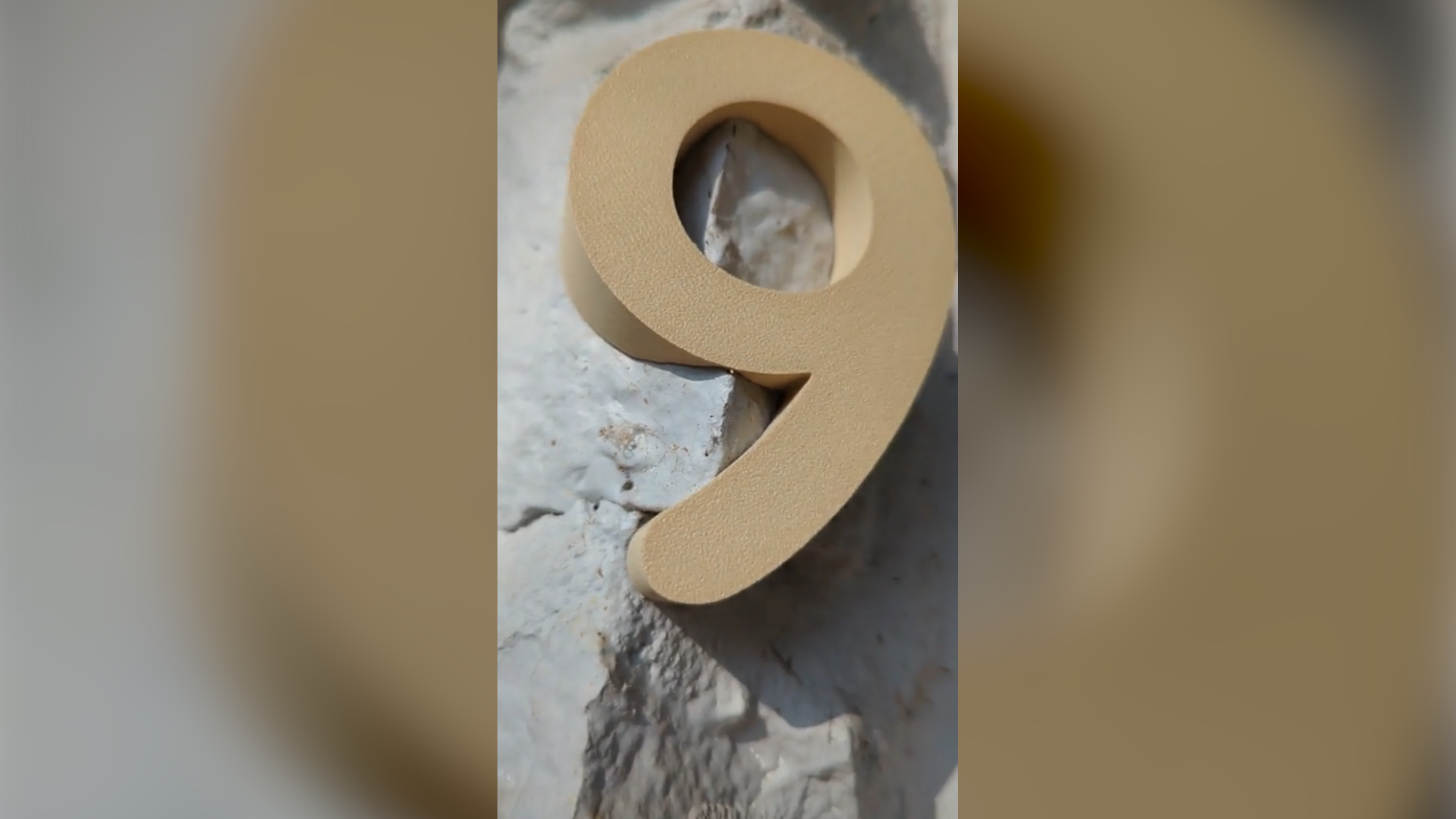
Have you ever struggled to mount hardware on a uniquely textured wall, only to face unsightly gaps or unstable fittings? What if technology could create custom parts that fuse seamlessly with irregular surfaces like puzzle pieces? This fusion has become reality through 3D scanning and printing, as demonstrated by innovators like Reddit user derekelliott. Their project—crafting house numbers that appear to organically “emerge” from a stone wall—epitomizes a groundbreaking shift in manufacturing. By capturing real-world surface topographies and translating them into precision 3D printable designs, this method solves a universal problem: creating components that integrate flawlessly with complex geometries. Beyond aesthetic appeal, this hybrid approach unlocks radical possibilities in fields from construction to biotechnology, challenging the limits of traditional fabrication.
The Genesis of Conformal Design: From House Numbers to Industrial Innovation
Understanding Conformal 3D Printing
Conformal design refers to objects shaped to mirror the exact contours of a surface. Unlike standard 3D prints with flat backs, these components leverage surface topology data (captured via scanning) to achieve a “zero-gap” fit. Derekelliott’s house number project showcases this perfectly:
- The Illusion of Integration: The number appears to grow from the wall’s stone façade by replicating its peaks and valleys.
- Functional Advantages: Eliminates mounting hardware, reduces weathering risks, and enhances durability.
- Aesthetic Innovation: Creates dynamic visual narratives (e.g., objects “emerging” or “melting” into structures).
Table: Advantages of Conformal vs. Traditional Mounting
| Aspect | Traditional Mounting | Conformal 3D Printing |
|———————-|——————————–|———————————|
| Surface Contact | Partial (gaps) | Full (0mm tolerance) |
| Installation | Drilling/nailing required | Adhesive-only, no damage |
| Weather Resistance | Vulnerable to moisture ingress | Sealed against elements |
| Customization | Limited to stock shapes | Fully bespoke for any topology |
The Development Workflow: Scanners, Software, and Plastics
derekelliott’s Reddit post details a pragmatic three-stage process, now the gold standard for custom conformal parts:
-
Stage 1: Surface Capture
Using a 3D scanner, they digitized their stone wall’s geometry. Modern scanners (structured light, LiDAR, photogrammetry) capture micron-level details. For instance, Intel RealSense devices achieve ~0.1mm accuracy for under $200, while Artec Eva ($15K+) handles larger surfaces. Key Tip: Matte spray reduces glare during scanning for better data capture. -
Stage 2: Boolean Design in Blender
Blender’s boolean modifier enabled cutting the wall’s inverse “negative” shape into the number’s base. This digital sculpting trick–known as a subtractive boolean operation–creates the “puzzle piece” effect. Alternatives like MeshLab or Fusion 360 offer similar workflows but require steeper learning curves. -
Stage 3: Material-Savvy Printing
Black PLA filament provided durability and visual contrast. For outdoor applications, ASA or PETG filaments resist UV/weather degradation. Poster settings: 0.15mm layer height, 25% infill for balance of speed and strength.
Beyond Address Plaques: Industry-Shifting Applications
Architecture and Construction
Contractors worldwide deploy this tech for:
- Custom vents that merge with historical brickwork.
- Renovation-compatible fixtures (e.g., sockets on uneven walls).
- Case Study: Architect Sam Page utilized drone-based photogrammetry to 3D print facade panels perfectly aligning with crumbling heritage structures, preserving aesthetics while reinforcing integrity (Journal of Architectural Conservation, 2023).
Medical and Biomechanics
Conformal printing revolutionizes prosthetics and implants:
- Orthotic insoles mapped to patients’ foot scans improve gait efficiency by 30% (NIH Study PMC8081060).
- Cranial implants generated from CT scans dramatically reduce surgery times.
Table: Software Tools for Conformal Design
| Tool | Cost | Learning Curve | Specialty |
|—————-|—————-|——————-|————————|
| Blender | Free | Moderate | Mesh boolean operations |
| MeshMixer | Free | Easy | Quick surface edits |
| Fusion 360 | Paid/Free tier | Steep | Parametric CAD control |
| Geomagic | Premium | Complex | Professional reverse engineering |
Robotics and Automotive
MIT engineers printed sensor housings conforming to a robot’s curved chassis, minimizing drag. Similarly, Formula 1 teams create aerodynamically optimized airflow sensors that contour flawlessly to vehicle surfaces.
Art and Interactive Design
Sculptors like Nick Ervinck use photogrammetry to merge printed organic forms with natural rock formations, enabling site-specific installations that “grow” from their environments.
Technical Challenges and Triumphant Solutions
Precision: The Data-Accuracy Gap
Consumer scanners can miss subtle textures. Solutions:
- Multi-pass scanning from varied angles.
- Software cleanup (CloudCompare filters noise/outliers).
- Proritizing “good enough” resolution for target surfaces.
Material Constraints
- Problem: Prints shrinking/warping off surfaces.
- Fix: Print models with anti-warping adhesion (brim/skirt), and match material expansion coefficients to the target surface.
Scale Limitations
- Large surfaces exceed printer volumes.
- Innovation: Section-scanning, then assembling modular prints using alignment dowels.
Accessibility Democratization
Smartphone lidar sensors (iPhone Pro, Android equivalents) now offer rudimentary scanning. Apps like Polycam output printable STL files, cutting entry costs 90%. Major 3D printing hubs (Thingiverse, Printables) host growing libraries of surface-adaptive models.
Future Frontiers: AI, Biotech, and Sustainability
Imagine AI-generated surface topographies predicting erosion patterns so seawall reinforcements print proactively. Researchers at UC Berkeley are developing 4D prints that expand/contract tracking environmental humidity changes—ideal for planters on uneven garden walls.
In biotech, labs like CELLINK scan tissue scaffolds to print stem-cell supportive matrices mimicking biological surfaces. Meanwhile, recycled ocean plastic filament makes conformal fishing-net-repair clips that disappear into boat hull textures—sustainability meeting resilience.
Conclusion: Every Surface Is Now a Canvas
The fusion of 3D scanning and printing has evolved from a novelty to a paradigm-shifting toolkit. derekelliott’s deceptively simple house numbers revealed a universal truth: any object can now be perfectly keyed to any surface. This erases barriers in restoration art, accessibility tech, and ecological design. As scanners shrink to phone-sensor size and printers speed up and become cheaper, personalized conformal fabrication will turn homes, workplaces, and cities into adaptable ecosystems. The wall between imagination and physical form has crumbled—so what textured surface will you transform? Share your groundbreaking ideas in the comments below!
Sources & Further Reading:
Original article at www.xda-developers.com


