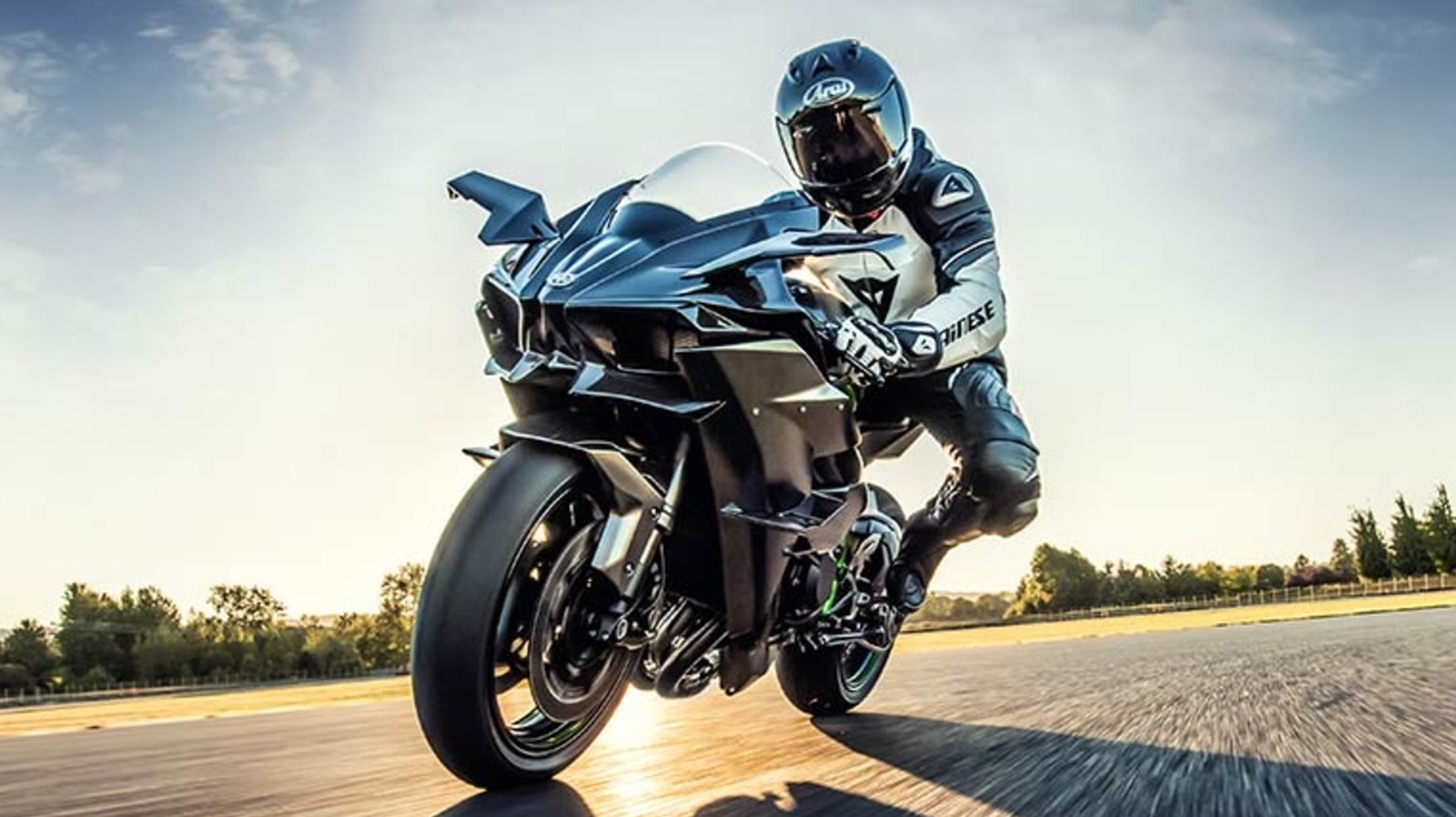

The Symphony of Speed: Kawasaki’s Best-Sounding Motorcycles Ever Crafted
Introduction
What separates a mere motorcycle from a mechanical symphony on wheels? For petrolheads, the answer often lies in the exhaust note – an auditory fingerprint that stirs the soul. While horsepower figures dominate spec sheets, Kawasaki has consistently engineered bikes where the sound is the ultimate performance upgrade. From two-stroke banshees to supercharged howls, Kawasaki’s best-sounding motorcycles blend engineering brilliance with raw acoustic personality. These iconic models prove that decibels and emotion are inseparable in the riding experience. Here’s an exploration of the legends whose roars, rasps, and growls define motorcycling’s auditory legacy.
The Unhinged Fury: 1972 Kawasaki H2 Mach IV 750
Dubbed the “Widowmaker,” this brutal two-stroke triple remains the most fearsome-sounding Kawasaki ever built. Its 748cc air-cooled inline-three engine produced 74 hp – a staggering figure in 1972 – but its auditory impact eclipsed even its speed.
- The Sound Profile: A high-RPM “beehive buzz” that evolves into a metallic, shattering scream. The two-stroke design, with its distinctive firing intervals, created an unrefined, high-frequency rage absent in modern bikes.
- The Controversy: Kawasaki warned “only skillful riders need apply.” The lightweight chassis couldn’t tame the engine, making it lethally unstable at speed – yet riders flocked to it for its berserk auditory thrill.
- Legacy: Despite its handling flaws, the H2’s sound is immortalized in vintage race footage and collector garages. Its pure, unfiltered acoustics represent an era when noise equaled rebellion.
Kawasaki’s H2 History underscores its status as the fastest production bike of 1972 – and the loudest personality.
The Cult Classic: Kawasaki ZX-7R (1996-2003)
Nicknamed “The Green Monster,” this ’90s icon blended World Superbike ambition with street-usable aggression. Its 749cc inline-four engine delivered 122 hp, but the soundtrack became its legend.
- Stock vs. Modified: While the factory exhaust offered a crisp howl, the ZX-7R truly sang with an aftermarket Muzzy system. Riders recall the “brutal” gear shifts echoing through tunnels like cannon fire.
- The Sweet Spot: Peak power arrived at 11,700 RPM, demanding high-rev bravery to unleash its full, spine-tingling wail.
- Modern Following: Even today, forums buzz with ZX-7R sound clips. Its blend of mechanical clash and inline-four purity makes it a benchmark for sportbike acoustics.
Sound Character Comparison
| Model | Engine | Signature Sound | RPM Sweet Spot | Ideal Exhaust |
|—————-|————–|————————–|—————-|———————-|
| H2 Mach IV 750 | 748cc 3-cyl | Raspy two-stroke scream | 7000+ RPM | Stock |
| ZX-7R | 749cc inline-4| Metallic howl | 10,000+ RPM | Muzzy aftermarket |
The Modern Masterpiece: Kawasaki Ninja ZX-10R (2011–2020)
This track-focused brute dominated superbike wars with a 998cc inline-four spitting 197 hp at 13,000 RPM. Kawasaki optimized its acoustics, making intake howl as critical as exhaust thunder.
- Engineering the Roar: A freer-flowing airbox and less restrictive exhaust highlighted the inline-four’s harmonic scream. The quickshifter enabled seamless upshifts, preserving the ear-splitting crescendo at redline.
- The Modifier’s Canvas: Brands like Austin Racing and GPR amplified its ferocity. Riders report a “ductile bark” under acceleration, hardening into a “chainsaw snarl” near redline.
- Electro-Acoustics: Unlike older models, rider aids like S-KTRC traction control let riders chase sonic bliss without constant fear of high-sides.
The Retro Resurrection: Kawasaki Z900RS
For riders who craved 1970s acoustics without vintage fragility, the Z900RS (2018–present) delivered. Its 948cc inline-four produces 111 hp but prioritizes tone over top-end chaos.
- Sonic Nostalgia: Kawasaki’s engineered “deep rumble” via a 4-into-1 exhaust system. The bass-heavy idle channels classic UJMs (Universal Japanese Motorcycles), building to a warm, chest-vibrating howl.
- Why Mods Miss the Point: Unlike the ZX models, the Z900RS’s exhaust note is a deliberate homage. Swapping it risks losing the curated retro timbre that makes it uniquely appealing.
- The Feel Factor: Riders describe the aural experience as “comforting” and “organic” – a counterpoint to hyperbike sharpness.
The Supercharged Spectacle: Kawasaki Ninja H2/H2R
With a centrifugal supercharger forcing air into a 998cc inline-four, the H2 (street) and H2R (track-only) rewrite acoustic physics. The H2R’s 321 hp output is complemented by F1-esque acoustics.
- The Whine of Forced Induction: Unlike any naturally aspirated rival, the H2 series layers turbine-like supercharger whine over exhaust shriek. The H2R’s unmuffled shriek peaks at 14,000 RPM, sounding like “angry jet engines.”
- The Price of Pandemonium: At $59,100, the H2R’s sound is inaccessible luxury. But even stock H2 owners note the supercharger’s rising-pitch scream becomes addictive.
- Acoustic Evolution: Earlier superbikes relied on exhaust tuning; the H2/H2R integrates intake, supercharger, and exhaust into a 3-part cacophony.
Top Power & Sound Specs
| Model | Engine | Peak Power | Distinctive Aural Feature |
|————–|——————–|————|———————————|
| Ninja H2R | 998cc supercharged| 321.5 hp | Supercharger whine + unmuffled scream |
| Z900RS | 948cc inline-4 | 111 hp | Deep-bass 4-into-1 retro rumble |
| ZX-10R | 998cc inline-4 | 197 hp | High-RPM ram-air howl |
Conclusion: The Art of the Roar
Kawasaki’s greatest-sounding bikes prove that acoustics are as vital as acceleration. From the H2 Mach IV’s anarchic two-stroke wail to the H2R’s supercharged symphony, these machines turn physics into feeling. Whether you crave the Z900RS’s nostalgic purr or the ZX-10R’s track-bred scream, Kawasaki offers a frequency for every soul. These motorcycles remind us that wattage alone can’t quicken the pulse – but the right exhaust note can turn asphalt into a concert hall. Which Kawasaki symphony resonates with you? Share your favorite roar in the comments!
Sources & Further Reading:
Original article at www.slashgear.com


