
Intel Locks SR-IOV Virtualization Support Behind Arc Pro Paywall: A Disappointment for Linux Enthusiasts?
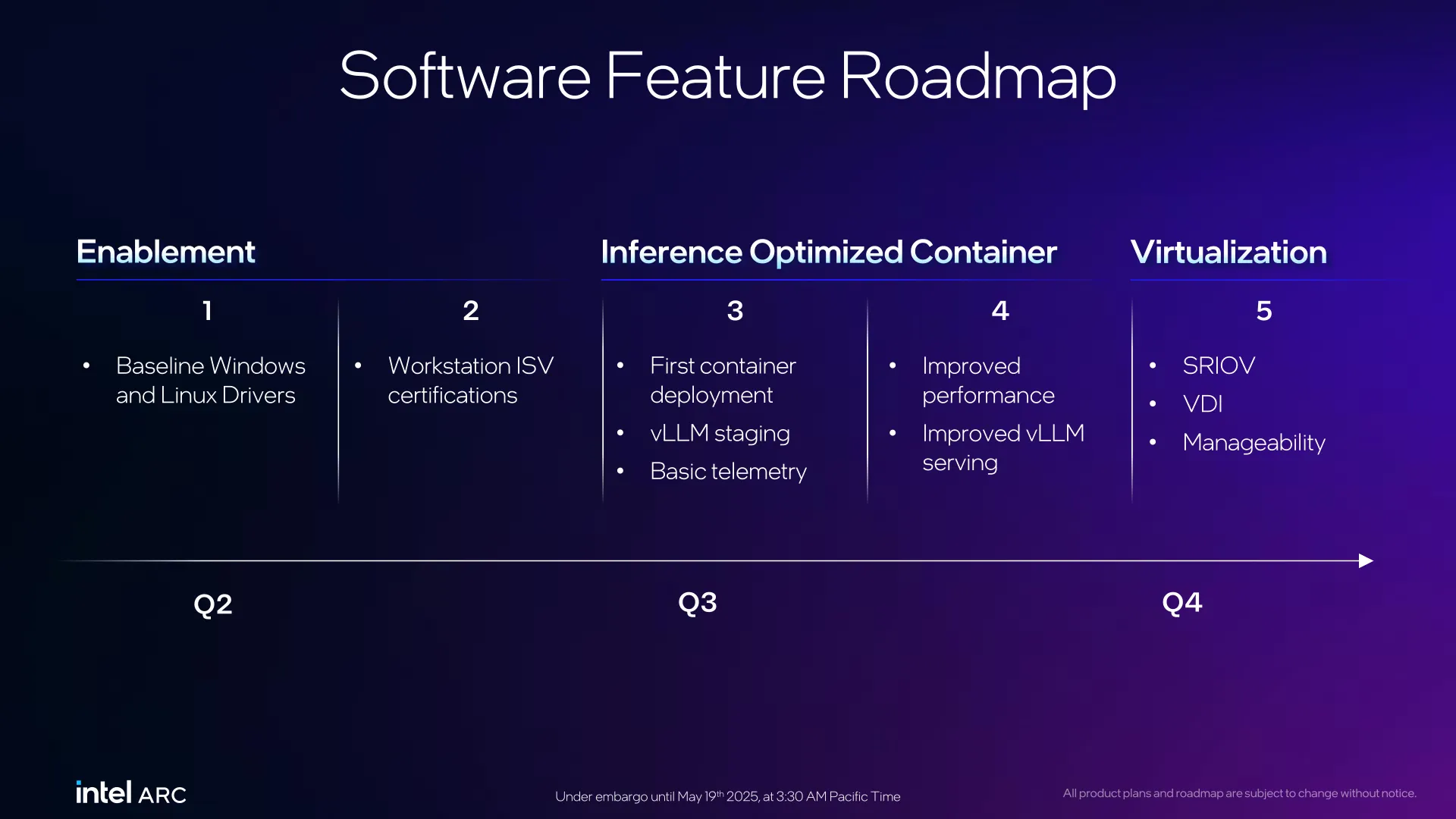
Are you a Linux user excited about leveraging the power of Intel’s Battlemage GPUs for virtualization? The promise of SR-IOV (Single Root Input/Output Virtualization) on these cards held immense appeal for many. However, recent news confirms a significant limitation: SR-IOV support will be exclusive to Intel’s Arc Pro product line, leaving consumer Arc B-Series cards in the cold. This decision mirrors a trend seen with AMD and NVIDIA, raising questions about the accessibility of advanced virtualization features for everyday users and the open-source community. This article delves into the details of this announcement, exploring the implications and potential alternatives for those seeking GPU virtualization capabilities.
Understanding SR-IOV and its Importance in Virtualization
So, what exactly is SR-IOV, and why is it such a sought-after feature? Simply put, SR-IOV is a PCI Express (PCIe) standard that allows a single physical PCIe device, in this case, a GPU, to appear as multiple separate physical devices. These “virtual functions” (VFs) can then be directly assigned to individual virtual machines (VMs). This direct assignment circumvents the traditional virtualization overhead associated with sharing a physical device through a hypervisor, resulting in near-native performance within each VM.
- Improved Performance: By allowing VMs to directly access the GPU hardware, SR-IOV significantly reduces latency and boosts performance compared to traditional pass-through methods.
- Enhanced Security: SR-IOV provides better isolation between VMs, as each VF is a separate hardware entity with its own memory space and resources.
- Simplified Management: SR-IOV simplifies resource allocation and management, allowing administrators to easily assign GPU resources to VMs based on their specific needs.
- Reduced Overhead: The direct assignment reduces the load on the hypervisor, freeing up resources for other tasks.
Imagine you’re running several virtual machines – one for gaming, one for video editing, and one for software development. Without SR-IOV, all these VMs would compete for the same physical GPU resources, leading to performance bottlenecks and a less-than-ideal user experience. With SR-IOV, each VM gets its own dedicated virtual GPU, ensuring smooth and responsive performance, as though they were running on separate physical machines. Think of SR-IOV as a way to slice a high-powered GPU into multiple, smaller, but equally powerful GPUs, dedicated to each individual virtual machine.
This technology is critical for professional use-cases like:
- Cloud Gaming: Delivering high-performance gaming experiences to multiple users from a single physical server.
- Virtual Desktop Infrastructure (VDI): Providing graphics-intensive applications to remote users with near-native performance.
- AI and Machine Learning: Accelerating training and inference workloads by providing dedicated GPU resources to each VM.
Intel’s Decision: Arc Pro Exclusivity for Battlemage SR-IOV
The initial excitement surrounding SR-IOV support for Intel’s Battlemage GPUs stemmed from enablement patches for Linux 6.17, which broadly mentioned “Battlemage” without specifying product lines. This led many to believe that consumer Arc B-Series cards, such as the anticipated Arc B580 and Arc B570, would also benefit from this feature.
However, Intel has now confirmed that SR-IOV support for Battlemage GPUs will be exclusively available on their Arc Pro product line. This decision mirrors the strategies of both AMD and NVIDIA, which also reserve SR-IOV and similar virtualization features for their professional-grade GPUs like AMD’s Radeon Pro and NVIDIA’s Quadro/RTX professional cards.
This exclusivity creates a significant barrier to entry for Linux users and home enthusiasts who were hoping to leverage SR-IOV on more affordable consumer-grade hardware. While integrated graphics like the Panther Lake Xe3 may offer SR-IOV capabilities, the performance characteristics of iGPUs typically don’t satisfy demanding graphical workloads as well as discrete GPUs can. The key takeaway is that for discrete Battlemage GPUs with SR-IOV, you’ll need to invest in the professional Arc Pro offerings.
Implications for Linux Users and the Open-Source Community
Intel’s decision to restrict SR-IOV to Arc Pro products has several implications for Linux users and the broader open-source community:
- Increased Cost: Accessing SR-IOV functionality now requires a more expensive investment in professional-grade GPUs. This may deter hobbyists and small businesses from exploring the benefits of GPU virtualization.
- Limited Accessibility: The focus on professional products means that SR-IOV will likely be less accessible to developers and researchers who rely on open-source tools and affordable hardware for experimentation and innovation.
- Potential for Fragmentation: The divergence between consumer and professional GPUs could lead to fragmentation in the Linux graphics ecosystem, as developers may need to target specific hardware configurations to fully utilize SR-IOV features.
- Disappointment for Enthusiasts: Many Linux users were eagerly anticipating using Arc cards with SR-IOV for personal projects, such as home labs and game streaming setups, and the restricted support is undoubtedly a letdown.
While the price point of the Arc Pro series has yet to be determined, professional cards are typically more expensive than their consumer counterparts because of stricter testing and validation processes, professional-grade support, and enterprise-focused features. It’s also worth noting that enterprise cards often have different driver support and certification, which can impact the open-source community’s ability to reverse engineer drivers or leverage their unique features.
Alternatives and Future Possibilities
Despite the setback, there are still avenues for achieving GPU virtualization on Linux, albeit with potential trade-offs:
- vGPU Technologies: NVIDIA vGPU software (https://www.nvidia.com/en-us/data-center/virtual-gpu/) offers GPU virtualization on certain NVIDIA GPUs, but it typically requires a commercial license.
- Software-Based GPU Virtualization: Solutions like VirGL (https://virgil3d.github.io/) provide software-based GPU virtualization, but performance may be significantly lower compared to SR-IOV.
- Passthrough: Bypassing SR-IOV, a dedicated GPU can be passed through to one single VM. This means only one VM can utilize the GPU, but it can do so at full speed.
- Utilizing Integrated Graphics: While discrete GPUs offer more power, future integrated graphics solutions from Intel (like Panther Lake Xe3) may offer more competitive and accessible solutions for SR-IOV on integrated graphics solutions.
It’s also important to remember that the open-source community is constantly evolving, and new solutions for GPU virtualization may emerge in the future. Continued advocacy and collaboration between developers and hardware vendors could potentially lead to wider SR-IOV support on consumer-grade hardware.
Conclusion: A Missed Opportunity, But Hope Remains
Intel’s decision to limit SR-IOV support for Battlemage GPUs to the Arc Pro product line is undoubtedly a disappointment for Linux users and enthusiasts who were looking forward to affordable and accessible GPU virtualization. This move mirrors the established practices of AMD and NVIDIA, highlighting a trend of reserving advanced features for professional-grade hardware. While alternatives exist, they often come with performance limitations or commercial licensing requirements.
While the short-term outlook may seem bleak, the long-term possibilities for GPU virtualization on Linux remain promising. The open-source community’s ingenuity and collaborative spirit, coupled with evolving hardware and software technologies, could pave the way for more accessible and innovative solutions in the future.
What do you think about Intel’s decision? Does it impact your plans for GPU virtualization? Comment below and share your thoughts!
Sources & Further Reading:
Original article at www.phoronix.com


