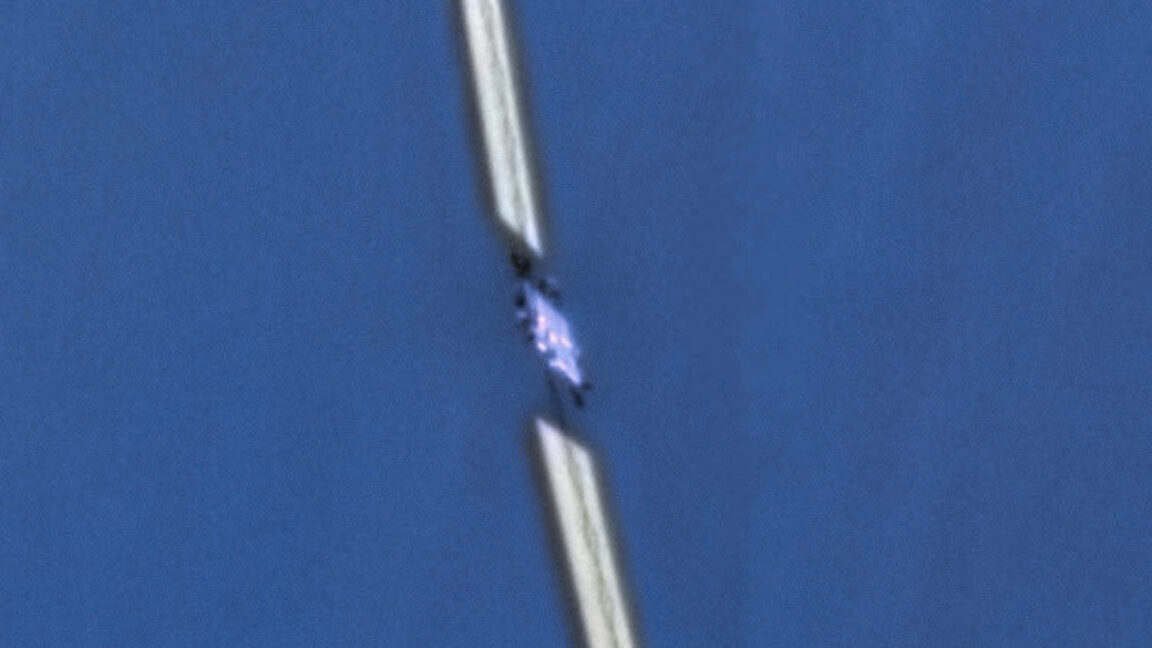

The Counterintuitive Move Making Space Safer Above Our Heads
Will cramming satellites closer together actually reduce collision risks? Sounds paradoxical, yet SpaceX is launching a massive orbital shift designed to achieve precisely that. In late 2025, Earth orbit hosted over 14,000 operational satellites – a bustling cosmic highway needing smarter space traffic management. Now, SpaceX, owner of history’s largest satellite fleet, is undertaking an unprecedented maneuver: moving nearly 4,400 Starlink satellites to lower altitudes throughout 2026. This wasn’t done on a whim. Driven by debris patterns and solar cycle physics, this complex reshuffle aims to significantly enhance long-term space safety for everyone.
The Mechanics of the Mega-Maneuver: Lowering Starlink’s Orbit
The plan, detailed by SpaceX’s VP of Starlink Engineering Michael Nicolls, involves shifting satellites currently orbiting at 341 miles (550 kilometers) down to 298 miles (480 kilometers). This 70-kilometer descent isn’t instantaneous.
- Phased Approach: Satellites will use their efficient krypton-fueled Hall-effect plasma thrusters to gradually lower their orbits throughout 2026.
- Scale: This involves nearly half of SpaceX’s operational Starlink fleet. By end-2025, SpaceX had roughly 9,400 satellites functioning, with over 8,000 active Starlinks plus others in testing.
- Decluttering Higher Zones: Ultimately, a massive segment of the most densely populated orbital band will relocate downward, concentrating traffic but also strategically changing the risk landscape.
Nicolls emphasized on social media: “Starlink is beginning a significant reconfiguration of its satellite constellation focused on increasing space safety.” The core promise? This concentrated downsizing reduces the overall potential for catastrophic collisions.
Debris Avoidance: Why Fewer Kilometers Mean Safer Skies
At first glance, packing thousands of satellites more tightly into a lower altitude zone seems to increase, not decrease, the chance of accidents. The logic breaks down when considering the debris environment and controlled management systems.
- The Debris Desert Analogy: Nicolls explicitly stated: “The number of debris objects and planned satellite constellations is significantly lower below 500 km.” Altitudes above 500 km harbor far more derelict satellites, old rocket stages, and fragments from past collisions – objects that don’t maneuver and pose unpredictable threats. Below 500 km, atmospheric drag naturally cleans up debris faster. Sources like the European Space Agency’s Space Debris Office consistently show dramatically lower debris density below this critical altitude threshold.
- Precision Choreography: Crucially, unlike random debris, Starlink satellites are actively controlled. They occupy specific, organized paths:
- Imagine dozens of individual orbital “lanes” or railways meticulously planned around the Earth.
- SpaceX leverages sophisticated GPS-based navigation and autonomous collision avoidance systems to keep satellites precisely within their assigned lanes.
- This reduces the chaotic “free for all” potential inherent in zones populated with uncontrolled objects. The predictability within the constellation is key.
Table: Orbital Context Comparison (Starlink Reconfiguration Focus)
| Characteristic | Current Orbit (~550 km) | New Orbit (~480 km) | Safety Significance |
|---|---|---|---|
| Typical Debris Density | Higher | Lower | Fewer random, unpredictable collision threats |
| Planned Constellation Density | Lower | Higher | Managed predictability enabled by automation & lane management |
| Natural Debris Cleanup Time | Slower | Faster | Atmosphere removes uncontrolled objects quicker |
| Primary Collision Risk Source | Uncontrolled Debris | Satellite Conjunction (Managed Risk) | Shifts risk from unpredictable objects to trackable/controllable ones |
The result? While satellites are denser below 500 km, the aggregate collision risk decreases because the primary danger comes from non-maneuverable debris, which is far less prevalent there. Space traffic management becomes more feasible.
Solar Minimum’s Critical Role: Enabling Safe Low-Altitude Operations
Beyond debris, the rhythms of our Sun significantly influence this strategic shift. The solar cycle, peaking around 2024, is now entering its quieter phase – solar minimum. This cosmic shift drastically impacts the thin upper atmosphere relevant to low-Earth orbit.
- Solar Activity & Atmospheric Expansion: During solar maximum, intense radiation heats the thermosphere (Earth’s upper atmosphere), causing it to expand significantly. This increases its density even at higher altitudes.
- The Drag Factor: This atmospheric density creates aerodynamic drag on satellites. It’s a critical factor:
- Operational Drag: Requires satellites to use propellant to constantly maintain their orbit against this subtle force.
- Disposal Drag: Provides a vital disposal mechanism. A disabled satellite relies on drag to slowly lose altitude and burn up on re-entry, preventing long-term space debris.
- Solar Minimum = Less Drag: As solar activity declines (precisely the phase beginning now), the thermosphere cools and contracts. Atmospheric density decreases at orbital altitudes.
Finding the Operational Sweet Spot: At their current 550-km altitude during solar minimum, Starlinks would face drastically reduced drag.
- Nicolls cautioned: Without intervention, deorbit times post-failure could stretch beyond four years as drag weakens. This creates unacceptable debris longevity risks.
- The solution? Move lower. At the new ~480-km altitude:
- Even with lower solar-induced atmospheric density, atmospheric density increases exponentially as altitude decreases.
- Result: Disabled satellites reenter and burn up harmlessly within a few months, a massive reduction in potential debris life. This ensures adherence to orbital debris mitigation best practices promoted by organizations like the Inter-Agency Space Debris Coordination Committee (IADC).
Implications for the Future Orbital Commons
SpaceX’s Starlink descent is the largest, most coordinated repositioning of an active constellation ever attempted. Its success will shape space traffic management far beyond Starlink.
- A Proactive Debris Mitigation Benchmark: This sets a powerful precedent for large constellation operators willingly incurring operational costs today (fuel expenditure for maneuvers) to ensure long-term sustainability. It validates models predicting lower orbits can be safer if combined with robust collision avoidance and controlled operations.
- Highlighting Solar Cycle Intelligence: Space operations must actively plan for solar cycle variations. Solar minimum conditions significantly alter the space environment, impacting satellite disposal timelines and collision probability calculations. Resources like NASA’s Space Weather Prediction Center (SWPC) become crucial for operators.
- Increased Traffic Requires Smarter Rules: As constellations grow (OneWeb, Amazon Kuiper, others), managing orbital volumes and rights-of-way at lower altitudes will demand enhanced coordination protocols. SpaceX is demonstrating sophisticated capabilities, but standardized international frameworks are still evolving. Entities like the United Nations Office for Outer Space Affairs (UNOOSA) play roles here.
- Technology Showcase: This move showcases the reliability and maneuverability SpaceX has achieved with the Starlink satellites. Successfully repositioning thousands of satellites validates their autonomous operation, propulsion system resilience, and ground control capabilities.
Navigating the Cosmic Terrain Ahead
SpaceX’s decision to migrate thousands of satellites down to 480 km underscores a critical evolution: Space safety isn’t just about passive avoidance; it requires dynamic, physics-informed management. Harnessing lower altitudes while leveraging choreographed paths exploits favorable debris environments. Intelligently adapting to solar cycles ensures responsible end-of-life disposal – preventing the creation of persistent debris clouds described in the infamous Kessler Syndrome scenario. This reconfiguration is a significant, complex experiment in high-volume space traffic management. Its success could solidify lower altitudes as a safer frontier for future constellations, forever changing how we navigate Earth’s orbital backyard. But it requires sustained vigilance and technological excellence. Is this ambitious shift the blueprint for a safer cosmic ecosystem, or will unforeseen complications arise? The eyes of the spacefaring world are watching closely. What risks and opportunities do you foresee?


