
Through the Nijo Castle Gates: How Shogun Season 2 Rewrites the Rules of Historical Drama
Imagine investing hours in an epic power struggle, utterly captivated by its factions and ideologies… only for the entire playing field to dramatically twist under your feet. That’s the bold promise of FX’s Shogun Season 2, shifting from established chess moves to what co-creator Rachel Kondo calls “unpredictable surprises.” How do you adapt a universally known historical climax, honor cultural authenticity, and still deliver genuine suspense? And what role does elevating previously peripheral female power brokers play in reshaping the game? For millions captivated by Season 1’s intricate dance of tradition, treachery, and Toranaga’s ambition, Season 2 confronts a unique challenge: maintaining cultural authenticity in the Shogun series while navigating the immense weight of Japan’s pivotal Battle of Sekigahara.
Ochiba no Kata: The Catalyst Shifting Shogun’s Political Center
The most profound structural shift hinges on Fumi Nikaido’s Ochiba no Kata, loosely inspired by the formidable Yodo-dono, consort of Toyotomi Hideyoshi. Co-showrunner Justin Marks explicitly contrasts her ascent with Season 1: “In season 1, the role of the Mariko (Anna Sawai) played an important role and functioned as part of the English-language side of the story. In part 2, Ochiba’s character is placed at the center of the story.” This isn’t mere screen time inflation; it’s a seismic narrative recalibration.
- Beyond Historical Reenactment: While drawing from Yodo-dono’s reputation for influence and political maneuvering, Ochiba operates beyond strict biographical confines. This deliberate fictionalization allows the writers to explore the often-unseen political dynamics of powerful women within feudal Japan’s rigid hierarchy, shifting focus onto the intense court intrigue brewing within Osaka Castle.
- Amplifying Internal Power Plays: With Ochiba taking center stage, Season 2 promises enhanced focus on:
- Internal clan rivalries and shifting loyalties fueled by female strategists.
- The complex interplay between public male authority and behind-the-scenes feminine influence.
- Motivations driven by protecting dynastic legacy and personal power gained through alliances rather than battlefield prowess.
- Strategic Significance: Her presence reframes the conflict. Where Season 1 pitted Toranaga against obvious external rivals (notably Ishido), Ochiba embodies a different kind of oppositional force – deeply entrenched, leveraging tradition, maternal legitimacy, and shrewd political calculation. This shifts the drama’s scale from broad military clashes to intensely personal, high-stakes duels fought in audience chambers.
Wrestling With Destiny: Sekigahara’s Historical Shadow
Any historical drama grapples with audience foreknowledge, but Shogun Season 2 tackles arguably Japan’s most decisive military encounter: the Battle of Sekigahara (1600). As Marks acknowledges, history buffs know the outcome: Tokugawa Ieyasu’s victory paving the way for centuries of Tokugawa Shogunate rule.
- Accuracy vs. Narrative Tension: Fundamental historical facts must hold. Dramatically altering Sekigahara’s outcome would break faith with knowledgeable viewers. Producers concede deviations from established history would “cause raised eyebrows,” especially among Japanese audiences where this history is deeply ingrained.
- The Power of the “How,” Not the “What”: The narrative challenge shifts from “Who wins?” to “How do they win against impossible odds?” and “What internal sacrifices occur?” Suspense is generated through character arcs, tactical gambits, unforeseen betrayals, and personal costs endured on the path to the foregone conclusion. This resonates with modern historical dramas exploring how we arrived at known outcomes (e.g., Rome, staring down Caesar’s assassination inevitability).
- Respecting the Known Framework: Key figures (Toranaga/Ieyasu, Ishido, historical allies/enemies) must adhere to their documented roles and allegiances. Creative license thrives within this fixed structure – exploring motivations, relationships, and pivotal moments leading to the battlefield.
Mastering the Blend: Culture as Structure, Not Just Material
Marks articulates the core production philosophy vital for navigating these complexities: treating culture, history, and language not just as raw “material” to be mined, but as essential “structure” shaping the narrative framework. This stance tackles inclusion and authenticity head-on.
- Beyond Amorphous “Consultation”: Hiroyuki Sanada’s dual role as producer and star (Toranaga) ensures deep, practical integration of cultural insight. He isn’t just advising; he’s helping build the story machinery. Comprehensive involvement of Japanese crew members across departments – costume, sets, language coaching – embeds authenticity throughout production, avoiding superficial cultural appropriation (Annenberg Inclusion Initiative studies frequently highlight the impact of diverse crews on authentic representation).
- Collaborative Storytelling Philosophy: “We are telling a fictional story based on real history,” Marks states. This mirrors the approach seen in series like The Crown, balancing meticulous historical detail with dramatic interpretation of internal struggles. Hiroshi Tokuhara (Historical Consultant) emphasized honoring bushido ethos and period-accurate protocols during production interviews cited by FX.
- The “Fact-Fiction Blend”: This process cultivates trust. Presenting Sekigahara accurately provides a stable foundation. Using Ochiba’s character to explore amplified female political influence creates compelling fiction. The blend aims for authentic emotional reality within the historical context, reacting to pressures genuine figures faced.
Navigating Historical Drama Approaches:
| Approach | Philosophy | Goal | Risk | Example (Beyond Shogun) |
| :————————- | :——————————————————– | :————————————- | :————————————- | :—————————————————- |
| Authentic Recreation | Recreate events & personas precisely; “what happened.” | Historical accuracy above narrative. | May sacrifice pacing, character depth. | Band of Brothers (battlefield focus). |
| Narrative Re-Editing | Use history as framework; “how & why it might have felt.” Create immersive character journeys. | Thrilling story preserving core truths. Accuracy-savvy audiences may still nitpick interpretations. | Shogun S2, The Crown, Rome. |
Mutual Respect: The Undercurrent Powering Authenticity
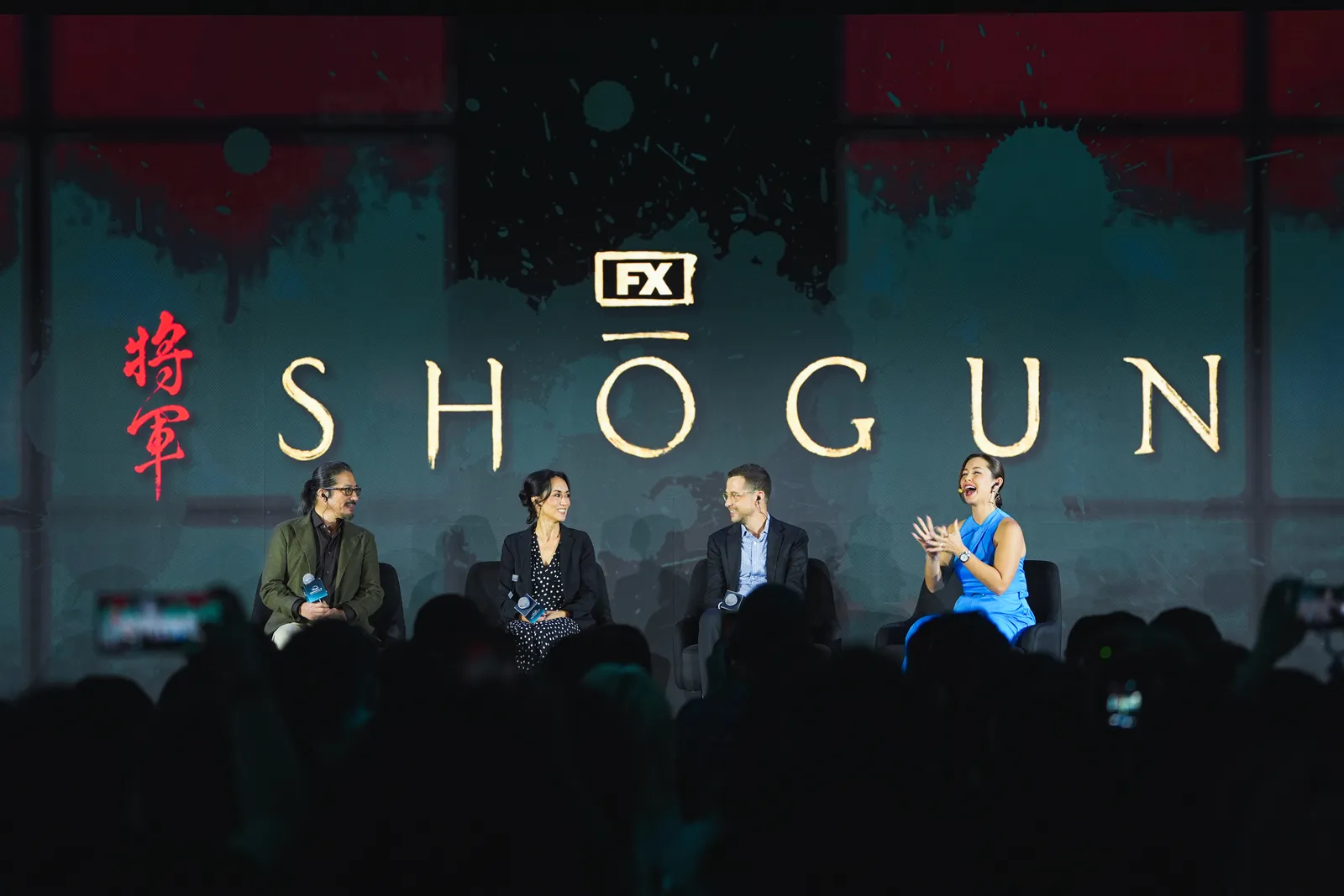
At Disney Plus’s preview event, Marks emphasized, “Mutual respect between cultures is more important than ever.” This resonates powerfully beyond entertainment, informing Shogun‘s very success.
- Respecting Cultural Ownership: Deep collaboration avoids relegating Japanese culture to mere exotic backdrop. Language authenticity (extensive Japanese dialogue with subtitles, not dubbing) respects linguistic nuance inherent to power dynamics. As Sanada stated at the event, preserving linguistic nuances proved crucial for portraying power dynamics authentically.
- Elevating Untold Perspectives: Centering Ochiba represents respect for acknowledging historical women wielded considerable, albeit often indirect, power worthy of narrative focus. Historical accounts tend to marginalize this, creating fertile ground for respectful exploration.
- Building Trust for Creative License: By demonstrating foundational respect through rigorous cultural adherence where it matters (core events, societal structures), the show earns leeway for dramatic interpretation around those pillars. Audiences understand deviations serve character depth without distorting historical essence.
Stepping Onto the Next Strategic Plateau
Season 2 doesn’t abandon the power dynamics that hooked viewers. Instead, it layers on complexity. Ochiba’s ascendancy transforms Osaka Castle into the season’s pivotal arena. Her maneuvering, leveraging her son’s claim and exploiting clan discontent against Toranaga’s strategic genius operating amidst swirling Edo rumors, promises a ferocious clash distinctly different yet equally potent.
The inherent tension in Sekigahara’s foregone conclusion becomes a creative engine. How will Toranaga overcome Ishido’s larger forces and Ochiba’s political web? What unexpected alliances fracture? Which trusted figures pay the ultimate price walking the knife-edge towards an inevitable outcome? The suspense isn’t birthed from questioning the endpoint, but from the harrowing journey required to reach it – navigating treacherous terrain filled with Marks’ promised “unpredictable surprises.”
The intricate production tapestry woven with cultural respect ensures this journey feels grounded. Anna Sawai’s translation intensity remains a crucial bridge, but the center shifts towards Japan’s internal power plays. Sanada’s authoritative presence behind and before the camera anchors Toranaga’s calculated gambits. The deliberate shift – from the Black Ship’s intrusion towards the decisive turning point in Japanese history – is supported by treating its cultural context as the bedrock of the story, not mere ornamentation. It’s a masterclass in balancing reverence with riveting narrative, proving historical authenticity isn’t a constraint, but the very foundation enabling thrilling exploration. Will you be rewatching Season 1 to spot foreshadowing before diving into Ochiba’s game? Share your thoughts on how Shogun navigates its historical legacy!


