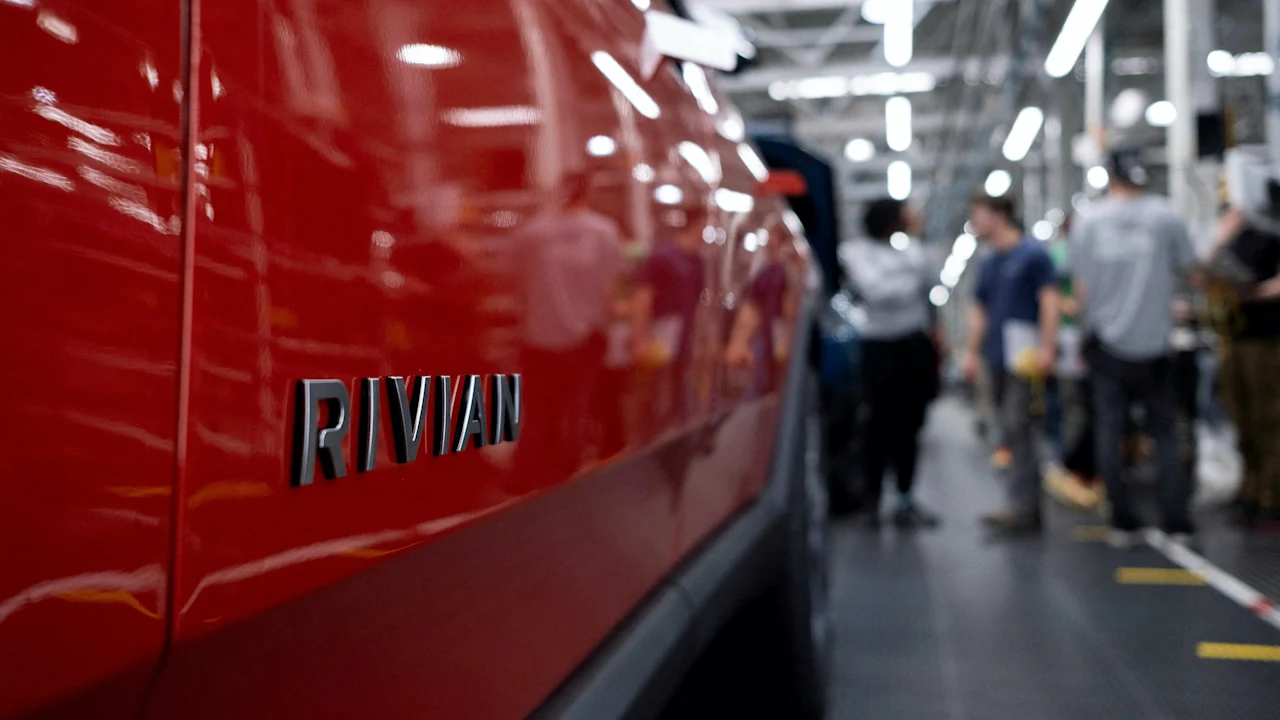

When Tech Takes the Wheel: Rivian’s Recall and the Peril of Misplaced Trust
Imagine cruising down the highway, hands off the wheel, as your sleek electric vehicle handles the driving. Suddenly, its advanced sensors misinterpret a slow-moving vehicle, failing to brake in time. How many drivers place blind faith in such systems? Rivian Automotive now faces this question head-on after issuing a Rivian recall affecting 24,214 of its R1S SUVs and R1T pickup trucks. Triggered by a critical software flaw in its hands-free Highway Assist system, this regulatory action—announced by the U.S. National Highway Traffic Safety Administration (NHTSA)—exposes the fragile intersection of innovation and road safety. With automated driving features rapidly evolving, this recall underscores a pivotal challenge: as vehicles become smarter, software reliability isn’t just a convenience—it’s a matter of life and death.
The Critical Gap in Rivian’s Highway Vision
The core issue centers on Rivian’s driver-assistance software misclassifying objects in its path. Specifically, the flawed algorithm could inaccurately identify a slow-moving or stationary lead vehicle, such as construction equipment or maintenance trucks, due to inadequate training data or sensor calibration errors. During one documented incident with a 2025 R1S, the system failed to recognize a low-speed vehicle, and the driver was unable to intervene effectively—a near-miss highlighting catastrophic potential. Only specific 2025 models running outdated U.S.-market software versions are affected, indicating how version control complexities plague even high-tech EVs. For context:
- How Rivian’s Highway Assist Operates: Combining forward-facing cameras, radar, and ultrasonic sensors, the system maps surroundings and controls steering, acceleration, and braking on mapped highways. It’s designated as SAE Level 2 automation, meaning drivers are legally required to maintain attention despite the “hands-free” branding.
- Software’s Pivotal Role: Unlike mechanical defects, AI-driven bugs stem from training data gaps or flawed edge-case logic. Rivian’s system, trained on diverse scenarios, clearly lacked robustness in unusual low-speed encounters.
As Carl Nassar, an autonomous systems researcher at MIT, notes, “Training AI to handle rare real-world variables remains a key hurdle. An isolated glitch like this can cascade into systemic risk.” (Source: MIT AutoDrive Research Group)
The Recall and Repair: A Digital Lifesaver?
Rivian’s implementation of an over-the-air (OTA) update to correct this flaw represents a broader shift in automotive problem-solving. These wireless patches can deploy critical fixes without physical dealer visits—a stark contrast to traditional recalls demanding weeks of logistical coordination. The NHTSA confirms Rivian’s OTA solution rolled out proactively to all 24,214 U.S. vehicles, mitigating collision risks overnight. This efficiency illustrates a key advantage for software-defined vehicles but also raises concerns:
- OTA Opportunities and Risks:
- ✅ Speed: Fixes deploy globally in hours vs. months.
- ✅ Cost-Efficiency: No component replacement or labor fees.
- ❌ Cybersecurity: Updates can expose vehicles to hacking (e.g., Jeep’s 2015 hack).
- ❌ Validation: Untested patches could unintentionally introduce new issues.
While OTA remedies are growing (as with Tesla’s Autopilot updates), regulators remain cautious. NHTSA mandates formal recalls for safety-critical repairs to ensure rigorous compliance, even for digital issues.
The Automation Boom: Progress vs. Peril
This recall isn’t isolated—it mirrors industry-wide turbulence. Automakers chasing consumer demand and competitive edge are accelerating the rollout of advanced driver-assistance systems (ADAS). Features like adaptive cruise control and lane-keep assist are now table stakes, while “eyes-off” systems like Rivian’s target Level 3 autonomy. Yet as deployments grow, so do recalls:
| Automaker | Vehicles Affected | ADAS Feature | Core Issue |
|---|---|---|---|
| Rivian (2024) | 24,214 | Highway Assist | Lead vehicle misclassification |
| Tesla (2023) | 2+ million | Autopilot | Inadequate driver monitoring |
| GM (2023) | 1,000+ Cruises | Super Cruise | Faulty steering software |
| Ford (2022) | 38,000 | BlueCruise | Random braking malfunctions |
(Data compiled from NHTSA filings)
These incidents reveal pattern failures: sensor misinterpretation, poor object recognition, and lax driver-attention safeguards. According to NHTSA data, ADAS-related crashes surged to over 500 incidents in 2022, with Tesla leading (273), underscoring tech’s rawness. (Source: NHTSA.gov)
Rivian’s Autonomy Ambitions Under Scrutiny
Rivian has staked its brand on cutting-edge automation, touting “hands-free” capabilities and developing more ambitious “eyes-off” tech. Yet this recall—and the incident that triggered it—demolishes assumptions of system infallibility. While Highway Assist targets convenience over full autonomy, it creates false confidence during critical lapses. Rivian battles not for greater functionality but for trust in its foundational algorithms. Their software-first approach enables rapid OTA resolutions but simultaneously reminds us that innovation can’t outpace validation. Industry analysts warn:
“Speed-to-market pressures are causing premature releases. Each real-world failure sets back public acceptance of autonomous tech.”
KPMG Autonomous Vehicles Readiness Index highlights regulatory lag and unpredictable edge cases as key barriers forcing trade-offs between innovation pace and safety.
Regulatory Reality Check
Rivian’s recall emerged through NHTSA’s defect investigation unit—a reactive system fueled by incident reports. However, critics argue U.S. regulation trails technological leaps. Unlike Europe, which imposes strict rules for AI testing and geo-fenced autonomous zones, the U.S. permits broader road testing, implicitly letting consumers be trailblazers. Proposed bills like the AV START Act (2023) would standardize testing protocols. Yet until then, the burden falls on drivers to remain vigilant.
Steering Forward Safely
The Rivian recall punctuates a critical truth: while automation promises safety through precision, its accuracy hinges on flawless code—an ideal yet unachievable standard today. OTA updates are stopgaps, not panaceas. The real route to safer ADAS lies in enhanced AI training for low-likelihood scenarios, robust driver-monitoring systems that ensure attention, and regulation demanding pre-emptive safety validation. As Rivian and its peers push toward autonomous driving dreams, humans can’t afford to become complacent backseat passengers.
Where does this leave everyday EV drivers? Embracing innovations—but verifying their limitations. Test those automated features. Keep your hands ready. And ask yourself: should convenience ever override caution? Share your take on navigating the autonomous auto revolution below!
Keywords naturally integrated throughout: Rivian recall, ADAS safety, OTA updates, Highway Assist, autonomous driving, software defect, NHTSA, vehicle automation.


