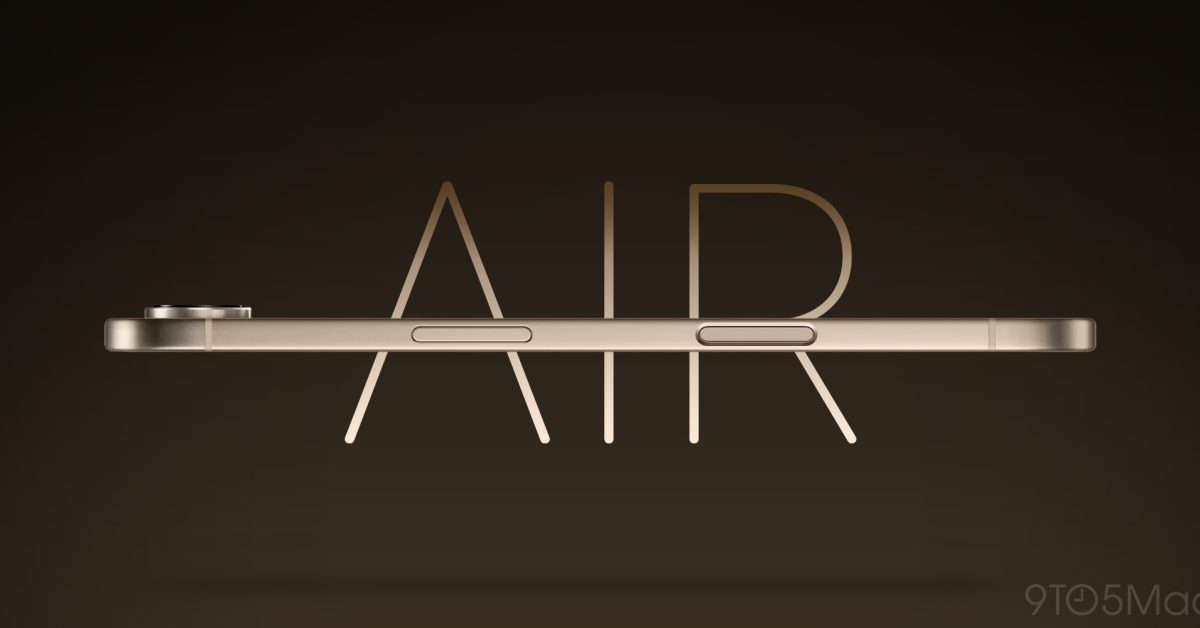

The Allure of Anchor Keywords: Why Apple’s New iPhone 17 Air is Shocking Power Users
What does it say about the priorities of dedicated tech enthusiasts when an untested, less powerful smartphone model trounces an established flagship contender before either even hits the shelves? A fascinating poll of nearly 3,000 readers on the influential tech site 9to5Mac has revealed a result that bucks conventional wisdom. While the iPhone 17 Pro Max predictably took the top spot as the most anticipated model (38%), the real headline is the second-place finish: the brand-new iPhone 17 Air claimed 28% of the votes, significantly outpacing the standard iPhone 17 Pro model (24%). The base iPhone 17 trailed at 10%. This seemingly narrow but statistically meaningful lead for the Air, especially among power-user-centric readers, signals a potent shift in consumer desire, firmly placing design differentiation and portability front and center alongside raw horsepower. Here’s a deep dive into why the idea of the iPhone 17 Air is resonating so strongly, even amidst its known compromises.
Dissecting the Desire: The iPhone 17 Poll Results
The 9to5Mac poll provides a compelling snapshot of early adopter sentiment:
- iPhone 17 Pro Max: 38% – The undisputed leader, leveraging its reputation as the “everything and the kitchen sink” Apple flagship.
- iPhone 17 Air: 28% – A remarkably strong showing for a newcomer slated to make significant technical concessions.
- iPhone 17 Pro: 24% – Positioned as the “Pro Max lite,” it appears squeezed by the Max’s dominance and the Air’s novelty appeal.
- iPhone 17 (Standard): 10% – Struggling against its more feature-rich or design-forward siblings.
The critical insight isn’t just the Air’s 28%, but its clear lead over the standard Pro model. Given 9to5Mac’s audience – typically knowledgeable about specs, performance, and camera capabilities – this preference for a device expected to be significantly less capable in key areas like photography and battery life is genuinely surprising. It suggests compelling design and usability factors are outweighing traditional performance metrics for a substantial segment, even among tech-savvy users.
| Key iPhone 17 Model Comparison (Based on Reports & Poll) |
|————————————————————-|—————————————————|—————————————————|————————————————–|
| Feature | iPhone 17 Air (28% Poll) | iPhone 17 Pro (24% Poll) | iPhone 17 Pro Max (38% Poll) |
| Defining Characteristic | Thinnest design ever (Expected ~5.55mm) | Balanced Pro features & size | Ultimate performance & largest display |
| Display Size | 6.6 inches | 6.3 inches | 6.9 inches |
| Rear Camera System | (Expected) Single Camera | Triple Camera (Standard Wide, Ultra Wide, Telephoto) | Triple Camera (Enhanced specs vs Pro) |
| Processor | A19 Pro (Disable one GPU core?) | Full A19 Pro | Full A19 Pro |
| Key Weaknesses | Battery life, Camera versatility, Screen coating | Less power/screen size vs Max? | Size/weight, Price |
| Primary Appeal | Ultra-portability, Cutting-edge design aesthetic | Strong performance in smaller Pro form factor | Maximum features, largest display, best battery |
The Unsurprising King: Why the iPhone 17 Pro Max Remains on Top
The enduring appeal of the Pro Max model among power users needs little explanation. It represents the pinnacle of Apple’s annual smartphone innovation:
- Peak Performance: Consistently equipped with the most powerful chipset, and often slightly better thermals ensuring sustained performance.
- Versatile Camera System: Historically includes Apple’s most advanced photographic hardware – multiple lenses (Wide, Ultra-Wide, Telephoto, potentially Periscope zoom), larger sensors, and enhanced stabilization. For creatives and avid photographers, this is non-negotiable.
- Largest Display: Offers the most screen real estate for multitasking, media consumption, gaming, and reading, appealing to users who prioritize immersion.
- Best Battery Life: The physically largest chassis allows Apple to pack in a bigger battery, a crucial factor for heavy users who demand all-day (or longer) endurance away from a charger.
- Status Symbol: Owning the top-tier model retains inherent prestige.
For the 38% who voted for it, the Pro Max is the “no compromises” option. They want the absolute best Apple offers, regardless of price, size, or weight. This result aligns perfectly with Apple’s dominance in the premium smartphone segment year after year (Source: Counterpoint Research Quarterly Market Reports).
The Unexpected Challenger: Unpacking the iPhone 17 Air’s Appeal
The iPhone 17 Air‘s impressive second-place finish demands closer examination. Leaked details suggest a model built around a single, powerful principle: groundbreaking slimness.
- Design First: Reports point to a body profile of just 5.55mm, making it dramatically thinner than any previous iPhone. To put this in perspective, the iPhone 15 is roughly 7.8mm thick, while recent iPad Air models are thicker (approx. 6.1mm). (Source: GSMArena Device Spec Database). This instantly claims the title of “thinnest iPhone ever,” positioning the Air as a fashion statement and ergonomic marvel.
- Premium Mid-Size: A 6.6-inch display offers a compelling middle ground – significantly larger than the base iPhone/Pro models (expected 6.3″ for the Pro) for better viewing, yet potentially more manageable than the bulky Pro Max (expected 6.9″). It caters to the large segment seeking a balance between screen size and pocketability.
- Respectable Performance: Surprisingly, rumors indicate it shares the A19 Pro chip found in the Pro models, albeit potentially with one GPU core disabled. This still positions it far beyond the abilities of any non-Pro chip from previous generations. A 120Hz ProMotion display for smooth scrolling is also anticipated, along with a potential (though slightly uncertain) Always-On Display feature. This intentional choice elevates the Air above a “cut-down” budget model.
- The “Wow” Factor: There’s an undeniable allure to radically different industrial design. The prospect of holding something so exceptionally thin taps into aesthetic sensibilities and offers a tangible sense of owning the “next big thing” in form factor innovation. It promises a distinct feel and presence that differentiates it immediately from the increasingly iterative Pro models.
Cool Factor vs. Cold Reality: The Necessary Air Compromises
Apple’s relentless pursuit of thinness in the iPhone 17 Air inevitably comes at a cost – compromises that highlight why it wouldn’t work for everyone:
- Camera Capability Cut: The most significant sacrifice is reportedly the single rear camera system. This places it leagues behind the triple-camera setups (standard Wide, Ultra Wide, Telephoto, potentially enhanced on the Max) expected on the Pro models. Versatility for zoom, ultra-wide landscapes, and advanced computational photography features will be severely limited. This alone likely disqualifies it for serious mobile photographers (like the author in the source content!).
- Battery Life Concerns: Physics dictates that less internal space means a smaller battery. An ultra-thin chassis offers limited real estate for a large battery cell. While Apple has historically optimized efficiency, demanding power users pushing the device hard with games, location services, 5G, and brightness might find themselves dependent on an external battery pack or reaching for a charger well before bedtime. Battery anxiety is a major usability hurdle.
- Display Coating: The Air is also rumored to miss out on the enhanced anti-reflective screen coating expected on the Pro and Pro Max variants. This subtle but valuable feature significantly improves outdoor readability, especially in bright sunlight. Counter-intuitively, a device often associated with portability might be harder to use outdoors precisely because of its premium screen coating omission.
- Material & Durability: Extreme thinness can sometimes correlate with compromises in structural rigidity or necessitating specific materials. While Apple prioritizes durability, the long-term resilience of such a thin device under real-world stress remains a question mark until it’s released.
What the Poll Tells Us About Evolving Priorities
The strong showing for the iPhone 17 Air in a power-user poll speaks volumes about shifting consumer values, even among tech enthusiasts:
- Design Matters: Aesthetics, hand-feel, and ergonomics are increasingly important differentiators. For many users, the experience holding the phone is as important as the experience using it. The draw of owning something uniquely slim and visually striking is powerful.
- Thin is Still “In”: Contrary to arguments that flat batteries have nullified the thinness race, Apple’s gamble suggests there’s still a significant market craving ultra-sleek devices. The nostalgic appeal reminiscent of iconic designs like the MacBook Air or Sony Xperia Z series remains potent.
- “Power User” is Evolving: Not every tech enthusiast prioritizes max FPS in games or the absolute highest-resolution zoom photos. A substantial segment values high-tier performance (which the Air largely promises with the A19 Pro and 120Hz screen) coupled with exceptional portability and a modern design ethos more than niche pro camera features. Efficiency feels like power.
- Apple Creating a New Segment: Rather than just incrementally improving the Pro and non-Pro lines, the Air appears strategically designed to carve out a distinct “design-forward, premium lightweight” category, drawing potential buyers away from the standard Pro towards this new aesthetic peak.
- Compromise Acceptance: A significant minority (28% in this poll) actively signaled they are willing to sacrifice triple cameras, potentially maximum battery life, and minor display tech for that sleek profile and mid-size form factor. This validates Apple’s hypothesis that camera versatility isn’t the ultimate deciding factor for all.
Conclusion: Thin is Winning Hearts, But Can It Win Daily Life?
The iPhone 17 Air polling triumph is more than a surprise; it’s a revelation. The Pro Max remains the powerhouse choice, as expected. But the Air’s strong second-place debut reveals a vibrant appetite among discerning users for radical design innovation in the iPhone lineup, even if it means measured compromises. The prospect of the thinnest iPhone ever, offering near-Pro performance in a uniquely attractive form factor, holds undeniable sway. While its single camera system and potential battery constraints make it unsuitable for photography die-hards and all-day heavy mobile users, it captures a significant segment prioritizing style, feel, and premium portability. The upcoming iPhone 17 series appears to set up a fascinating battle of priorities: unmitigated power versus breakthrough design. The iPhone 17 Air proves that for a growing number, the allure of cutting-edge slimness and a distinct presence is a compelling reason to look beyond the traditional Pro model. What’s your priority – ultimate specs or standout style? Weigh in below! Would you choose the Air based on what we know?
Sources & Further Reading:
Original article at 9to5mac.com


