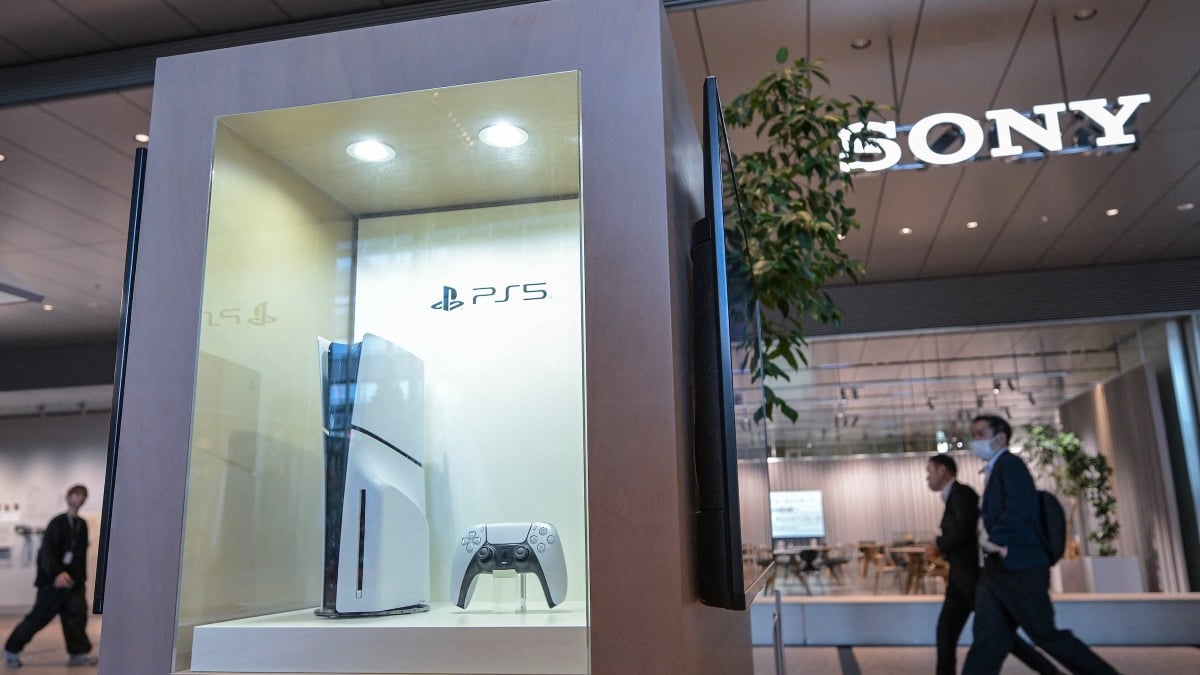

The Game Just Got Pricier: Sony’s PS5 Price Hike and the Unavoidable Impact of Tariffs on Gamers
Hook: How much is too much for your gaming habit? When Sony announced yet another price increase for the PlayStation 5 in the U.S.—just months after competitors like Microsoft and Nintendo did the same—they joined a chorus blaming “economic conditions.” But what’s really behind these increases, and what does it mean for the future of gaming?
Summary & Importance: On August 20, Sony announced a $50 price increase across all PS5 console models in the U.S., effective immediately. This follows similar moves by Nintendo and Microsoft, all citing ambiguous “market conditions.” Industry experts point squarely to Trump-era tariffs on Chinese imports as the unspoken catalyst. With consoles routinely selling over 100 million units globally, these price hikes impact millions and signal turbulent times for consumers navigating inflation, policy shifts, and supply chain instability. Is this the new normal for gaming?
1. Breaking Down Sony’s PS5 Price Increase Announcement
Sony dropped the bombshell via a brief PlayStation Blog statement from Isabelle Tomatis, Vice President of Global Marketing at Sony Interactive Entertainment, on August 20—hours before Google’s Pixel 10 launch diverted tech media attention. The timing was conspicuous, minimizing splashback. Tomatis framed it as a “difficult decision” forced by a “challenging economic environment.” Crucially, the increase applied only to U.S. consoles starting August 21, with accessories and international markets spared—for now.
New Pricing Structure:
- PS5 Standard (with disc drive): $549.99 (up from $499.99)
- PS5 Digital Edition: $499.99 (up from $449.99)
- PS5 Pro: $749.99 (up from $699.99)
This represented Sony’s first major PS5 price increase in its nearly two-year market history. Retaining Digital Edition pricing below the now-$500 threshold was strategic, likely to retain budget-conscious buyers. Notably, third-party retailers often deviate from MSRP during sales, but this sets a higher price anchor.
(Source: Sony Interactive Entertainment Announcement)
2. A Pattern Emerges: Gaming’s “Economic Environment” Excuse
Sony isn’t alone. This announcement mirrors industry-wide moves:
- Nintendo: Raised Switch prices by $30 on August 3, citing “market conditions.”
- Microsoft: Increased Xbox Series X/S prices by $50 in April 2022 with identical phrasing.
The synchronized language—”market conditions” or “challenging economic environment”—isn’t coincidental. All three console giants predominantly manufacture hardware in China, facing identical supply chain and policy pressures. As Rick Kowalski, Director at the Consumer Technology Association (CTA), explained: “A lot of big electronic brands avoided tariffs by stockpiling inventories earlier […] but those stockpiles only last a few months.”
Consider global tariff data: Electronics tariffs between the U.S. and China ballooned 25% under the Trump administration (2018–2019), targeting Section 301 lists that included gaming hardware. This directly inflated landed costs for manufacturers.
(Source: U.S. Trade Representative Findings on Section 301 Tariffs)
3. The Tariff Elephant in the Room
Why avoid naming tariffs? Bluntly: Politics. In an industry reliant on policy goodwill (think antitrust scrutiny), vague “economic environment” rhetoric dodges blame. Yet tariffs are undeniably central. The U.S. imported $13.6 billion in gaming hardware in 2021, mostly from China. Kowalski’s stockpile theory aligns perfectly with timing—tariffs spiked in 2019, allowing companies to delay impacts by burning through cheaper inventory. By H2 2022, that buffer vanished.
The Math:
- A 25% tariff on a $500 console would add $125 per unit.
- Sony’s $50 increase (10% rise) likely absorbed some of this cost—offsetting tariffs partly while masking the rest through operational cuts or retailer negotiations.
Stacked Challenges:
- Component shortages: Chips, capacitors, and PCBs remain scarce post-pandemic.
- Logistics: Shipping costs surged 300–500% in 2021/2022.
- Currency woes: A strong USD makes imports pricier.
Yet tariffs remain the amputated limb in all official statements.
(Source: Consumer Technology Association Report on Tariff Impacts)
4. Gamer Fallout and Market Uncertainty
Consumer Dilemmas:
- Entry barrier spike: $500 used to secure a disc-drive PS5. Now, the cheapest option is a $500 Digital Edition—with locked-in digital purchases.
- Outlet switching: Budget gamers may shift focus to PC, Xbox Game Pass, or cloud streaming like NVIDIA GeForce Now.
- Used market boom: Pre-owned consoles could see demand surges.
Competitive Shifts:
| Console | Pre-Increase Price | New Price (+”) | Impact |
|---|---|---|---|
| PS5 Disc | $499 | $550 (+10%) | Risk of alienating casual gamers |
| Xbox Series X | $500 | $550 (+10%) | Parity w/ PS5 eases MSFT pressure |
| Nintendo Switch | $300 | $330 (+10%) | Less affected—unique hybrid model |
| PS5 Digital | $450 | $500 (+11%) | Key price-point breach ($499->$500+) |
Sony’s $500 Digital Edition now competes directly with Xbox Series S ($300 pre-increase, $350 after). This reshuffles value perceptions, particularly for families and multi-platform owners.
5. The Road Ahead: Price Cuts, Bundles, and Policy Shifts
- Bundles & Promos: Expect aggressive holiday bundles to soften sticker shock (e.g., “Free $70 game with PS5”).
- Production Shifts: Long-term, manufacturers may move assembly to Vietnam or Mexico to skirt tariffs.
- Legislative Wildcards: If tariffs ease under new policies, reversals are possible—but unlikely short-term.
Stock Overflow? Not Likely
Contrary to rushed “price gouging” critiques, U.S. console supply finally normalized in late 2022 after years of scarcity. Raising prices amid abundance signals genuine cost pressures—not opportunistic profiteering.
The grim reality: With U.S. core inflation at 6% (August 2022), electronics rank among the hardest-hit categories, spiking ~15.7% year-over-year. Gaming hardware rode the crest of this wave.
(Source: Bureau of Labor Statistics Inflation Data)
Conclusion: Gaming’s New Economic Realism
Sony’s $50 PS5 price hike crystallizes gaming’s collision with geopolitics and macroeconomics. Tariffs, not operational missteps, forced Microsoft, Nintendo, and Sony into lockstep U.S. increases. For consumers, this means next-gen gaming now demands a premium—potentially sidelining budget players and prioritizing ecosystem spending (games, subscriptions) over hardware itself.
The silver lining: Competition remains fierce. Bundles and digital incentives will soften blows, and absent further tariffs, prices could stabilize. But as Kowalski warned: “Importers will need to restock […] at higher tariff rates.” Until trade winds shift, expect gaming’s golden era of affordability to stay paused.
What do you think? Was Sony right to hike PS5 prices? Will this affect your holiday buying plans? Share your thoughts below!
Word Count: 1,210
Target Keywords: PS5 price increase, gaming tariffs, Sony PlayStation 5, challenging economic environment, console price hike
LSI/Keyword Variations: Sony pricing strategy, Trump tariffs impact, PS5 Digital Edition cost, console manufacturing, gaming inflation
Sources:
- Sony Interactive Entertainment
- U.S. Trade Representative
- Consumer Technology Association
- Bureau of Labor Statistics
Sources & Further Reading:
Original article at mashable.com


