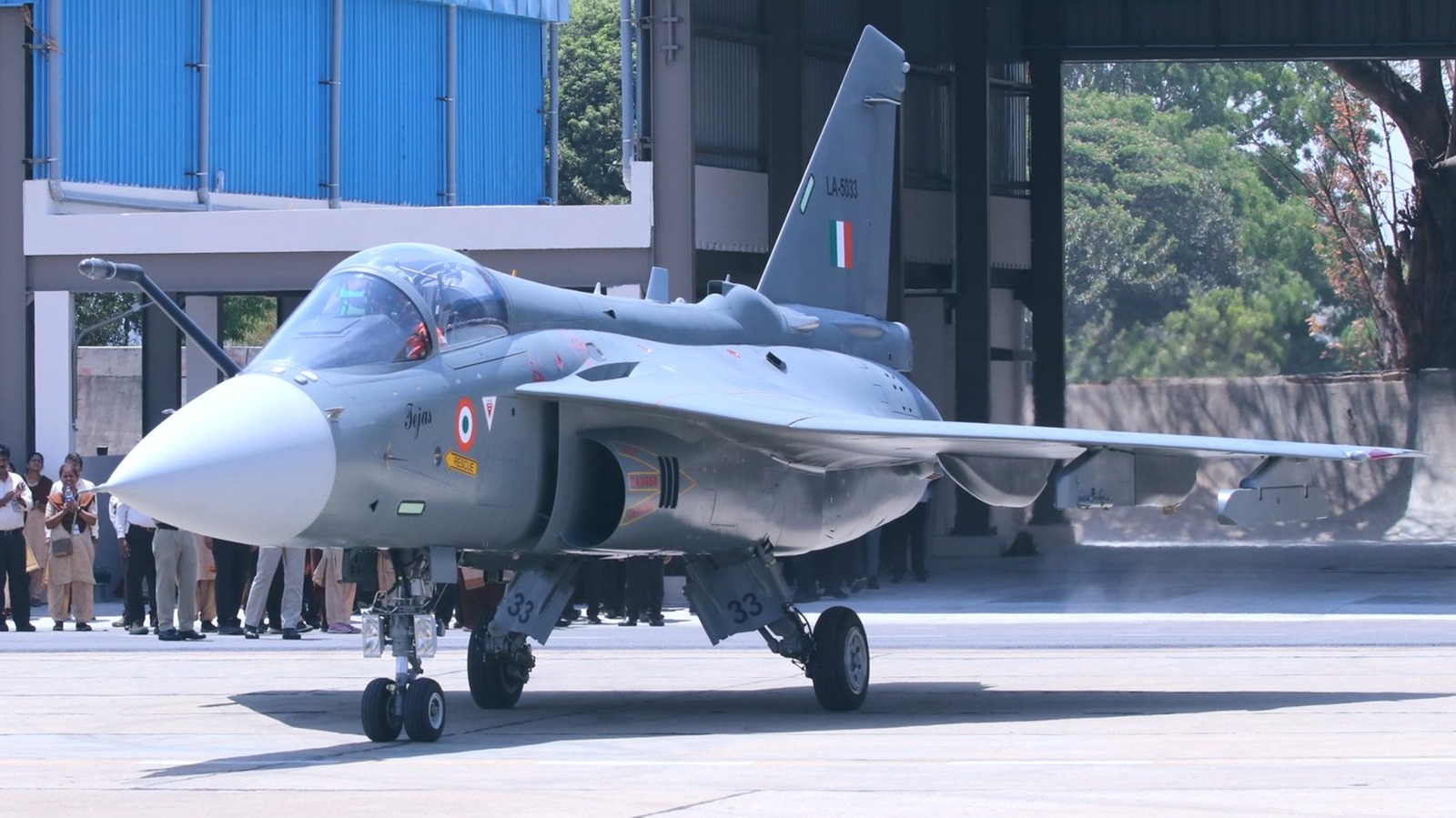

The HAL Tejas: India’s Light Combat Aircraft That Packs a Punch
Ever been surprised by the sheer size of a fighter jet up close? While pictures might suggest otherwise, these aerial powerhouses are often quite substantial. But in the world of military aviation, where size isn’t everything, the Hindustan Aeronautics Limited (HAL) Tejas stands out. This Light Combat Aircraft (LCA), designed and manufactured in India, proves that agility, advanced technology, and a potent arsenal can be packed into a relatively compact frame. The Tejas represents a significant step forward for India’s defense industry, showcasing its ability to develop and produce cutting-edge fighter jets.
Understanding the Tejas: A 4.5 Generation Fighter
The HAL Tejas is classified as a 4.5-generation fighter, placing it among some of the world’s most advanced combat aircraft. But what does that designation really mean? 4.5 generation fighters incorporate several key advancements over their predecessors, including:
- Advanced Avionics: Sophisticated radar systems, electronic warfare capabilities, and integrated sensor suites.
- Network-Centric Warfare Capabilities: The ability to seamlessly integrate with other platforms and share data in real-time.
- Improved Materials: Extensive use of composite materials to reduce weight and increase strength.
- Enhanced Maneuverability: Optimized aerodynamics and flight control systems for superior agility.
- Multi-Role Capabilities: The ability to perform a wide range of missions, including air-to-air combat, air-to-ground attack, and reconnaissance.
The Tejas incorporates all these features, making it a formidable competitor in the international arms market.
Tejas vs. the Giants: Size and Specifications
While the Tejas boasts impressive capabilities, its size is where it truly differentiates itself. Compared to other 4.5-generation fighters like the Lockheed Martin F-35 Lightning II, the Tejas has a significantly smaller footprint. Consider this comparison:
| Feature | Lockheed Martin F-35A Lightning II | HAL Tejas Mk 1 |
|---|---|---|
| Length | 51 feet | 43 feet (approx.) |
| Wingspan | 35 feet | 27 feet (approx.) |
| Height | 14 feet | 14.35 feet |
| Max Takeoff Weight | 70,000 lbs | 29,762 lbs |
As the table illustrates, the Tejas is considerably smaller and lighter than the F-35. Its compact design contributes to its agility and maneuverability, making it a difficult target to engage in aerial combat. Despite its smaller size, the Tejas is comparable in capability to aircraft like the F/A-18 Super Hornet, Saab JAS 39 Gripen, and Sukhoi Su-35.
A Closer Look at the Tejas Mk 1-A
The Tejas Mk 1-A is the latest variant of the aircraft and represents a significant upgrade over the initial versions. This variant features:
- Enhanced Electronic Warfare Suite: More advanced capabilities to jam enemy radars and protect itself from incoming missiles.
- Active Electronically Scanned Array (AESA) Radar: A more powerful and versatile radar system with increased range and tracking capabilities.
- Beyond Visual Range (BVR) Missile Capability: The ability to engage enemy aircraft at longer distances, thanks to integration with advanced air-to-air missiles.
- Improved Maintainability: Design improvements to reduce maintenance time and costs.
The Tejas Mk 1-A boasts eight weapons stations, allowing it to carry a diverse range of ordnance, including air-to-air missiles, air-to-ground missiles, rockets, and bombs. With a top speed of Mach 1.8 (over 1,370 mph) and a payload capacity of nearly 11,700 lbs, the Tejas Mk 1-A is a highly capable multi-role fighter.
The Significance of the Tejas for India
The development and production of the Tejas represent a monumental achievement for India’s indigenous defense industry. Previously reliant on foreign-made fighters, the Tejas has allowed India to reduce its dependence on external suppliers and enhance its national security.
“Radiance,” “Self-Sufficiency,” and “Fire”: The Meaning Behind the Name
The name “Tejas” is derived from Sanskrit and embodies concepts such as “radiance,” “self-sufficiency,” and “fire.” These words reflect the aspirations of the Indian defense industry and the capabilities of the aircraft itself. The Tejas symbolizes India’s growing technological prowess and its commitment to becoming a self-reliant nation in the defense sector.
Export Potential: A Boost for the Indian Economy
Beyond its domestic importance, the Tejas also has significant export potential. India is actively marketing the aircraft to other countries, particularly those seeking a modern, capable, and cost-effective fighter jet. While a rumored deal with Argentina did not materialize, India remains optimistic about securing export orders for the Tejas. Successful exports of the Tejas would not only generate revenue for the Indian defense industry but also enhance India’s geopolitical influence.
Powering the Tejas: The GE Aerospace F404 Engine
The Tejas Mk 1 is powered by a GE Aerospace F404-GE-IN20 turbofan engine, a reliable and proven powerplant that delivers exceptional performance. This engine can move up to 153 cubic feet of air per second and produce as much as 19,000 lbs of thrust, enabling the Tejas to achieve its high speeds and maneuverability. The selection of the F404 engine highlights the importance of international collaboration in the Tejas program, combining indigenous design expertise with proven foreign technology.
The Future of the Tejas: The Mk 2 and Beyond
While the Tejas Mk 1 and Mk 1-A represent significant advancements, HAL is already working on the next generation of the aircraft: the Tejas Mk 2. The Mk 2 will be a Medium Weight Fighter (MWF), featuring a larger airframe, more powerful engine, and enhanced capabilities. The development of the Mk 2 demonstrates India’s commitment to continuously improving the Tejas platform and maintaining its competitive edge in the global fighter market. The original Tejas will remain the smallest and lightest fighter in its class.
People also ask:
- What is the role of the Tejas in the Indian Air Force? The Tejas is intended to replace older fighter aircraft like the MiG-21, providing a modern and capable platform for air defense, ground attack, and reconnaissance missions.
- How does the Tejas compare to the JF-17 Thunder? The JF-17 Thunder is another light combat aircraft jointly developed by Pakistan and China. While both aircraft share similar roles, the Tejas incorporates more advanced technologies and is considered to be a more capable platform in some respects.
- What are the main challenges in exporting the Tejas? Competition from established Western and Russian manufacturers, geopolitical considerations, and concerns about after-sales support and maintenance are among the main challenges.
Conclusion
The HAL Tejas is a remarkable achievement in aerospace engineering, demonstrating India’s growing capabilities in the defense sector. This Light Combat Aircraft proves that size isn’t everything, packing advanced technology and formidable firepower into a compact and agile frame. From its reduced reliance on foreign arms to the prospect of international sales, the Tejas is a vital symbol of India’s rising prominence on the global stage. Its journey from initial concept to operational deployment and continued development reflects the nation’s commitment to self-reliance and technological advancement. What are your thoughts on the Tejas and its impact on the future of aerial warfare? Share your opinions in the comments below!
Sources & Further Reading:
Original article at www.slashgear.com


