
Are PCIe 5.0 SSDs Worth the Hype? A Deep Dive
Do you really need that new, blazing-fast PCIe 5.0 SSD? The marketing hype surrounding these drives is undeniable, promising unprecedented speeds and a future-proof computing experience. But are these claims justified for the average user? This article will delve into the realities of PCIe 5.0 SSD technology, explore its benefits and limitations, and help you determine if upgrading is the right move for your needs. Ultimately, understanding the practical implications of PCIe 5.0 SSDs is key to making an informed decision.
Understanding PCIe 5.0 SSD Technology
The Allure of Speed: What Does PCIe 5.0 Bring?
The primary advantage of PCIe 5.0 is its sheer speed. It effectively doubles the bandwidth compared to PCIe 4.0, boasting a transfer rate of 32GT/s per lane, compared to PCIe 4.0’s 16GT/s. This translates to sequential read speeds reaching up to 14 GB/s and write speeds hitting 12 GB/s on some drives. These figures are undoubtedly impressive, dwarfing the capabilities of even the most performant PCIe 4.0 SSDs.
To illustrate the progression of PCIe speeds, consider the following table:
| PCIe Generation | Transfer Rate (GT/s) | Theoretical Max Bandwidth (x16 slot) |
|---|---|---|
| PCIe 3.0 | 8 GT/s | 128 GB/s |
| PCIe 4.0 | 16 GT/s | 256 GB/s |
| PCIe 5.0 | 32 GT/s | 512 GB/s |
This increase in bandwidth allows for faster data transfer rates, at least in theory. However, realizing these theoretical speeds requires compatible hardware. PCIe 5.0 SSDs necessitate the latest AMD and Intel platforms with PCIe 5.0 support on their motherboards. Older systems simply cannot take advantage of the increased bandwidth.
The Downside: Heat and Compatibility
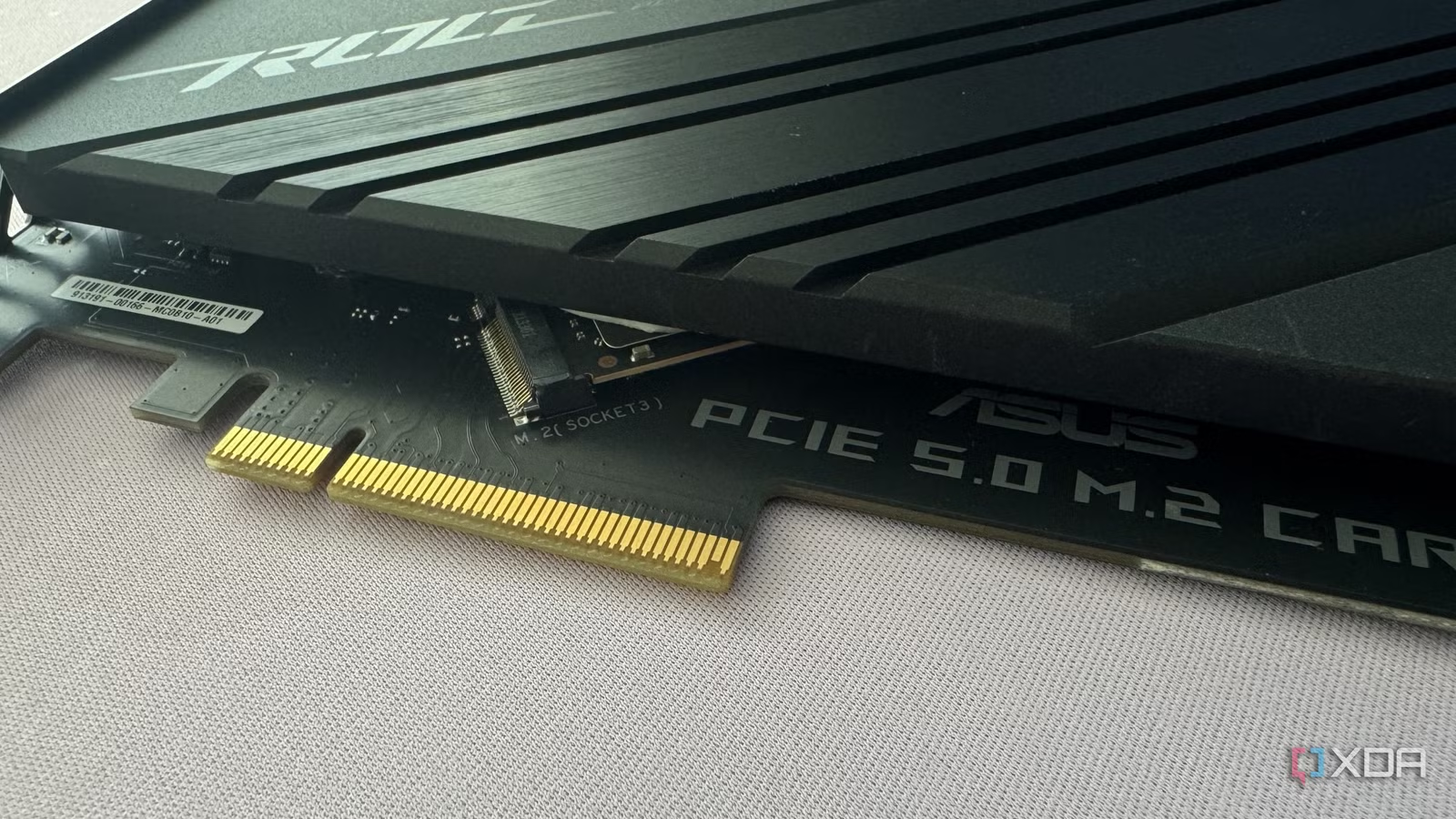
The increased speed of PCIe 5.0 SSDs comes at a cost: heat generation. These drives can get incredibly hot during sustained operation, often exceeding 80°C. To mitigate this, manufacturers often equip them with massive heatsinks, and some even resort to using small, integrated fans. These cooling solutions add to the overall cost and size of the drive, potentially causing fitment issues in smaller cases or laptops.
Consider a scenario where your system’s cooling is already borderline. Adding a power-hungry, heat-generating PCIe 5.0 SSD could exacerbate thermal issues, leading to performance throttling and potentially impacting the longevity of other components.
Why PCIe 5.0’s Blazing Speeds Might Not Matter to You
Bottlenecks Beyond the Bus: The Limits of Real-World Performance
While PCIe 5.0 SSDs excel in synthetic benchmarks that measure sequential throughput, everyday computing tasks tell a different story. Activities like launching applications, booting your operating system, and browsing files rely heavily on random read/write performance. Unfortunately, random read/write speeds haven’t seen as dramatic an improvement with the transition to PCIe 5.0.
The reason for this lies within the drive itself. Controller queues and firmware latency play a significant role in determining random read/write performance. Until controller technology significantly advances, the increased interface speed offered by PCIe 5.0 is underutilized. It’s akin to widening a pipe when the faucet’s flow remains the same.
Think of it like this: the PCIe interface is a highway. PCIe 5.0 is a wider, faster highway. But if the on-ramps and off-ramps (controller queues and firmware) remain congested, the overall speed of your journey (application loading, file access) won’t significantly improve.
Other System Limitations
Even if random read/write performance were significantly improved, other bottlenecks in your system could limit the benefits of a PCIe 5.0 SSD. Network connections, CPU processing power, and even software limitations can all restrict data transfer speeds, negating the advantages of the drive’s theoretical bandwidth.
For example, transferring a large file over a network will be limited by the network’s speed, regardless of how fast your SSD can read and write data. Similarly, if your CPU is struggling to keep up with the demands of a particular application, the SSD’s speed won’t alleviate the CPU bottleneck.
The Cost-Benefit Analysis
PCIe 5.0 SSDs are significantly more expensive than their PCIe 4.0 counterparts. This price premium, coupled with the need for compatible hardware and robust cooling solutions, makes them a questionable investment for most users.
Instead of spending a substantial amount on a PCIe 5.0 SSD, consider allocating those funds to other components that could provide a more noticeable performance boost. Upgrading your RAM, CPU, or GPU could yield more tangible improvements in overall system responsiveness and gaming performance.
Niche Use Cases: When PCIe 5.0 SSDs Shine
While PCIe 5.0 SSDs may be overkill for general use, there are specific workloads where their extreme speeds can be advantageous.
- 8K Video Editing: Professionals working with massive 8K video files can benefit from the faster transfer speeds, reducing editing and rendering times.
- Large Dataset Processing: AI researchers and data scientists who handle extensive datasets can leverage the increased bandwidth for quicker processing and analysis.
- Disk Cloning: Cloning large hard drives or SSDs can be significantly faster with a PCIe 5.0 drive, minimizing downtime.
However, even in these scenarios, it’s essential to consider whether the gains justify the cost. High-end PCIe 4.0 drives like the Samsung 990 Pro [^1^] already offer impressive performance that may be sufficient for many professional workflows.
The Smarter Choice: PCIe 4.0 or Even PCIe 3.0
For the vast majority of users, PCIe 4.0 SSDs represent the sweet spot in terms of performance and price. They offer a significant speed boost over older SATA SSDs and provide ample bandwidth for most applications and games. Furthermore, their prices have dropped considerably, making them a much more attractive option than PCIe 5.0 drives.
Even PCIe 3.0 SSDs remain a viable choice for many consumer workloads. While they are slower than PCIe 4.0 drives, they still provide a substantial performance improvement over traditional hard drives and are more than adequate for everyday tasks.
Comparison of SSD Generations:
| Feature | PCIe 3.0 | PCIe 4.0 | PCIe 5.0 |
|---|---|---|---|
| Max Sequential Read | Up to 3.5 GB/s | Up to 7 GB/s | Up to 14 GB/s |
| Price | Lower | Mid-Range | Higher |
| Compatibility | Broad | Good | Limited |
| Heat Generation | Lower | Moderate | High |
The Future of PCIe 5.0
While PCIe 5.0 SSDs may not be essential today, their potential may be unlocked by future technologies. Microsoft’s DirectStorage API, for example, aims to reduce CPU overhead and allow games to directly access the SSD, potentially leading to faster loading times and improved performance. Local AI training workloads, where data bandwidth is critical, could also benefit from the increased speeds offered by PCIe 5.0.
However, until these technologies become more widespread, the benefits of PCIe 5.0 SSDs remain limited for most users.
Conclusion: Is PCIe 5.0 Worth It?
In conclusion, while PCIe 5.0 SSDs offer impressive speeds on paper, their real-world benefits are often negligible for the average user. Bottlenecks elsewhere in the system, coupled with the high cost and increased heat generation, make them a questionable investment for most. PCIe 4.0 or even PCIe 3.0 SSDs provide a much better balance of performance and price, making them the smarter choice for the vast majority of users. Unless you have a specific workload that can truly leverage the extreme speeds of PCIe 5.0, you’re better off saving your money and investing in other components that can provide a more noticeable performance boost.
What do you think? Are you planning to upgrade to a PCIe 5.0 SSD, or are you sticking with a previous generation? Share your thoughts in the comments below!
Sources & Further Reading:
Original article at www.xda-developers.com


