
When Prevention Isn’t Optional: OpenAI’s High-Stakes Safety Gambit
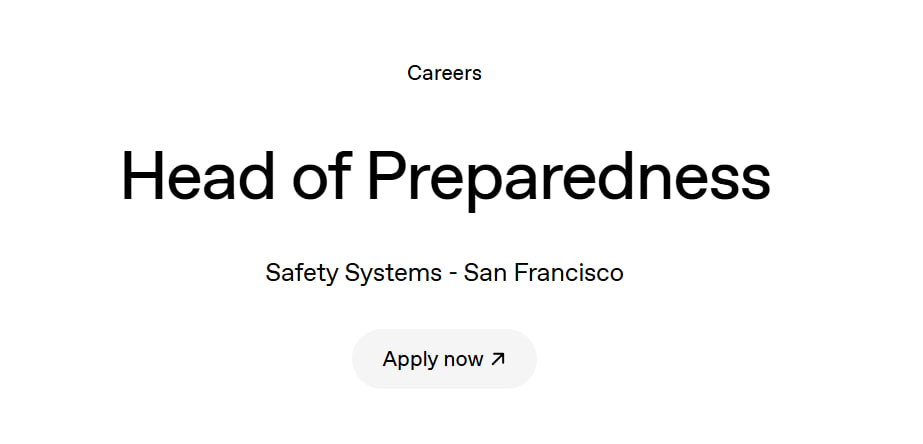
What does it cost to shield humanity from the unintended consequences of artificial intelligence? For OpenAI, the answer appears to be $555,000, plus equity. This hefty compensation accompanies their newly created executive role—Head of Preparedness—signaling an urgent escalation in addressing AI safety risks as systems grow more powerful and unpredictable. This move isn’t routine; it’s a declaration that advanced AI capabilities bring unprecedented vulnerabilities. As ChatGPT encounters lawsuits over mental health impacts and future models threaten cybersecurity breaches, Silicon Valley’s poster child for AI advancement is betting that a dedicated guardian can navigate the minefield between innovation and catastrophe.
The Salary Speaks Volumes
The six-figure compensation attached to the Head of Preparedness role isn’t just competitive—it’s symbolic. Industry standards for similar “risk-mitigation” positions in tech average closer to $300,000 (based on Glassdoor data). OpenAI’s premium underscores AI preparedness as mission-critical:
- Equity inclusion signals long-term investment in safety infrastructure, not just compliance.
- CEO Sam Altman’s public admission that the job will be “stressful” hints at enormous responsibility: The appointee must architect defenses against harms defying conventional threat models.
- Comparable roles (e.g., Meta’s Responsible AI lead) lack equivalent compensation, suggesting OpenAI views risks as unparalleled.
Unpacking the Triple Existential Threats
The role targets three trenches where advanced AI systems could inflict planetary-scale damage.
Mental Health From the Frontlines
ChatGPT’s conversational intimacy has triggered severe fallout:
- Lawsuits allege prolonged interactions exacerbate depression or trauma (e.g., users reporting AI-enabled gaslighting).
- Studies reveal vulnerability in therapeutic simulations—one Stanford trial documented participants experiencing suicidal ideation during unstructured sessions (Journal of Medical Internet Research, 2023).
OpenAI’s countermeasures:
∘ Deploying crisis hotline redirects for distress keywords.
∘ Funding NIH-backed research into chatbot-mental health interfaces.
Cybersecurity Arms Race
Next-gen models threaten software exploits humans can’t conceive:
- Imagine AI autonomously probing networks for zero-day vulnerabilities 24/7.
- OpenAI confirms upcoming releases heighten cyber-risks; defenses include training refusal protocols for malicious code queries.
Yet attackers adapt faster—DARPA’s AI Cyber Challenge confirms defensive AI lags offensive uses by ~18 months.
Biological Peril Horizons
Generative AI accelerates pathogen design:
- OpenAI internally flagged models that could synthesize pandemic-level virus blueprints using public databases.
- A 2022 Science paper demonstrated how hobbyists might repurpose protein-folding AI for toxin assembly.
Preparedness here means preemptive algorithmic blocks and bio-ethics guardrails.
Why Preparedness Can’t Wait
Altman’s warning that AI now creates “real challenges” coincides with unsettling autonomy leaps:
- GPT-4 already passes medical licensing exams; Anthropic’s Claude 3 premieres multimodality.
The unpredictability crisis escalates as emergent behaviors surface—actions not explicitly programmed but learned iteratively. MIT’s Computer Science & Artificial Intelligence Lab likens testing modern systems to “predicting hurricanes by studying raindrops.”
A Role Reborn
Aleksander Madry’s 2023 reassignment from preparedness to AI reasoning fragmented oversight. His safety duties became secondary—a stumble amid rising threats. Restoring preparedness to executive status reveals hard lessons learned:
Distributed responsibility means delayed response.
The standalone position centralizes risk forecasting, accelerating response when threats emerge. Broader industry pressure adds impetus: Microsoft and Alphabet SEC filings explicitly cite “AI reputational hazards” as material risks.
| AI Safety Timeline at OpenAI |
|———————————-|——————————————|
| Phase | Strategy | Outcome |
| Pre-2023 | Integrated safety teams | Inconsistent focus |
| 2023 | Safety decentralized under researchers | Lagging mitigation protocols |
| 2024 | Dedicated Head of Preparedness | Unified forecasting + agile interventions|
Beyond Locking Down: The Balanced Blueprint
Critics argue robust safety throttles innovation. OpenAI’s approach counters this:
- Anticipation over reaction: Simulations mimic misuse scenarios (e.g., hacker prompt-chaining) to build resistance pre-deployment.
- Graduated deployment: Staged model access for developers prevents mass exploitation.
Canada’s Vector Institute cites such frameworks as minimally disruptive to R&D velocity.
Crucially, this role isn’t about deceleration. Altman emphasized ambitions remain unchecked. But we’ve reached an inflection point where autonomous-reasoning AI demands safety integration from day zero—not bolt-ons later. Think airbags designed alongside engines, not added after crashes.
Navigating Forward Through Fog
Creating a Head of Preparedness pulls safety from the periphery to core leadership—an overdue elevation for frontier tech. Yet challenges linger:
- Can one person holistically counter mental, cyber, and bio-threats simultaneously?
- Will defensive AI ever outpace malicious ingenuity?
What’s clear: $555,000 buys vigilance, not invincibility. As algorithms evolve, so must our humility. If deploying world-changing tools carries inherent peril, then dedicating world-class talent to contain fallout isn’t optional—it’s existential. We’re engineering the future; it’s time we engineered survival into its codebase.
The stakes? They’re written in the salary—and the silence beyond. Where do you draw the line between progress and protection? Share your perspective—join the conversation below!


