
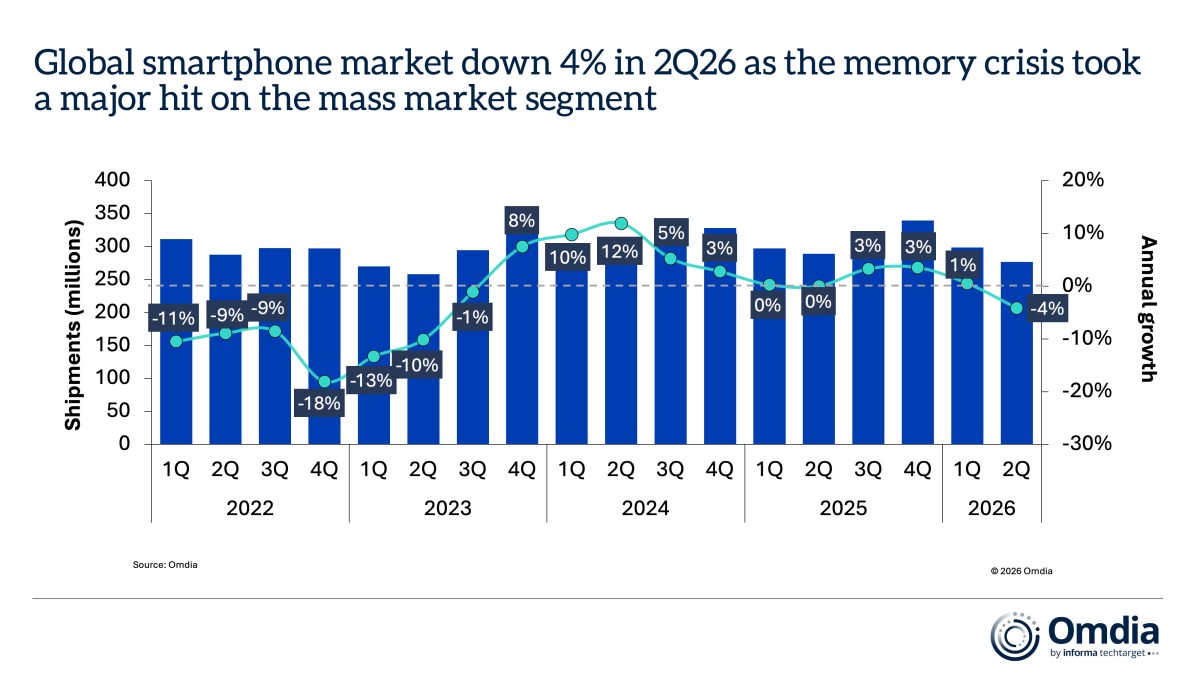
According to a new report from Omdia, global smartphone shipments fell 4% in the second quarter of 2026 (April to June) compared to the same period last year. The ongoing memory crisis is largely to blame, pushing up component costs and making devices more expensive.
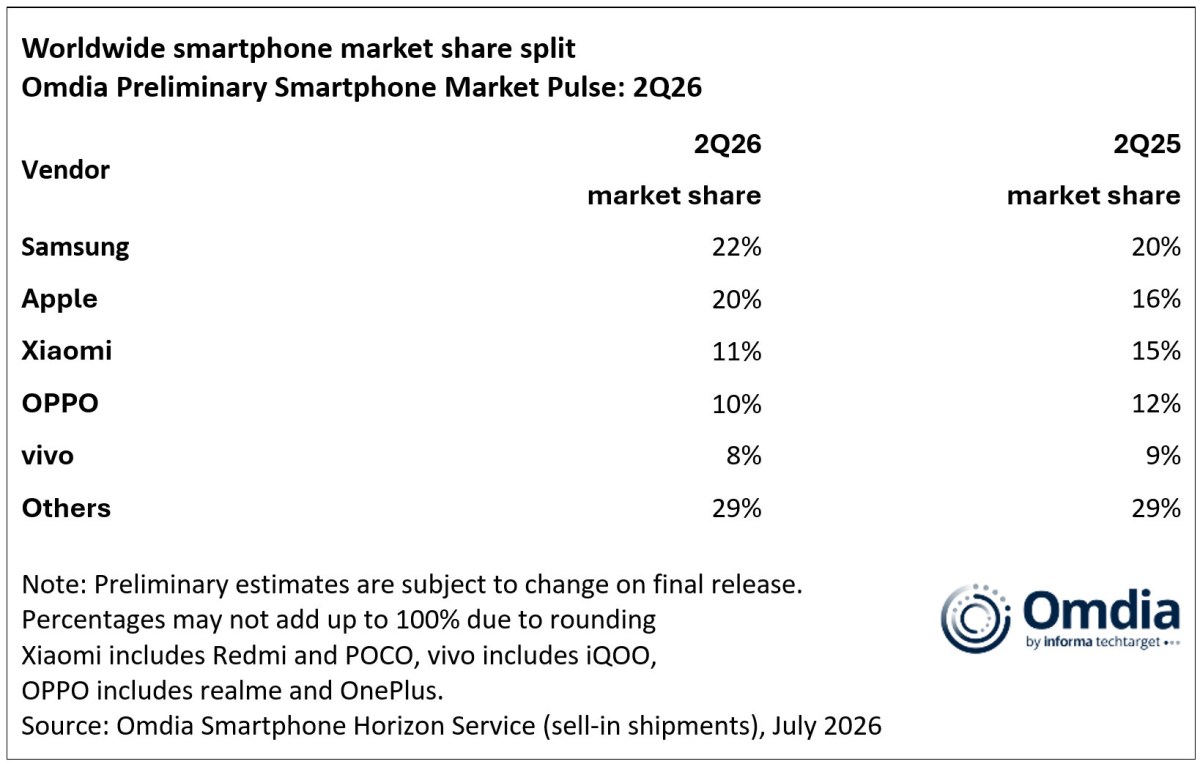
However, both Samsung and Apple managed to grow their market shares — Samsung went from 20% to 22%, while Apple climbed from 16% to 20%. Meanwhile, Xiaomi’s share dropped from 15% to 11%, Oppo’s from 12% to 10%, and vivo’s from 9% to 8%.
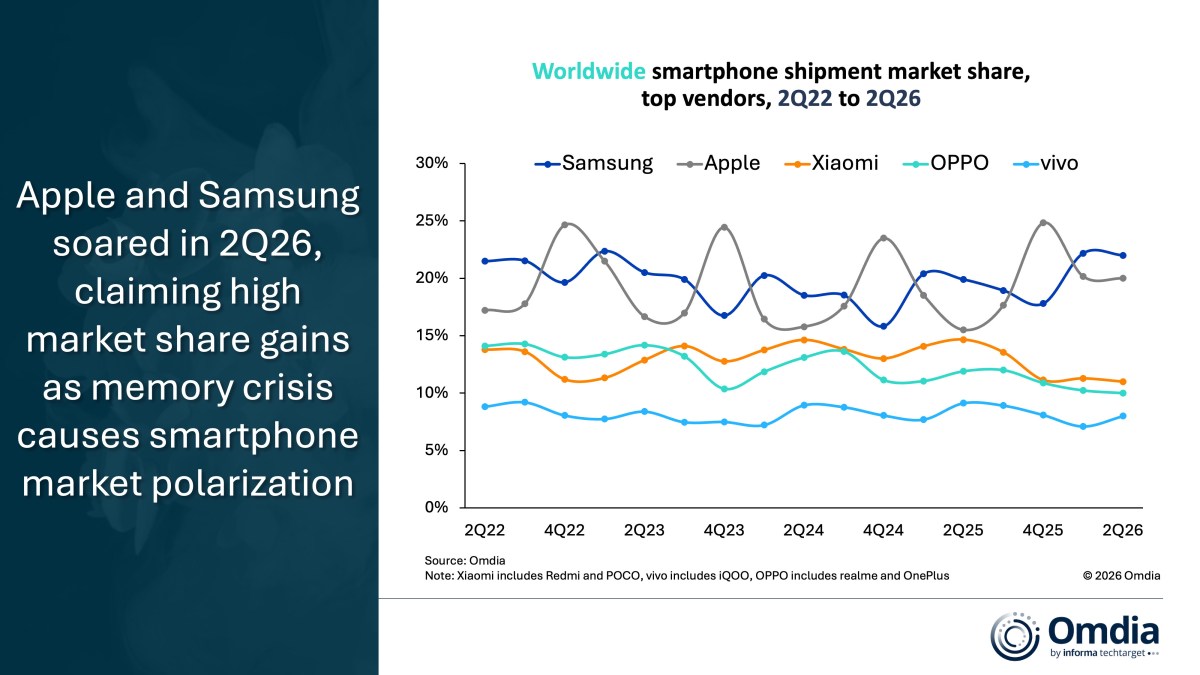
As you can see, Samsung still leads the pack and Apple is now a close second. The Korean company gained ground in the budget segment as its Chinese competitors reduced product lines and raised prices. Apple’s second quarter was the best in its history, thanks to the iPhone 17 series and the fact that it did not raise prices.
The price range that saw the biggest sales decline is under $400, “where supply constraints are tightest, profit margins are slimmest, and price sensitivity is highest,” according to Runar Bjorhovde, Omdia’s Research Analyst. Memory and storage alone now account for more than 60% of the bill of materials for budget devices and more than 30% for high-end models. Memory price declines are only expected to occur in the second half of next year, but prices are unlikely to return to pre-2025 levels even then.
Omdia expects the sharpest sales declines to hit in Q3 and Q4. Budget-constrained customers will have fewer and fewer choices as vendors lean further into higher price segments, forcing many “mass-market buyers” to delay purchases, lower expectations, use financing, or buy refurbished devices.


