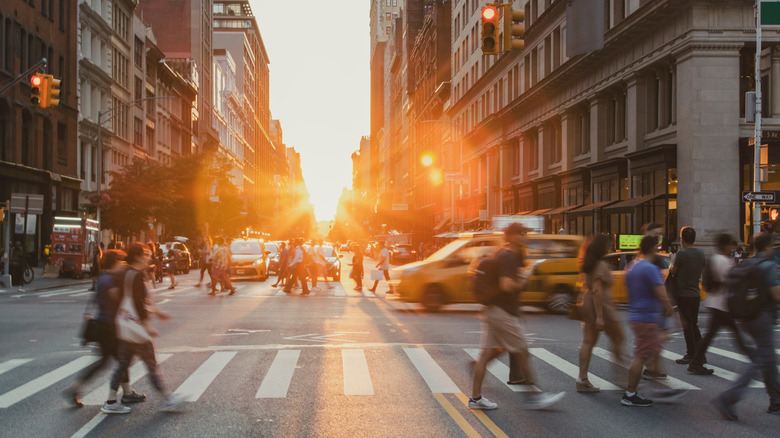

The Unseen Killers: How Everyday Road Designs Threaten Millions of New Yorkers
Picture this: You’re crossing a typical New York City street, perhaps rushing to work, picking up groceries, or walking your child to school. But what if the simple act of navigating an intersection could be unexpectedly deadly? A chilling reality faces nearly 3 million residents who live within just half a mile of one of New York City’s most perilous crossings. A comprehensive new study by Transportation Alternatives, Families for Safe Streets, and Open Plans has mapped 116 dangerous NYC intersections, each claiming at least five pedestrian fatalities since 2022 alone. Beyond the staggering numbers – representing profound personal tragedies – this study underscores a systemic crisis in urban design prioritizing vehicles over vulnerable road users. With daily life revolving around foot travel for countless New Yorkers, the identification of these deadly hotspots is a critical step, but it’s the lack of concrete action on proven solutions that fuels ongoing fear and frustration.
Mapping the Deadliest Crossroads: The Anatomy of Danger
The study paints a stark map of peril across the five boroughs. It quantified the death toll at specific junctions, moving beyond anecdote to hard data that demands action. The toll is highest at:
- Manhattan: West 120th Street & Lenox Avenue – 9 fatalities
- Queens: Northern Boulevard & 48th Street – 9 fatalities
- Brooklyn: Flatbush Avenue & Avenue H – 8 fatalities
- Bronx: Bruckner Boulevard & St. Ann’s Avenue – 8 fatalities
- Staten Island: Hunton Street & Richmond Road – 7 fatalities
These locations, often on major arterial roads designed for high-speed vehicle throughput, represent profound failures in prioritizing pedestrian safety. The sheer volume – 116 intersections meeting the deadly criterion – highlights that this is not isolated failure but a widespread hazard ingrained in the city’s infrastructure. Crucially, these aren’t remote locations. They are embedded within communities:
- High Pedestrian Activity: Residents rely on walking for essential activities – commuting, shopping, accessing schools and transit.
- Proximity Equals Risk: The statistic that nearly three million New Yorkers reside dangerously close to these lethal intersections exposes the vast scale of the threat.
- Vulnerable Groups: Children walking to school (over 1 million NYC students daily, as noted by Transportation Alternatives’ Ben Furnas), seniors, and low-income residents reliant solely on walking bear a disproportionate burden. Every fatal crossing impacts families and neighborhoods endlessly.
The Visibility Trap: How Parking Policies Create Blind Spots
The study doesn’t just chart the where; it identifies a critical why obstructing pedestrian safety: parking at intersections. Currently, NYC regulations typically permit vehicles to park right up to the curb cut, inches from the crosswalk. This isn’t merely an inconvenience; it creates deadly visibility blind spots, a phenomenon known globally as a leading contributor to pedestrian-vehicle collisions.
- Obstructed Lines of Sight: Parked vehicles, especially taller trucks and SUVs, form visual barriers.
- Pedestrians Hidden: People stepping into the crosswalk are invisible to approaching drivers until the last second.
- Drivers Blinded: Drivers cannot see crossing traffic (other vehicles, cyclists, pedestrians) until they are partially into the intersection themselves.
- Effectively, everyone – pedestrians and drivers – are navigating partial blindness.
- Increased Reaction Time Needed: With visibility severely restricted, the time required for a driver to perceive a hazard and react safely is dramatically reduced, directly increasing collision risk.
Research consistently supports the danger. A Columbia University study published in Traffic Injury Prevention highlighted close proximity parking significantly increased pedestrian crash risk. Globally, cities implementing solutions have seen dramatic safety improvements.
Daylighting: A Proven Solution Stuck in Political Gridlock
The antidote to this visibility crisis exists and is remarkably straightforward: daylighting. This urban design practice involves repurposing curb space near intersections to eliminate parking immediately adjacent to crosswalks. Intro 1138, the bill introduced to the NYC Council in December 2024, proposes mandating drivers cannot park within at least 20 feet of an intersection, creating clear sight lines. The benefits are well-documented:
- Eliminates Blind Spots: Creates unobstructed views for pedestrians and drivers approaching crossings.
- Lowers Crash Rates: Studies from San Francisco ([SFMTA Report]), Los Angeles, and international cities show significant reductions in pedestrian collisions post-implementation. For instance, Seattle reported a dramatic decline.
- Simpler Than Overhaul: Unlike costly infrastructure rebuilds, daylighting primarily requires strategic curb regulation and paint – a highly scalable intervention.
- Multi-Modal Benefit: Also improves visibility for cyclists and motorists navigating turns.
Despite its simplicity and proven track record, Intro 1138 remains tragically stalled:
- Political Paralysis: As of mid-2025 (a timeline inferable from the study’s “370 days without a vote” statement referencing Dec 2024 intro date), the City Council has not held a hearing in over 230 days and not called for a vote in over 370 days.
- Leadership Vacuum: The delay speaks volumes about prioritization. As Ben Furnas pointedly highlighted, over a million children cross hazardous intersections daily.
- Community Frustration: Organizations like Families for Safe Streets and Open Plans consistently rally for action, yet tangible progress remains elusive.
The juxtaposition is stark: detailed data identifying lethal threats affecting millions, paired with a clear, low-cost solution languishing without serious consideration. The daily toll underscores the human cost of this bureaucratic inertia.
Lifelines Ignored: Confronting Inequity in Street Safety
Effective pedestrian safety isn’t just about convenience; it’s a matter of fundamental equity and public health. Certain populations face heightened vulnerability:
- Children: Their small size makes them hard to see even without obstruction. Daylighting provides crucial extra visibility near schools and playgrounds. The city’s future relies on their safe movement.
- Seniors: Slower crossing times require ample visibility to compensate. Expecting other road users to yield appropriately often fails without clear sight lines.
- Low-Income Communities: Neighborhoods with fewer car owners disproportionately rely on walking, meaning dangerous intersections become unavoidable hazards in daily life. A Columbia University Mailman School of Public Health report emphasized this spatial inequality in transportation dangers. For example:
- Residents often traverse hazardous routes to reach essential services lacking safer alternatives.
- Lack of vehicle access may force reliance on dangerous paths regardless of risk.
Ignoring simple fixes like daylighting perpetuates these inequities. The stalled legislation represents a collective failure to protect the city’s most vulnerable residents. Basic safety should never be a privilege determined by zip code or economic status – yet the dangerous intersection map disproportionately zones risk onto specific communities.
The 116 intersections mapped by Transportation Alternatives represent hundreds of avoidable tragedies and countless near-misses endured by millions everyday. We know the deadly consequences of allowing vehicle parking to obscure critical crossing sight lines – the blind spots that turn routine commutes into fatal encounters. We possess the solution: implementing daylighting citywide through measures like Intro 1138 would demonstrably save lives without requiring vast expenditures. Yet, the stark contrast between this urgent need and the City Council’s baffling 370-day delay in even holding a vote signifies a profound disconnect. It elevates bureaucratic inertia over the immediate safety of children walking to school, seniors navigating their neighborhoods, and countless others. Every day without action commits thousands to navigating potential death traps. What will it take for New York City officials to value human lives over parking convenience? Join Transportation Alternatives in demanding action – the path to safer streets starts with holding our leaders accountable.


