
Will Multi-Kernel Linux Become a Reality? New Patches Spark Debate
Imagine a single server, not just running multiple applications, but running multiple independent Linux kernels simultaneously. Could this radical idea revolutionize resource allocation and performance? Patches for a multi-kernel architecture, allowing multiple independent kernel instances to co-exist on a single physical machine, have been proposed for the Linux kernel. While the concept is intriguing, its future remains uncertain, facing challenges from both technical complexities and competing proposals. This article delves into the details of these multi-kernel patches, exploring their potential benefits, the hurdles they face, and what this could mean for the future of Linux.
Exploring the Multi-Kernel Architecture for Linux
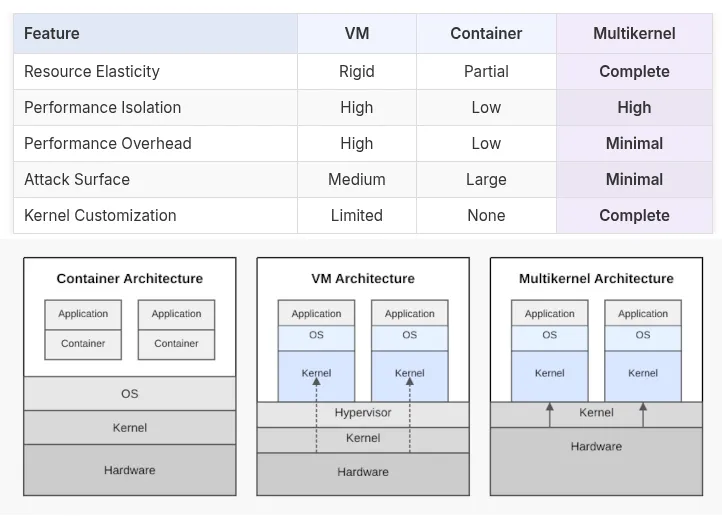
The idea behind a multi-kernel architecture is to enable the concurrent operation of multiple, independent Linux kernels on the same physical hardware. This differs significantly from traditional virtualization or containerization, where a single kernel manages all processes, albeit with varying degrees of isolation. The proposed patches, recently updated to version 2, aim to introduce this capability directly into the Linux kernel.
The Promise of Multi-Kernel: Improved Resource Utilization and More
The proponents of the multi-kernel approach highlight several potential advantages:
- Enhanced Resource Utilization: By assigning specific CPU cores to dedicated kernels, resources can be optimized for particular workloads. For example, a real-time (RT) kernel could manage time-sensitive tasks on one set of cores while a standard Linux kernel handles general-purpose applications on others.
- Performance Gains Over Containers: Unlike containers that share a single kernel, a multi-kernel system allows for true isolation and potentially less overhead, leading to improved performance for demanding applications. Containers still rely on the underlying kernel, whereas multiple kernels allows you to compartmentalize for tasks like Realtime processing.
- Improved Fault Isolation: If one kernel instance crashes, it should not affect the operation of other kernel instances, enhancing system stability and resilience. This is a crucial benefit in mission-critical environments.
- Specialized Kernel Configurations: Different kernel instances can be configured with different parameters and modules optimized for specific tasks. This allows for greater flexibility and customization compared to a single kernel.
To further illustrate the potential benefits, consider the following example:
A large-scale data center might utilize a multi-kernel system to:
- Run a high-performance database on a kernel instance optimized for memory management and I/O throughput.
- Execute web servers on another kernel instance tuned for network performance and security.
- Dedicate a real-time kernel instance to handle critical monitoring and control tasks with minimal latency.
This separation of concerns can lead to improved performance, stability, and security compared to running all these workloads on a single kernel.
Technical Details of the Proposed Patches
The v2 patches introduce several key components:
- Generic Multi-Kernel Physical Memory Allocations: Mechanisms for allocating physical memory to individual kernel instances.
- Per-Instance Virtual Memory Allocations: Allows each kernel instance to have its own virtual memory space, providing isolation and security.
- Kernfs Interface: A file system interface for managing kernel instances, allowing for control and monitoring of individual kernels.
- Device Tree and Kernel Handover (KHO) Framework: A framework for managing and sharing resources, such as devices, between kernel instances. This is crucial for allowing the various kernels to interact with hardware.
- Messaging via IPI (Inter-Processor Interrupts): A mechanism for communication between kernel instances.
- Reorganized and Improved Patches: Reflecting feedback from the community and addressing initial concerns.
Challenges and Competing Proposals: The Road Ahead
Despite the potential benefits, the multi-kernel approach faces several challenges:
- Complexity: Implementing and maintaining a multi-kernel architecture is inherently complex, requiring significant modifications to the Linux kernel. This complexity can increase the risk of bugs and security vulnerabilities.
- Community Acceptance: Gaining widespread acceptance from the Linux kernel development community is crucial for the success of any major new feature. Initial reactions to the multi-kernel patches were mixed, with some developers expressing skepticism about its necessity and complexity.
- Bytedance’s “Parker” Proposal: As mentioned earlier, Bytedance independently proposed a similar multi-kernel architecture called “Parker” around the same time. This competition adds another layer of complexity to the situation. It raises questions about which approach will ultimately gain traction and whether the two projects can be merged or integrated.
- Demonstrating Clear Advantages: The proponents of the multi-kernel architecture need to convincingly demonstrate its advantages over existing virtualization and containerization technologies. This requires rigorous benchmarking and real-world use cases.
How does it compare to containers and VMs?
To better understand the potential of multi-kernel architectures, it’s crucial to compare them with existing technologies:
| Feature | Containers (e.g., Docker) | Virtual Machines (VMs) | Multi-Kernel |
|---|---|---|---|
| Kernel Sharing | Shared | Emulated/Virtualized | Independent Kernels |
| Resource Isolation | Limited | Strong | Strong |
| Performance Overhead | Low | High | Potentially Lower than VMs |
| Boot Time | Seconds | Minutes | Seconds/Faster |
| Security | Lower | Higher | Potentially High |
| Complexity | Lower | Moderate | Higher |
Containers: Offer lightweight virtualization by sharing the host operating system’s kernel. This leads to lower overhead and faster startup times but provides limited isolation and security compared to VMs. Think of containers as sharing the same hotel room (the kernel) but having separate compartments for your belongings.
Virtual Machines: Provide full virtualization, emulating an entire operating system (including the kernel) on top of the host operating system. This offers strong isolation and security but incurs higher overhead and slower startup times. VMs are like having your own separate hotel room, complete with its own bathroom and amenities.
Multi-Kernel: Aims to bridge the gap between containers and VMs by providing strong isolation with potentially lower overhead than VMs. By running multiple independent kernels, it offers a balance between performance and security. This is like having multiple connected rooms in a hotel, each with its own dedicated resources and management.
Potential Use Cases for Multi-Kernel Linux
Beyond the data center example mentioned earlier, the multi-kernel architecture could find applications in various domains:
- Embedded Systems: Running separate kernels for real-time control, networking, and user interface tasks.
- Automotive: Isolating critical safety-related functions from infotainment systems.
- Networking: Optimizing network performance by dedicating a kernel instance to packet processing.
- Security: Creating isolated environments for sensitive applications or malware analysis.
Conclusion: A Promising but Uncertain Future
The proposed multi-kernel architecture for Linux represents a significant departure from traditional kernel design. While it offers the potential for improved resource utilization, performance, and fault isolation, it also faces significant challenges in terms of complexity, community acceptance, and competition from alternative solutions. The v2 patches represent a step forward, but the road ahead is long and uncertain. Whether this innovative approach will ultimately find its way into the mainline Linux kernel remains to be seen.
What are your thoughts on the multi-kernel approach? Do you see a potential for it in your own environment? Share your opinions in the comments below!
Sources & Further Reading:
Original article at www.phoronix.com


