
Decoding the Silent Symphony: Brain-Computer Interfaces and Inner Speech
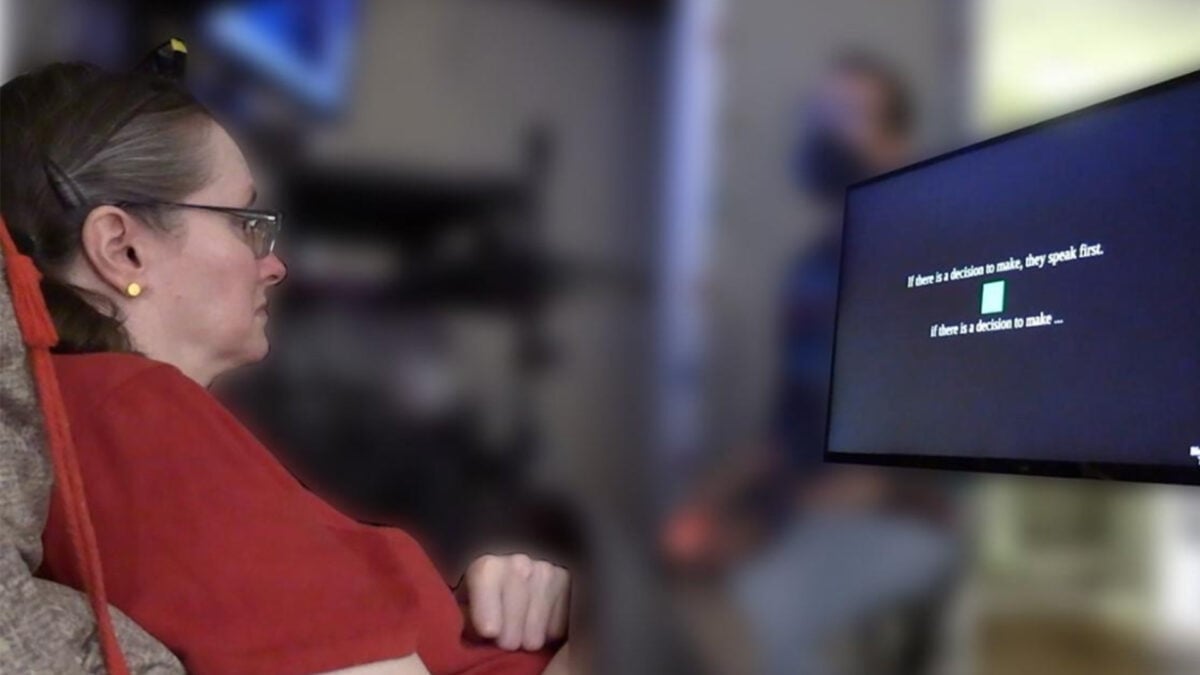
Imagine a world where your thoughts, even unspoken, could be translated into words. Scientists are moving closer to making this a reality. A groundbreaking study reveals the ability to decode inner speech using brain-computer interfaces (BCIs) with an accuracy of up to 74%. This breakthrough, published in Cell, offers immense hope for individuals with severe paralysis, potentially restoring their ability to communicate naturally and effortlessly. The implications of decoding inner monologue are profound, opening new avenues for communication and control for those who have lost the ability to speak.
Unlocking Silent Voices: The Science Behind Decoding Inner Speech
This revolutionary research, conducted at Stanford University, marks a significant leap forward in the field of BCIs. It delves into the complex realm of inner speech, the silent dialogue we have with ourselves constantly. Previous BCI efforts focused on decoding attempted speech, where the physical act of trying to speak triggered brain activity that could be interpreted. However, this approach can be tiring and ineffective for individuals with limited muscle control. This new study, therefore, tackles the more challenging task of directly decoding inner speech.
How Does it Work? Mapping the Motor Cortex and Imagined Speech
The researchers employed a sophisticated methodology to achieve their results. Microelectrodes were surgically implanted into the motor cortex of four participants who had severe paralysis due to conditions like ALS (Amyotrophic Lateral Sclerosis) or brainstem stroke. The motor cortex is the region of the brain responsible for controlling voluntary movements, including those involved in speech.
The study revealed that both attempted and imagined speech activate similar patterns of brain activity within the motor cortex, although these patterns are not identical. This crucial finding allowed the researchers to train an artificial intelligence (AI) model to recognize and interpret the signals associated with imagined speech.
- Data Acquisition: Microelectrodes record neural activity in the motor cortex during imagined speech.
- Signal Processing: The recorded data is processed to remove noise and isolate relevant signals.
- AI Model Training: An AI model learns to correlate specific neural patterns with imagined words or sentences.
- Decoding: The trained model decodes new neural activity in real-time, translating imagined speech into text.
Accuracy and Vocabulary: Current Capabilities and Future Potential
The AI model was trained on a vocabulary of up to 125,000 words, showcasing the potential for complex and nuanced communication. Impressively, the system achieved a decoding accuracy of up to 74%. While this is a significant achievement, the researchers acknowledge that errors still occur. Further advancements in recording technology and AI algorithms are expected to improve accuracy in the future.
Accuracy of Inner Speech Decoding:
- Current Accuracy: Up to 74%
- Vocabulary Size: Up to 125,000 words
- Potential Improvements: More sensitive recording devices, advanced AI algorithms
Beyond Intentional Communication: Capturing Unprompted Thoughts
One of the most fascinating aspects of the study is the system’s ability to pick up on unprompted inner thoughts. For instance, the system accurately detected when participants were silently counting numbers during a task. This suggests that the BCI can tap into a broader spectrum of cognitive processes beyond consciously formulated speech.
This capability raises ethical considerations regarding privacy and control. What happens when the BCI inadvertently decodes thoughts that the user doesn’t intend to communicate?
Privacy and Control: Implementing a “Password” for Inner Thoughts
Addressing these concerns, the researchers developed a mechanism to provide users with a degree of control over what is decoded. They implemented a “password” system, where the BCI would only decode inner speech if the participant consciously thought of the designated password (e.g., “chitty chitty bang bang”). The system recognized this password with remarkable accuracy, exceeding 98%.
This password mechanism is a crucial step towards ensuring that users have agency over their inner thoughts and can prevent unwanted decoding. It highlights the importance of incorporating user control and privacy considerations into the design of BCIs.
BCI Technology: A Comparative Look at Existing Methods
Before this breakthrough, BCIs primarily focused on decoding attempted speech or controlling external devices through brain activity. Let’s examine how this new approach compares to existing BCI technologies:
| Feature | Attempted Speech Decoding BCI | Inner Speech Decoding BCI |
|---|---|---|
| Input | Brain activity associated with trying to move speech muscles | Brain activity associated with imagined speech |
| Effort | Can be physically exhausting for individuals with limited control | Requires less physical effort |
| Accuracy | Varies depending on the individual and technology | Currently up to 74%, with potential for improvement |
| Target Population | Individuals with some residual muscle control | Individuals with severe paralysis, including those unable to attempt speech |
| Naturalness | Less natural due to the effort involved | Potentially more natural and fluid |
This table illustrates the potential advantages of inner speech decoding BCIs, particularly for individuals who cannot physically attempt to speak. While the current accuracy is lower than some attempted speech decoding systems, the reduced physical burden and potential for more natural communication make it a promising avenue for future research.
Ethical Considerations and the Future of Brain-Computer Interfaces
The ability to decode inner speech raises a number of ethical considerations that need careful attention:
- Privacy: How do we protect the privacy of individuals using BCIs, ensuring that their thoughts are not accessed without their consent? The “password” system is a step in the right direction, but further safeguards may be needed.
- Autonomy: To what extent should BCIs be able to influence an individual’s thoughts or actions? It’s crucial to maintain user autonomy and prevent BCIs from being used for manipulation or control.
- Accessibility: How can we ensure that BCI technology is accessible to all who could benefit from it, regardless of their socioeconomic status or geographical location?
- Bias: Ensuring the AI models are trained on diverse data sets to prevent biases in decoding accuracy based on gender, race, or other factors.
Despite these ethical considerations, the future of BCIs is undeniably bright. As Frank Willett, assistant professor in the department of neurosurgery at Stanford, stated, this work “gives real hope that speech BCIs can one day restore communication that is as fluent, natural, and comfortable as conversational speech.” Continued research and development in this area hold the potential to transform the lives of countless individuals with severe speech and motor impairments.
Conclusion: A New Era of Communication
The ability to decode inner speech represents a monumental achievement in neuroscience and engineering. This breakthrough offers a glimmer of hope for individuals with severe paralysis, potentially restoring their ability to communicate and interact with the world in a more natural and meaningful way. While challenges remain in terms of accuracy, privacy, and ethical considerations, the rapid pace of technological advancement suggests that these hurdles can be overcome. The silent symphony of our inner thoughts is slowly being translated into a language that the world can understand, ushering in a new era of communication and connection.
What do you think about the potential of decoding inner speech? Share your thoughts in the comments below!
Sources & Further Reading:
Original article at gizmodo.com


