
Is Microsoft’s Gaming Copilot a Helpful Sidekick or an Annoying Nuisance?
Are you ready for AI to guide you through your favorite games? Microsoft certainly hopes so. With the sunsetting of Windows 10 and the rise of AI integration across their platforms, the tech giant is pushing its Copilot AI into the gaming world. But is this a game-changer for players, or is it destined to become an intrusive, unhelpful distraction? Let’s delve into the reality of Microsoft’s Gaming Copilot and explore whether it enhances or detracts from the gaming experience.
The Promise and Peril of AI in Gaming: Exploring Microsoft’s Gaming Copilot
Microsoft’s foray into AI-assisted gaming is embodied in the Gaming Copilot, currently in beta and integrated into the Xbox Game Bar. The core idea is to provide real-time assistance, answer questions, and offer guidance within games, all without requiring the player to exit the game. This seems appealing on the surface. Stuck on a puzzle? Need help finding a specific item? Copilot aims to be your digital guide. However, the current implementation raises serious questions about its usefulness and potential drawbacks.
First Impressions of Gaming Copilot: More Obvious Than Helpful
Early reviews and demonstrations paint a picture of an AI that often states the obvious. For example, in a demo of Final Fantasy XVI, the AI pointed out that the quest objective was “right down the stairs,” despite the player clearly seeing it. This kind of interaction raises concerns that Copilot is underestimating gamers’ intelligence and potentially insulting their abilities.
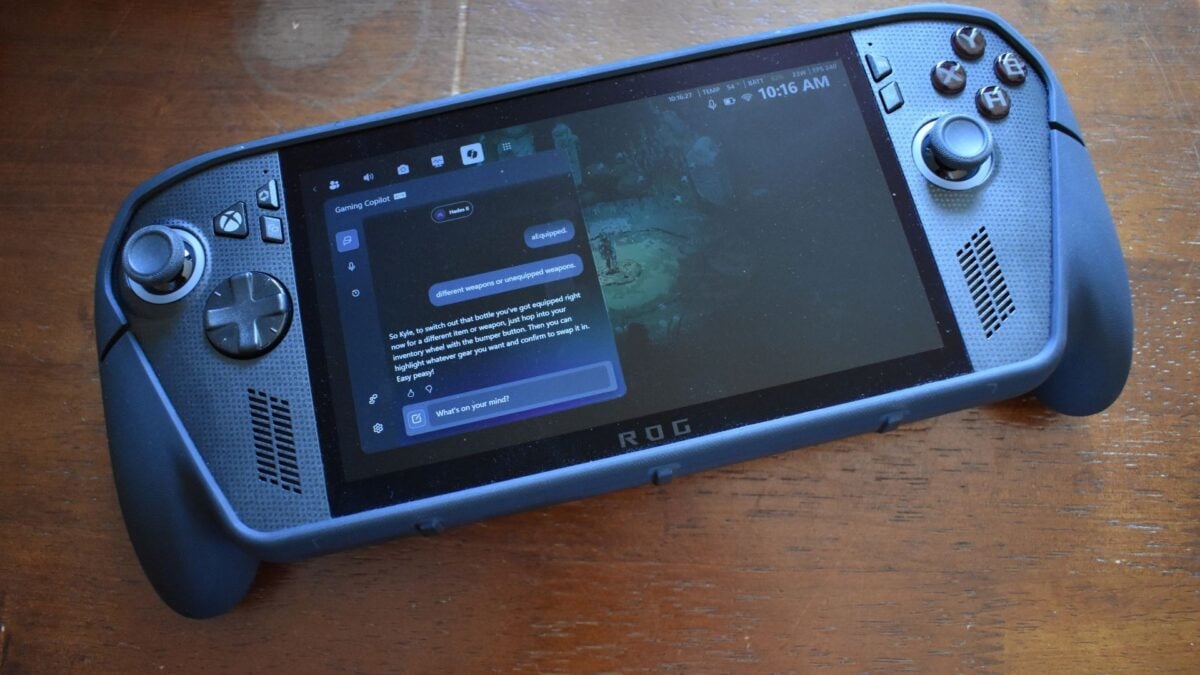
The Asus ROG Ally X and the Gaming Copilot Beta
The Gaming Copilot beta is a defining feature of devices like the Asus ROG Ally X, a handheld gaming PC. Users can access Copilot through the Xbox Game Bar and interact with it via voice or text. You can even customize the voice, though the “wise” option is described as more lethargic than insightful, and the “heroic” option is essentially just a British accent.
One user’s experience with Hades II highlighted the AI’s limitations. When asked how to acquire “Kudos,” a resource for upgrading the camp, Copilot correctly stated that completing more runs was necessary. However, it failed to mention that Kudos can also be obtained by selling items to the Wretched Broker, missing a key piece of information readily available within the game.
The Problem with Hand-Holding: Sacrificing Discovery in Gaming
One of the most significant concerns with Gaming Copilot is its potential to diminish the sense of discovery inherent in many games. The joy of exploring virtual worlds, solving puzzles independently, and uncovering hidden secrets is a core part of the gaming experience. Over-reliance on AI assistance could rob players of these rewarding moments.
- Breaking Immersion: Pausing the game to ask Copilot for help disrupts the flow and immersion, pulling players out of the experience.
- Undermining Game Design: Well-designed games guide players organically through their worlds. Using AI to bypass these carefully crafted systems undermines the work of game developers.
- The Uncharted 4 Example: A classic example of organic game design is found in Uncharted 4: A Thief’s End. During a truck chase sequence, players can choose various paths to reach the same destination. This freedom of choice is what makes the experience engaging. If a player were to ask Copilot “How do I get to the bottom?”, it would nullify the creative freedom offered by the game’s design.
The real risk is that Gaming Copilot becomes a crutch, hindering players’ ability to learn and adapt within game environments.
Gaming Copilot’s Confident Lies and Incorrect Advice
Perhaps the most troubling aspect of Gaming Copilot is its tendency to provide inaccurate information with unwavering confidence. One user recounted asking Copilot how to swap weapons in Indiana Jones and the Great Circle. The AI incorrectly stated that an “item wheel” was accessible via the bumper button when, in reality, the game uses the D-pad. Similarly, it gave wrong advice on leaning around corners.
This unreliability undermines the AI’s credibility and makes it difficult for players to trust its guidance. Imagine relying on Copilot for crucial information during a challenging boss fight only to receive incorrect instructions.
Limitations in Settings Adjustments and Optimization
One area where AI could genuinely benefit PC gamers is in optimizing settings for performance. Tweaking graphics settings to achieve the best balance between frame rate and visual quality can be a tedious process. Unfortunately, Gaming Copilot is not yet capable of handling this task effectively.
One user had a lengthy conversation with Copilot about optimizing Indiana Jones and the Great Circle on the ROG Ally X. The AI’s ultimate advice was to lower the graphics to medium, set the TDP to “Turbo,” and reduce the resolution to 720p. This was demonstrably bad advice, as the user was already achieving a stable 40fps at 1080p.
| Feature | Copilot’s Advice | Actual Optimal Setting |
|---|---|---|
| Graphics Quality | Medium | High |
| TDP | Turbo | Balanced |
| Resolution | 720p | 1080p |
This example highlights the current limitations of Gaming Copilot and its inability to provide tailored recommendations based on specific hardware configurations and game requirements.
The Future of Gaming Copilot: Potential and Possibilities
Despite its current shortcomings, the Gaming Copilot is still in beta, and there’s room for improvement. Microsoft is actively working on Copilot Actions, an app that can perform tasks on the PC on the user’s behalf. If Microsoft can leverage this technology to enable Copilot to adjust in-game settings automatically, it could become a valuable tool for optimizing performance.
The Ideal Future Copilot could:
- Suggest optimal graphics settings based on hardware.
- Automatically adjust resolution and frame rate for smooth gameplay.
- Provide contextual hints and tips without spoiling the game.
- Offer tutorials for complex mechanics.
Ultimately, the goal should be to alleviate the tedious aspects of PC gaming and empower players to focus on the fun.
Conclusion: A Work in Progress with Potential, but Not Quite There Yet
Microsoft’s Gaming Copilot is an ambitious project with the potential to revolutionize the way we play games. However, in its current beta form, it falls short of its promise. Its tendency to state the obvious, provide inaccurate information, and fail to optimize settings effectively makes it more of a distraction than a helpful tool. The danger of undermining the sense of discovery and creativity in games is a serious concern.
While the idea of an AI assistant that can optimize settings and provide contextual help is appealing, Gaming Copilot needs significant improvements before it can truly enhance the gaming experience. For now, it’s best to approach Gaming Copilot with cautious optimism.
What do you think about the integration of AI into gaming? Share your thoughts and concerns in the comments below!
Sources & Further Reading:
Original article at gizmodo.com


