
Remember That Irritating Paperclip? Microsoft Bets on a Blobby Sequel
Have you ever felt a pang of nostalgia (or annoyance) thinking about Microsoft Clippy, the famously intrusive virtual assistant? Microsoft’s track record with AI avatars hasn’t been stellar—remember the ambitious Cortana, largely shelved due to tepid adoption? Now, a new bubbly character named Mico, riding the wave of generative AI via Copilot, aims to rewrite history. Positioned not just as a tool but as a conversational companion derived from Microsoft Copilot itself (hence the name “Mico”), this expressive blob signals Microsoft’s renewed push to make AI interaction genuinely engaging. Will Mico succeed where its predecessors stumbled, or become another quirky footnote? The tech giant is gambling that personality, personalization, and a “computer you can talk to” strategy will finally unlock mainstream love for its virtual helpers.
From Clippy to Cortana: Microsoft’s Checkered History with Virtual Assistants
Microsoft’s journey with animated AI guides is paved with mixed results. The journey began with Clippy, the iconic (and often detested) paperclip assistant bundled with late-90s versions of Microsoft Office. While technologically primitive by today’s standards, Clippy pioneered the concept of an anthropomorphized digital helper, often interrupting users with unsolicited advice. Studies analyzing user reactions to Clippy, like those archived in the Human-Computer Interaction Institute repository, frequently cite its intrusive nature and lack of contextual smarts as primary reasons for its failure. Clippy’s legacy serves as a crucial reminder to Microsoft: users dislike interruptions and crave relevance.
Cortana, launched with significant fanfare in 2014 as a Siri and Google Assistant competitor, promised a sophisticated, voice-activated digital assistant deeply integrated into Windows. However, despite a beloved namesake from the Halo universe, the reality fell short:
- Limited Ecosystem Integration: Cortana struggled to match the deep integration Google Assistant achieved within Android or Siri within Apple’s ecosystem.
- Disjointed Strategy: Shifting focus between productivity tasks, smart home control, and general search led to an unclear value proposition. According to Statista data, Cortana’s market share consistently lagged behind competitors by significant margins.
- User Frustration: Common complaints included misinterpreted voice commands and inconsistent usefulness across devices.
Cortana’s virtual embodiment finally vanished, transitioning into a behind-the-scenes productivity tool. This history underscores the difficulty Microsoft has faced in creating an AI companion users genuinely embrace.
Mico Unveiled: Copilot’s Animated Personality Arrives
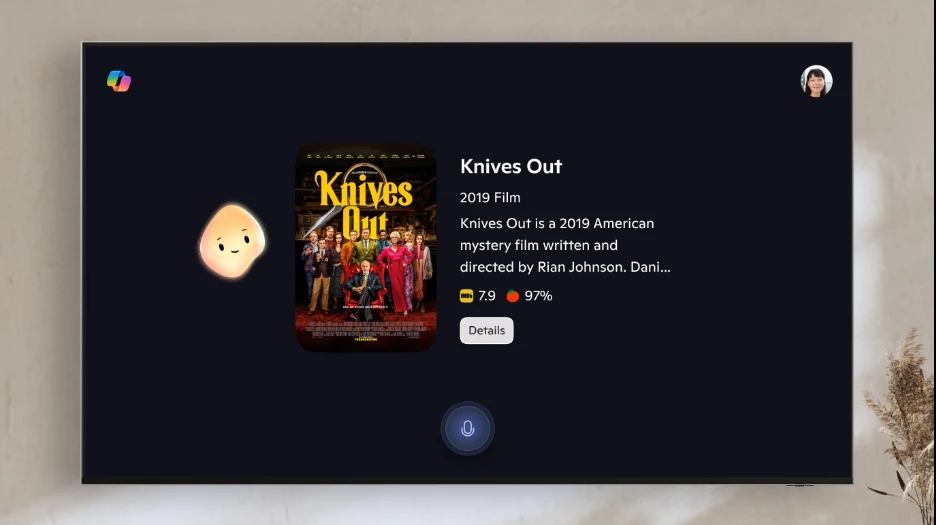
Emerging as the visual embodiment of Copilot’s powerful voice interaction mode, Mico is Microsoft’s latest attempt at a relatable AI interface. It’s not a standalone service but an avatar layer designed to make talking to Copilot more tangible and engaging. Currently accessible mainly in the U.S. via Copilot Voice mode on various platforms like the web, specific Windows builds, and select Samsung displays, Mico’s core promise is warmth and personality. Key characteristics include:
- An Expressive Silicone-Like Blob: Visually distinct and avoiding complex human-like features, Mico shifts colors, animates fluidly, and reacts dynamically to user interactions, aiming for approachability over realism. A 2023 study by Stanford researchers on human-AI interaction found that abstract characters can often evoke more positive affective responses than hyper-realistic ones, important for reducing the uncanny valley effect.
- Personalization Designed for Connection: Microsoft AI CEO Mustafa Suleyman emphasizes Mico’s role as an “AI companion” that learns and adapts. Utilizing Copilot’s “memory” capabilities, it personalizes interactions over time. Jacob Andreou, VP of Product and Growth, explicitly credits Clippy’s legacy: “Clippy walked so that we could run.“
- “Learn Live” – Beyond Simple Answers: Mico integrates Copilot’s ability to not only answer questions but also explain concepts conversationally through features like the upcoming “Learn Live” mode, moving beyond simple outputs to interactive learning.
Comparison: Microsoft’s Evolution of AI Characters
| Feature | Clippy (1997-2007) | Cortana (2014-2023) | Mico (2024-) |
| :——————– | :—————– | :———————- | :——————– |
| Core Technology | Rule-based scripts | Primitive AI/Voice Commands | Generative AI (Copilot) |
| Embodiment | Static cartoon | Voice-First/Circles | Animated Color-Shifting Blob |
| Primary Interaction| Pop-up interruptions | Voice/Text Commands | Voice-Driven Conversation |
| Key Goal | Offer Office help | Digital Assistant | AI Companion & Teacher |
| Customizability | Minimal | Limited Skills/Look | Personality/Behavior |
| Critical Flaw | Intrusive & Clueless| Lack of Integration/Utility | Yet to be Determined |
The Psychology Behind the Blob: Can Personality Drive AI Adoption?
Microsoft’s investment in Mico isn’t arbitrary; it taps into fundamental principles of human-computer interaction (HCI). The key hypotheses driving Mico’s development include:
- Anthropomorphism Fuels Comfort: By giving Copilot a responsive, non-threatening face (even abstract), Microsoft aims to reduce the friction of talking to an invisible AI. Research from MIT Media Lab shows that even minor anthropomorphic traits (like expressions or variable color) increase perceived helpfulness and trust.
- Emotion Enhances Learning: Mico’s reactivity isn’t just cute; it’s designed to make interactions feel conversational. The “Learn Live” mode leverages this. As Copilot explains concepts, Mico’s animations aim to reinforce understanding and make the process less sterile, aligning with pedagogical principles of affective state supporting learning (see research on Affective Tutoring Systems).
- Companionship Beyond Utility: Microsoft hopes Mico fosters attachment, recalling characters like Tamagotchi. If users form a para-social bond—where they perceive the character as having feelings or a personality—they might engage more frequently and deeply. Journal publications on Human-Robot Interaction document how simple, expressive virtual characters can evoke nurturing behaviors in users, even when they know they’re dealing with AI.
The gamble lies in whether these relatable AI experiences translate beyond novelty. Does a charming blob actually make Copilot significantly more useful, or is it merely dressing?
The Stakes for Microsoft: Why Mico Isn’t Just a Gimmick
Mico’s launch isn’t merely a quirky experiment; it represents a crucial strategic pivot for Microsoft within the fiercely competitive AI assistant landscape. Here’s why:
- Combating Voice Assistant Fatigue: Standard voice interactions (a la Alexa or early Siri) often feel transactional and impersonal. Mico aims to differentiate Copilot by offering a uniquely engaging AI assistant, making the interaction feel less like commanding a device and more like conversing.
- Embedding Copilot Everywhere: Mico is already appearing on Samsung TVs and monitors. As Microsoft pushes Copilot as the ubiquitous AI layer across Windows, Edge, Office, and third-party hardware, a consistent, recognizable visual anchor like Mico helps solidify Copilot’s brand identity far more effectively than a disembodied voice or a logo. This echoes branding successes like Slack’s vibrant UI or Android’s candy-themed updates.
- Driving Adoption Beyond Early Tech Adopters: For generative AI assistants to truly go mainstream, they need bridges beyond power users comfortable with command-line prompts. Mico’s visual friendliness lowers the barrier for everyday users intimidated by raw AI text streams.
- Avoiding Cortana’s Fate: Crucially, Mico rests on the more advanced Copilot infrastructure, offering tangible AI capabilities Cortana lacked (writing, summarizing, explaining, browsing the web). The character enhances the underlying power, but the utility needs to exist first. Andreou’s “Clippy walked so we could run” quote recognizes they need both solid tech and engaging delivery this time.
Key Risks: Yet challenges loom: is Mico distracting? Will users find its animations irritating over time? Privacy-conscious users might question giving personality to an AI with access to potentially sensitive data. Most importantly: Will Microsoft maintain focus and avoid the strategic drift that doomed Cortana?
Giving Mico a Chance: The Verdict is in Your Voice
Microsoft’s introduction of Mico reveals a clear vision: the future of AI interaction blends potent intelligence with relatable personality. Building on the cautionary tales of Clippy’s intrusiveness and Cortana’s unfilled promise, Mico isn’t just a cute add-on—it leverages Copilot’s real-time intelligence and memory features towards the goal of a truly conversational AI partner. The core questions facing Redmond are significant: Can an expressive, color-changing companion overcome users’ inherent resistance to chatty interfaces? Does personality genuinely translate into utility, trust, and regular use? Will Mico reduce the friction of interacting with complex AI for a mainstream audience, thereby unlocking Copilot’s full potential?
Microsoft has built the blob; the market will decide its social graces. Mico is live in the U.S., ready (and subtly animated) for you to test. Fire up Copilot Voice, say hello to that blobby avatar, and see for yourself: does it elevate your AI interaction, or fade into digital background noise? Is this the companion that finally sticks? Tell us your first impressions below!


