
The Bloodthirsty Secret: When Male Mosquitoes Break All the Rules
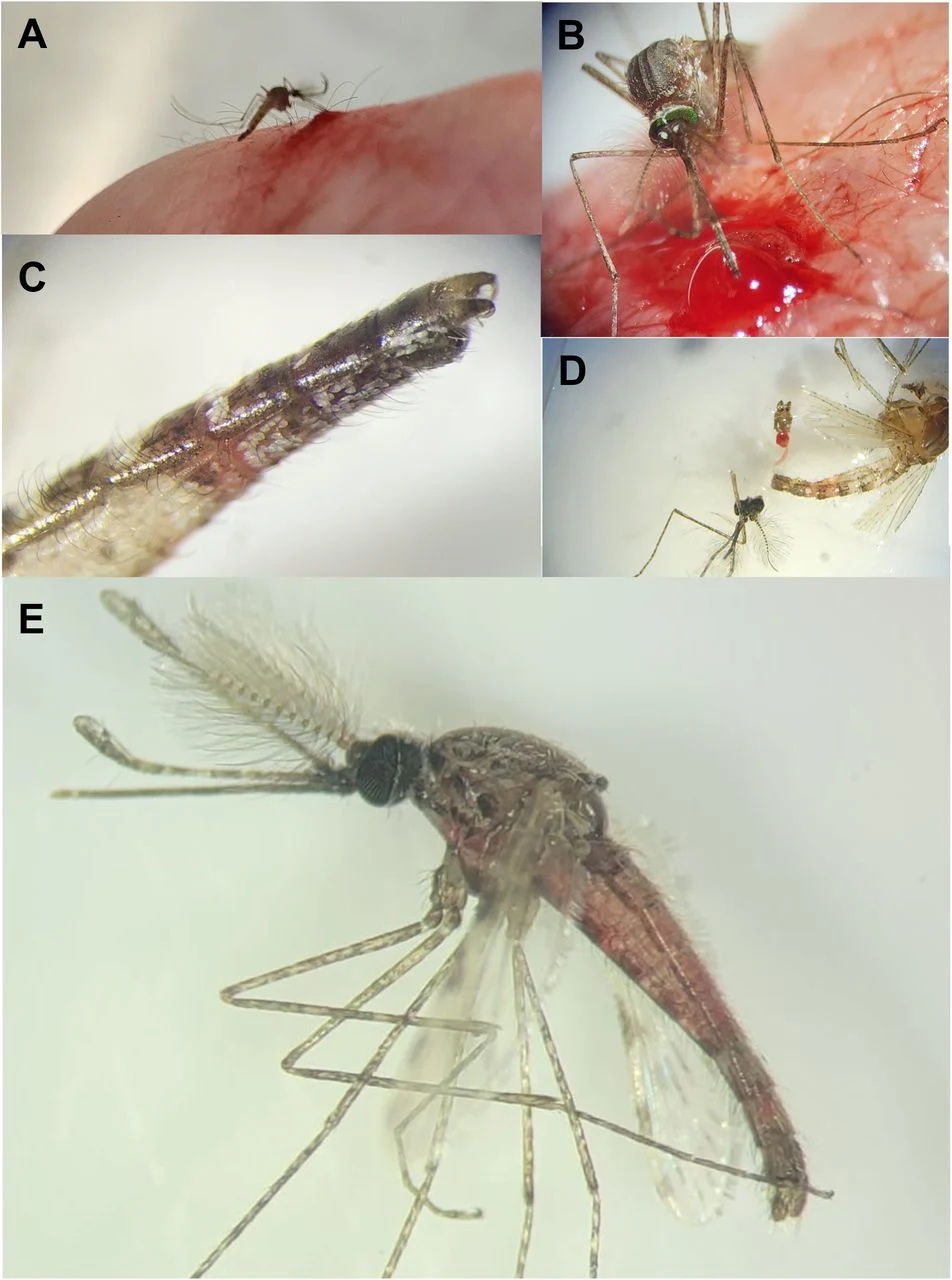
For centuries, entomology textbooks declared an ironclad rule: only female mosquitoes drink blood. But what if this foundational belief is fundamentally flawed? Groundbreaking research led by Penn State University reveals that male mosquitoes can—and do—feed on human blood under specific conditions, particularly dehydration. Published as a preprint on bioRxiv, this discovery emerged from an accidental lab observation that snowballed into an international investigation across five mosquito species. The findings upend our understanding of mosquito biology and suggest unexpected risks in disease transmission. If males contribute to spreading pathogens like West Nile virus, it could reshape global strategies for combating mosquito-borne diseases.
The Accidental Discovery That Rewrote Entomology
It began when a graduate student noticed male mosquitoes feeding during routine blood experiments—a phenomenon dismissed as impossible. Lead researcher Jason Rasgon remembered a 2016 study where Culex males died after blood feeding, but his team witnessed something astonishing: their blood-fed males survived as long as sugar-fed ones. This led to systematic dehydration experiments:
- The Dehydration Trigger: When deprived of water, males of species like Aedes aegypti and Anopheles stephensi actively sought blood from artificial feeders.
- Genetic Confirmation: Using CRISPR-edited males lacking humidity sensors, researchers proved dehydration’s role—these mutants ignored blood entirely.
Rasgon calls such moments “accidental advances,” emphasizing the importance of pursuing anomalies that others overlook.
Field Evidence: Wild Males Caught Red-Handed
Collaborators worldwide contributed chilling real-world evidence:
- Male mosquitoes collected in Texas and Spain tested positive for human and dog DNA, proving wild blood-feeding.
- Lab tests showed males could acquire West Nile virus through blood meals—and replicate it enough to potentially infect new hosts.
This data shattered assumptions that males are harmless nectar-feeders, positioning them as potential disease vectors.
Species Confirmed to Feed on Blood
| Species | Common Habitat | Disease Vector Potential |
|——————|———————|————————–|
| Ae. aegypti | Tropical/Subtropical| Dengue, Zika |
| An. stephensi | South Asia, Middle East | Malaria |
| Cx. quinquefasciatus | Global | West Nile Virus |
| Cx. tarsalis | North America | West Nile Virus |
| Ae. notoscriptus | Australia, Pacific | Ross River Virus |
The Unsettling Self-Experiment
Rasgon’s most visceral test involved his own body. After a cat scratch reopened a wound, he exposed it to 20 dehydrated male mosquitoes. Five probed the injury; one fed successfully. Another male pierced his skin, causing brief inflammation—a reaction previously attributed only to females. As Rasgon noted, the significance escalated from “a stupid little whatever” to a paradigm-shifting insight. Yet, the feline accomplice remains uncredited.
Repercussions for Disease Control
The implications are profound:
- Sterile Male Programs: Efforts using non-biting, sterile males to suppress disease-carrying populations might inadvertently release blood-capable males into the wild.
- Transmission Risks: Even occasional male involvement could amplify outbreaks. As Rasgon warns, “If males move pathogens between hosts, it adds a layer of complexity we’ve ignored.”
- Climate Connection: Drought conditions—increasing globally—could trigger male blood-feeding surges.
The Critical Unknowns
Despite compelling evidence, vital questions persist:
- How frequently blood-feeding males occur outside labs.
- Precise dehydration thresholds for each species.
- Their role in sustaining pathogens like Zika or malaria in nature.
Researchers stress the urgent need for field studies across different climates. As Rasgon states, “Hardcore fieldwork needs to be funded next year.”
Beyond the Lab
This research exposes a broader truth: nature defies rigid categorization. In harsh environments, survival instincts override textbook rules. Male mosquitoes aren’t just passive nectar-sippers—they’re opportunistic survivors. The findings also spotlight iterative science: 17 authors across four continents collaborated to challenge dogma after one curious observation. As the paper undergoes peer review, its message is clear: entomology must confront uncomfortable truths to protect public health.
When we slap at mosquitoes, we assume it’s a female seeking blood for her eggs. But dehydration turns males into unexpected predators—ones potentially capable of spreading deadly infections. The urgency now is confirming how widespread and dangerous this behavior truly is. As control strategies evolve, ignoring male mosquitoes could leave gaping holes in our defenses. Will this discovery lead to overhauled mitigation tactics? What do you think—should mosquito-control funding prioritize this newfound threat? Share your insights below!
Sources:
bioRxiv Preprint on Male Mosquito Blood-Feeding
CDC: West Nile Virus Transmission
WHO: Vector-Borne Diseases


