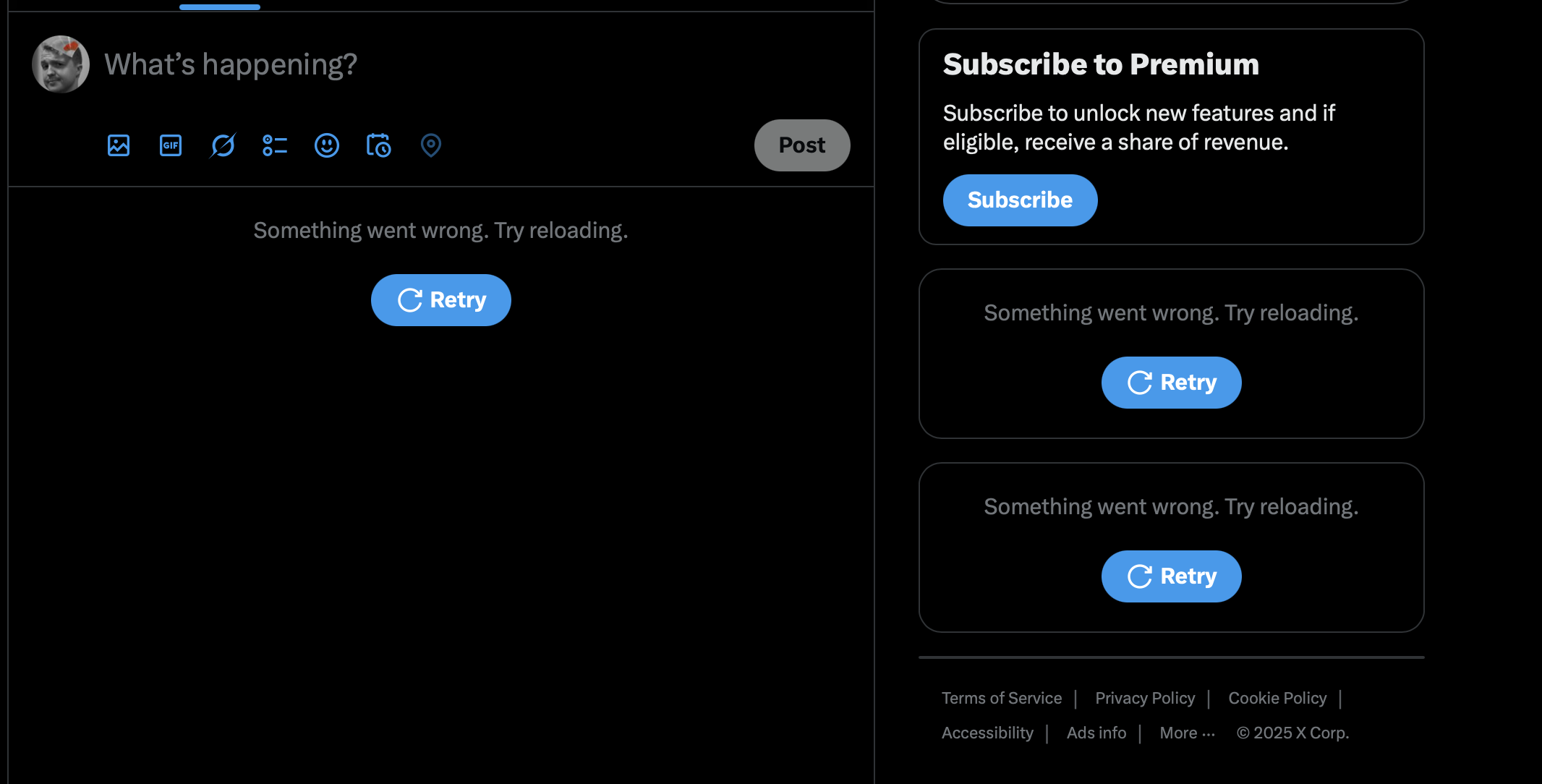

When Screens Go Dark: Inside the January 2026 Platform X Outage
Ever experienced that sudden jolt of disconnection? That moment when the digital world you rely on simply… vanishes? On January 13th, 2026, millions globally felt that disorienting silence as Platform X, a cornerstone of real-time news and communication, suffered a widespread, multi-region outage. For roughly 25 minutes, users encountered loading failures on both the app and website, sending shockwaves through businesses, journalists, and everyday users dependent on this instantaneous flow of information. This incident underscores the critical vulnerability of our modern digital infrastructure, highlighting how swiftly platform outages can paralyze global communication channels, raising crucial questions about resilience in an always-on world.
Anatomy of a Digital Blackout: Unpacking the Incident Timeline
Understanding how such outage events unfold provides critical insight into modern digital fragility.
- The Initial Spike (14:47 UTC): Down Detector, the platform monitoring service, registered a dramatic surge in outage reports flooding in from users globally. Crucially, reports indicated failures across both the mobile application and the web interface simultaneously. This immediacy eliminated isolated app update glitches or browser-specific issues as root causes, pointing towards a systemic problem impacting the platform’s core backend services. As depicted in the Down Detector visualization, the spike wasn’t merely noticeable; it represented a stark deviation from baseline activity.
- The Diagnostic Chase (14:53 UTC): A common reflex when major online platforms falter is the hunt for scapegoats among big infrastructure providers. Reports spiked for AWS (Amazon Web Services) and Cloudflare shortly after Platform X’s difficulties emerged. This pattern, as noted in commentary accompanying the Cloudflare status visualization, is predictable paranoia. Users often mistakenly attribute failures to hosting or CDN providers upfront. However, rapid checks confirmed both AWS (Cloud Computing Services – Wikipedia) and Cloudflare (Cloudflare – Wikipedia) were fully operational, decisively isolating the fault within Platform X’s own domain. This ruled out massive internet backbone failures or widespread DDoS attacks as the culprit.
- Mapping the Disruption (14:55 UTC): The Down Detector outage heatmap revealed unsurprising hotspots: densely packed urban centers like New York City and Los Angeles lit up most intensely. Importantly, this visualization primarily reflects user population density rather than pinpointing the technical source. As commentary explained, “The heatmap is usually more of a population thing… But gives you an indication of where is feeling it most!” Large cities naturally report more incidents simply because more users reside there. However, the sheer geographic spread and near-simultaneity confirmed this wasn’t a regional ISP issue or localized network failure.
- The Fragile Recovery (14:56 & 14:58 UTC): Relief arrived sporadically. Initial reports surfaced at 14:56 UTC from a UK-based tester confirming Platform X had begun loading there. Minutes later, at 14:58 UTC, confirmation arrived from colleagues in New York – the platform was back online in the core US market. This rapid recovery timeframe (under 30 minutes total) was noted positively (“Hopefully this is quick!”) as the first reports surfaced, suggesting the issue was resolved relatively swiftly once identified, contrasting sharply with prolonged outages experienced by other major platforms historically.
Infrastructure Paradox: Alone in a Connected World
Platform X’s outage underscores a fascinating, yet unsettling, aspect of modern online ecosystems: extreme interconnectedness masking critical points of failure. Despite relying heavily on giants like AWS for hosting and Cloudflare for content delivery and security, Platform X remains a complex, interdependent suite of software and services it manages. When its unique configuration, internal authentication systems, API gateways, or bespoke algorithms encounter a fault, the whole structure can stall – even while the foundational cloud infastructure purrs along unaffected. This incident highlighted:
- The Illusion of Blame: The immediate surge in AWS/Cloudflare reports demonstrates a common public misconception. Users often lack visibility into the complex layered architecture of online services. An outage doesn’t automatically mean the underlying cloud is down; it frequently points to issues within the application layer managed solely by the platform owner.
- Internal Complexity Risks: Modern platforms are microservices-heavy environments. A failure in one critical internal microservice managing login tokens, caching, or API routing, driven by Platform X’s own software or configuration, can cascade into a total user-facing outage.
- The Monitoring Accuracy Gap: Platforms like Down Detector are incredibly valuable for measuring user-perceived impact geographically and temporally. They excel at showing that and broadly where users are struggling. However, as seen with the misinterpretation potential of the heatmap, they are not precise diagnostic tools for identifying the true root technical cause within a complex architecture.
Comparing Outage Attribution Dynamics
| Factor | AWS/Cloudflare Spike | Platform X Failure |
|---|---|---|
| Cause of Reports | Panic/False Attribution by Users Seeking Answers | Actual User Experience Failure |
| Underlying Status | Confirmed Operational by Provider Monitoring | Confirmed Internal Service Disruption |
| Diagnostic Value | Illustrates User Confusion / |


