
Infrared Tech Is Decades Old — So Why Does Almost Every TV Remote Still Use It?
The history of TV remotes is surprisingly fascinating. The very first remote control, called the “Lazy Bones,” wasn’t even wireless — it was introduced by Zenith Radio Company in 1950 and relied on a long cable connecting to the television. The “Flash-Matic” from 1955 was the first true wireless solution, using a beam of visible light to send commands. Infrared (IR) remotes became the industry standard by the 1980s and have somehow held on for over four decades.
So why is a technology from the 1980s still sitting in every living room in 2026?
The Simple Answer: Cost and Compatibility
Infrared technology costs next to nothing to implement, especially after decades of mass production. With millions of TVs, soundbars, set-top boxes, and other entertainment devices already built around IR, the single biggest advantage is compatibility. Abandoning a technology that has become synonymous with televisions doesn’t make much sense — especially when Bluetooth and infrared can coexist perfectly well in modern remotes.
How Infrared Actually Works
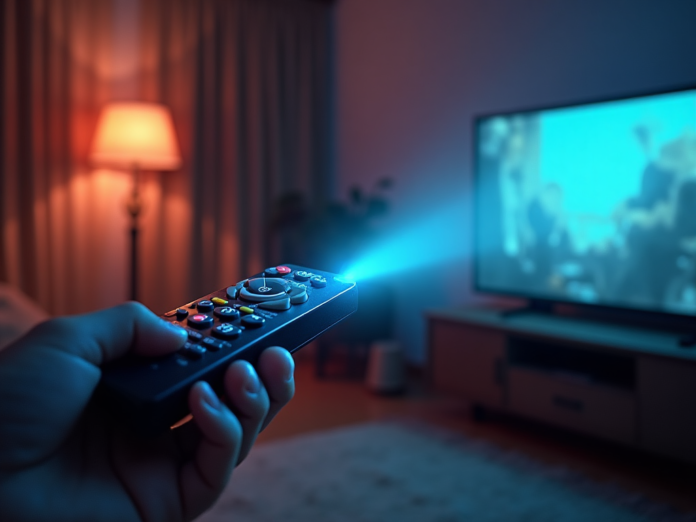
IR remotes work by sending rapid pulses of invisible light using an LED. The infrared receiver on your TV decodes this signal and processes the command. If you point your phone’s camera at the front of a TV remote and press a button, you’ll see the infrared LED flashing — a neat party trick that also works as a quick diagnostic test.
When Bluetooth Makes More Sense
Many modern televisions ship with Bluetooth remotes that offer features like voice control and air gestures, but they still include an IR transmitter. Why? Because Bluetooth remote can only control your TV once it’s paired. Remember setting up your smart TV for the first time? That initial pairing process required IR to navigate the setup screens before Bluetooth could take over.
In fact, I tested this on my TCL smart TV. The remote uses IR for just two operations: turning the TV on and off. Everything else — navigating the interface, changing volume — goes over Bluetooth. I unpaired the remote from the TV’s Bluetooth settings, and guess what? It defaulted right back to using IR. The remote also uses IR to turn the TV on since Bluetooth may not be active while the TV is in standby mode.
Bluetooth vs. Infrared: The Real Tradeoffs
Bluetooth doesn’t require line of sight, so you don’t need to dig your arm out from under a blanket to change the volume. Infrared is more battery-efficient, though that matters less today since most remotes default to Bluetooth anyway.
In the end, infrared has stuck around as a reliable fallback and pairing mechanism. But your TV’s remote is probably using Bluetooth more often than you think — and Bluetooth also lets you use your Android phone as a remote control.


