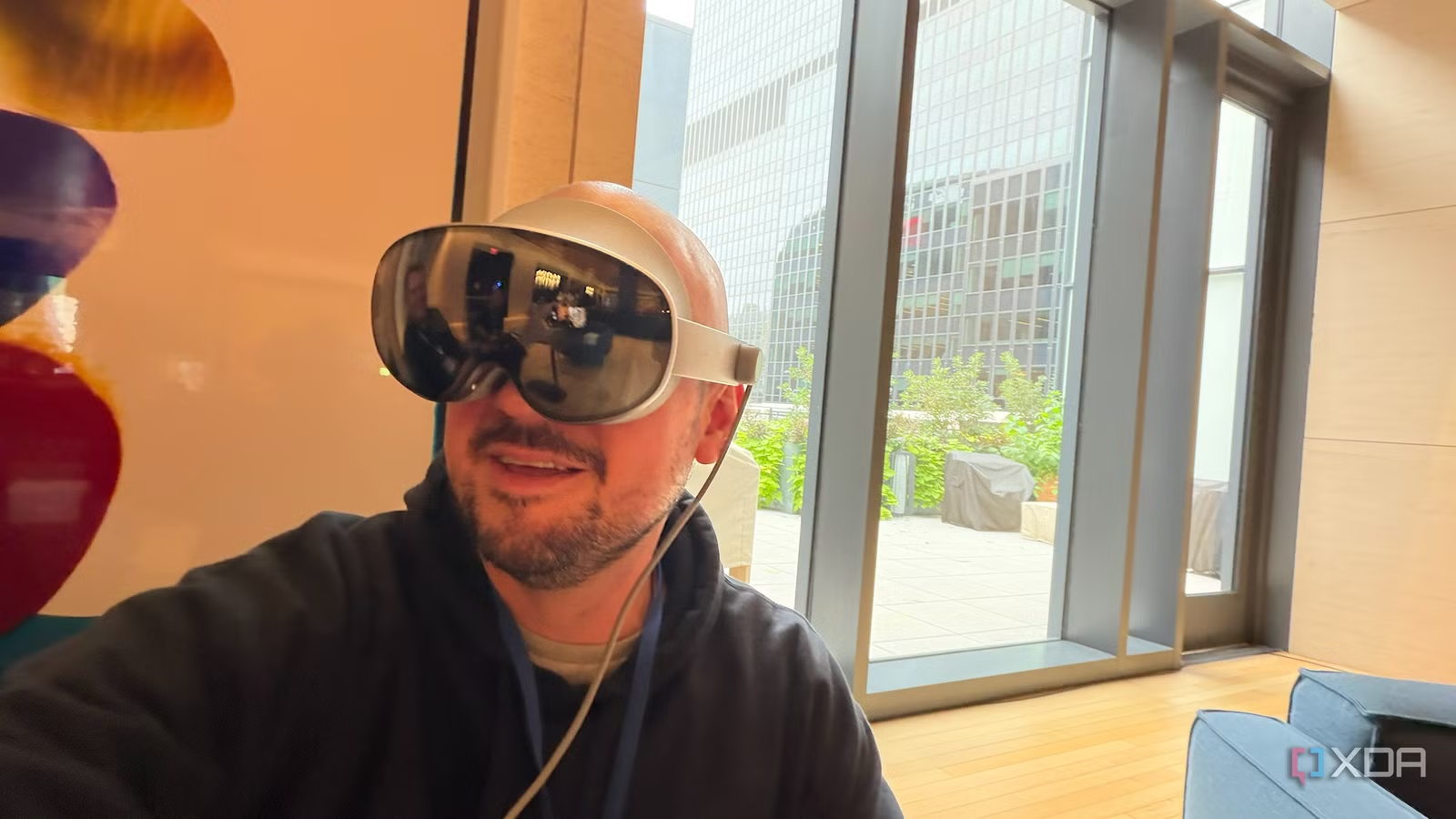

Is the Samsung Galaxy XR a Vision Pro Killer? First Impressions and Analysis
Are you ready for a new era of immersive experiences? Samsung is throwing its hat into the ring with the Galaxy XR, a mixed-reality headset poised to challenge Apple’s Vision Pro. Designed in collaboration with Google and Qualcomm, the Samsung Galaxy XR promises a compelling blend of performance, features, and affordability. While the Vision Pro made waves with its high price tag, Samsung aims to make XR technology more accessible. This article delves into the details of the Galaxy XR, exploring its capabilities, limitations, and overall value proposition based on initial hands-on experiences.
Samsung Galaxy XR: A Deep Dive into Features and Functionality
The Samsung Galaxy XR represents a significant step forward in the XR (extended reality) space, offering a combination of hardware and software designed to create immersive and interactive experiences. Let’s break down the key aspects of this new device.
Powering the Galaxy XR: Android XR and Snapdragon XR2+ Gen 2
At the heart of the Galaxy XR lies the powerful combination of Android XR and Qualcomm’s Snapdragon XR2+ Gen 2 chipset. This pairing is crucial for delivering the performance needed for demanding XR applications. The Snapdragon XR2+ Gen 2 is specifically designed for XR devices, offering enhanced processing power, improved graphics rendering, and optimized power efficiency.
- Android XR: This specialized version of Android is tailored for XR experiences, providing developers with the tools and APIs needed to create compelling applications. It also ensures compatibility with a wide range of existing Android apps, expanding the potential use cases for the headset.
- Snapdragon XR2+ Gen 2: This chipset handles the heavy lifting of processing spatial data, rendering graphics, and managing sensor inputs. Its advanced capabilities are essential for delivering a smooth and responsive XR experience. You can learn more about the Snapdragon XR2+ Gen 2 on Qualcomm’s official website.
Immersive Visuals: Display Specifications and Field of View
The Galaxy XR boasts impressive display specifications, aiming to deliver a visually stunning experience.
- Resolution (per eye): 3,552 x 3,840 pixels, resulting in 29 million pixels. This high resolution ensures sharp and detailed visuals, minimizing the “screen door effect” often associated with VR headsets.
- Display Type: Micro-OLED. OLED (Organic Light Emitting Diode) technology offers superior contrast and color accuracy compared to traditional LCD displays. The “micro” designation means a small pixel pitch, boosting the perceived resolution further.
- Field of View: 109 degrees horizontal and 100 degrees vertical. A wide field of view is crucial for creating a sense of immersion, allowing users to see more of the virtual world around them.
Here’s a comparison of some key specs to the Apple Vision Pro (based on available information):
| Feature | Samsung Galaxy XR | Apple Vision Pro (Estimated) |
|---|---|---|
| Resolution (per eye) | 3,552 x 3,840 | ~3600 x 3200 (Rumored) |
| Field of View | 109° horizontal, 100° vertical | ~120° (Rumored) |
| Processor | Snapdragon XR2+ Gen 2 | Apple M2 |
| Price | $1,799.99 | $3,499 |
Tracking and Sensors: Navigating the XR World
Precise tracking and sensor technology are essential for creating a seamless and responsive XR experience. The Galaxy XR incorporates a comprehensive suite of sensors:
- Two High-resolution Pass-through cameras: Allow users to see the real world around them while wearing the headset, enabling mixed reality experiences.
- Six World-facing tracking cameras: Track the user’s position and movement in the environment.
- Four Eye-tracking Cameras: Monitor eye movements, enabling foveated rendering (reducing rendering workload by focusing detail where the user is looking) and gaze-based interactions.
- Five Inertial Measurement Units (IMUs): Measure acceleration and angular velocity, providing accurate motion tracking.
- Depth sensor: Captures depth information, enabling more realistic interactions with virtual objects and environments.
- Flicker sensor: Detects and reduces screen flicker, minimizing eye strain.
Connectivity, Storage, and Battery Life
The Galaxy XR offers modern connectivity options and ample storage:
- Connectivity: Wi-Fi 7 (802.11a/b/g/n/ac/ax/be) and Bluetooth 5.4. Wi-Fi 7 offers significantly faster speeds and lower latency compared to previous generations, while Bluetooth 5.4 provides reliable connectivity for peripherals.
- Storage: 256GB. This provides sufficient space for storing apps, games, and media content.
- Battery Life: Up to 2 hours of general use. Battery life remains a challenge for XR headsets, and the Galaxy XR’s 2-hour estimate is typical for this class of device.
Initial Impressions: Promising Potential with Some Caveats
Early hands-on experiences with the Galaxy XR have been largely positive, but also highlight some areas for improvement.
Practicality of Demos: Cool vs. Useful
While the Galaxy XR showcases impressive technological capabilities, some of the initial demos may not translate into practical real-world use cases. For instance, using a 3D immersive map experience to find nearby pizza, while visually appealing, might be less efficient than simply using a smartphone app. This highlights the importance of focusing on applications that genuinely enhance user productivity and entertainment.
Spatial Photos and Videos: The “Hero Story”
One of the most compelling aspects of the Galaxy XR is its support for spatial photos and videos. This allows users to experience content in a more immersive and realistic way. YouTube’s support for spatial video, where creators can enable the feature for their content, is a significant advantage. The ability to view websites and other content in 3D also adds to the device’s versatility.
Comfort and Ergonomics: A Work in Progress
Comfort is a crucial factor for any wearable device. Initial impressions suggest that the Galaxy XR, like the Apple Vision Pro, may not be comfortable for extended use. The headset may feel front-heavy, leading to discomfort after a relatively short period. Further refinement of the design and weight distribution is needed to improve the user experience. The weight is listed as 545g, and that may make it uncomfortable after a prolonged period of use.
Pass-through Video Quality: Close to Reality
The Galaxy XR’s pass-through video quality is reportedly good enough to allow users to interact with their surroundings and even use their phones comfortably. While there is some lag, it is minimal. This feature is essential for mixed reality experiences, enabling users to seamlessly blend virtual and real-world elements.
Samsung Galaxy XR: Is It Worth the Investment?
With a price tag of $1,799.99, the Samsung Galaxy XR is significantly more affordable than the Apple Vision Pro. Furthermore, Samsung is offering over a thousand dollars’ worth of freebies, including subscriptions to services like YouTube Premium, Google Play Pass, and NBA League Pass. This makes the Galaxy XR a more attractive option for early adopters who are looking to explore the world of XR without breaking the bank.
The Google Explorer Pack Includes:
- One Year AI Pro
- Youtube Premium
- Google Play Pass
- NBA League Pass
- Three Months of YouTube TV
- Access to NFL PRO ERA, Adobe Project Pulsar, Asteroid, and Calm
The value of these freebies is in the eye of the beholder. If you’re a sports fan or plan to use these services regularly, the added value makes the Galaxy XR an even more compelling deal.
Conclusion: A Promising Contender in the XR Arena
The Samsung Galaxy XR represents a significant step towards making XR technology more accessible to a wider audience. Its impressive specifications, coupled with its more competitive price point and bundled freebies, position it as a strong contender in the market. While some initial impressions highlight areas for improvement, the Galaxy XR’s potential for immersive entertainment and productivity is undeniable.
As the XR landscape continues to evolve, the Samsung Galaxy XR is poised to play a key role in shaping the future of immersive experiences. What do you think? Will you be giving the Galaxy XR a try? Comment below!
Sources & Further Reading:
Original article at www.xda-developers.com


