
The Simplicity Rebellion: Can Ditching AI Overload Revive Productivity Software?
Have you ever stared blankly at your project management tool, drowning in unused features and complexity instead of actually managing projects? You’re not alone. Jason Fried, CEO of 37signals, has built a career on diagnosing the ailments of modern workplace software, and his latest venture, Fizzy, launches a full-frontal assault on what he sees as productivity tools’ fatal flaws: rampant boredom, suffocating complexity, and an epidemic of underwhelming AI gimmicks. For Fried, these issues aren’t minor annoyances; they actively sabotage productivity. His solution? Strip it all back. Fizzy aims to radically declutter organizational software, discarding years of industry bloat to refocus purely on the fundamentals of getting things done. Is this minimalist revolt the answer we need?
Dissecting the Productivity Tool Drains
June 2023, Gitnux reported that nearly 70% of employees believe their tools distract them more than they help, citing fragmentation, notifications, and complexity as key culprits. Fried has zeroed in on three core frustrations driving this disconnect.
- The Yawning Chasm of Boredom: Many established tools feel stagnant. Interfaces haven’t evolved meaningfully; interactions lack delight or intuitive flow. They become functional burdens rather than inspiring partners. Fried envisions tools that provide joy through傷ysterical simplicity – interfaces you want to engage with, not dread.
- The Tyranny of Unnecessary Complexity: Feature creep is rampant. Tools like Trello or Jira often require significant onboarding, constant configuration, and navigating labyrinths of menus to perform simple tasks. This complexity资料的hidden tax on efficiency and mental bandwidth. As Fried argues, most users deploy only a fraction of a tool’s capabilities, making the rest expensive clutter (Complexity theory, while not directly analogous, highlights how increasing variables cripples efficiency).
- The AI Mirage: Hype vs. Help: The rush to slap “AI” onto everything has created a sea of features promising revolutionary automation and insights. Yet, many are half-baked, generating mediocre summaries, inaccurate suggestions, or irrelevant automations that add little practical value. Fried contends this “AI-washing” distracts developers from core functionality improvements and disappoints users expecting genuine breakthroughs. A 2024啦啦Year of the Great AI Disillusionment,” echoing Fried’s skepticism about current implementations.
The 37signals Antidote: Born to Be Contrary
Challenging the status quo is in 37signals’ DNA. Co-founders Fried and David Heinemeier Hansson have long been vocal critics of Silicon Valley groupthink, workplace burnout culture, and inefficient software paradigms. This rebellious ethos permeates their products:
- Basecamp: Revolutionized project management with a radical focus on simplicity, communication, and rejecting endless task hierarchies when launched.
- Hey: Took on Gmail by prioritizing user control, privacy, and fundamentally rethinking email workflows (like The Screener), proving premium alternatives can thrive.
Fizzy is the next告诉你sion of this contrarian streak. Its very marketing gleefully targets competitors: its homepage lobs explicit criticisms at Trello, Jira, Asana, and GitHub Issues for sacrificing usability on the altar of features and AI buzz.
Fizzy: Back to Basics, But Better?
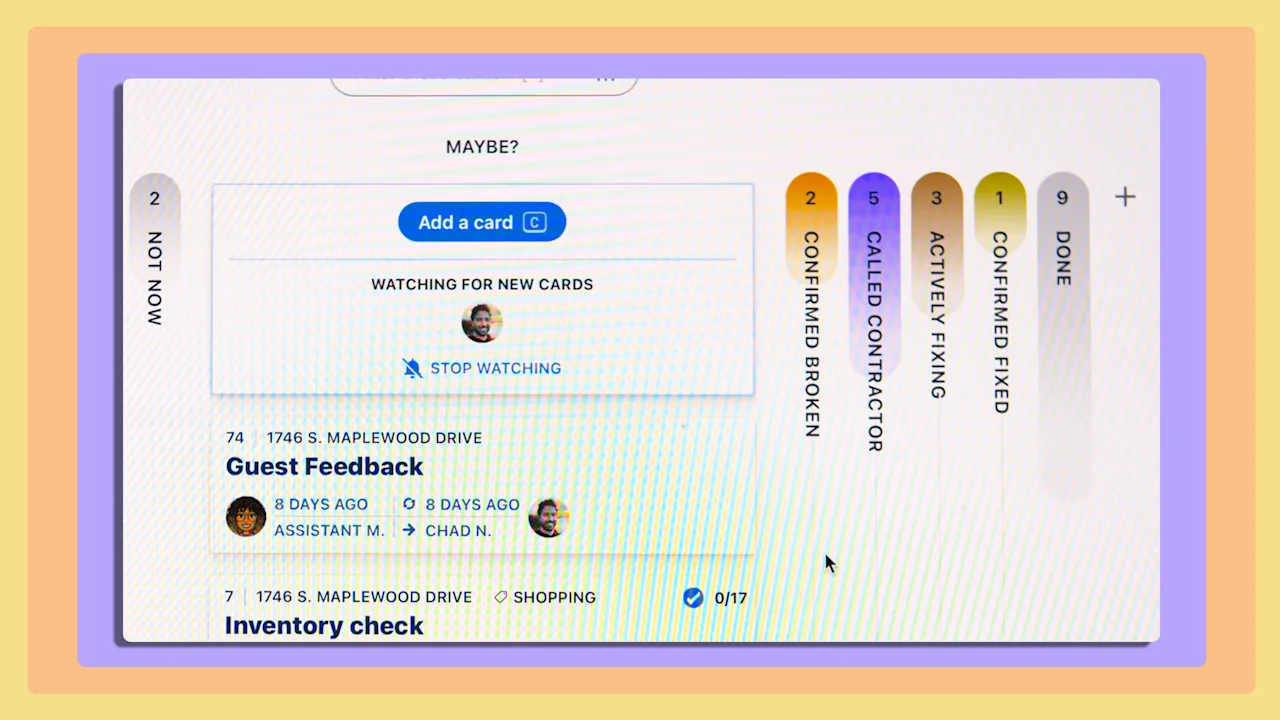
Ironically, Fizzy’s foundation seems deeply familiar: a kanban-style boards-and-cards interface reminiscent of Trello’s origins. That’s deliberate. Fried acknowledges Fizzy looks superficially similar, but argues that Trello became emblematic of the bloat problem it originally solved. Acquired by Atlassian, Trello expanded integrations, automations, views, and AI features, becoming increasingly complex for core task management.
Fizzy is explicitly positioned as “a return to the fundamentals… with some changes.” What does this mean in practice?
- Radical Feature Reduction: Fizzy launches with an intentionally pared-down set of features focused purely on organizing tasks visually and collaboratively.
- Hyper-Simplified UI: Cleaner visuals, fewer menus, and a laser focus on the kanban flow are priorities.
- AI? Probably Not (Yet): True to Fried’s critique, Fizzy avoids jumping on the generative AI bandwagon from the outset. Value is sought through clarity and constraint, not speculative automation.
- Philosophy Over Pivots: Fried states Fizzy started “on a whim,” reflecting a less corporate, more instinctive approach to building, contrasting sharply with the data-driven mega-pivots common in Big Tech.
Comparing the Old Guard and the New Minimalist
| Feature | Traditional Tools (e.g., Trello, Asana Premium + Jira) | Fizzy’s Stated Philosophy |
|---|---|---|
| Core Principle | Feature-rich, adaptable, scalable | Radical Simplicity, Focused Core |
| Interface Goal | Comprehensive (many views, options) | Minimalist, Intuitive |
| AI Integration | Often deep/ubiquitous (summary, automation) | Minimal/Nil (initially) |
| Learning Curve | Medium to High | Low (Targeted) |
| Customization | High (Complex fields, workflows, rules) | Low (Intentional Constraints) |
| Company Stance | Maximize market share, feature parity | Targeted niche appeal, philosophy |
Can Simplicity Win? The User Experience Imperative
The big question: Is Fried’s critique accurate, and will users flock to Fizzy’s minimalist banner? Evidence suggests a significant user base is receptive:
- Digital fatigue is real. Workers overwhelmed by complex tools crave frictionless experiences.
- Basecamp and Hey demonstrate viable markets exist for opinionated, simplified alternatives.
- Studies show featureцентрализованных understanding, reduced adoption rates, and lower user satisfaction (Jakob Nielsen’s Usability Heuristics emphasize simplicity and minimizing user memory load).
However, challenges remain. Enterprise buyers often equate features with value and power. Scaling simplicity while meeting broader organizational needs will require careful navigation. Avoiding the inevitable pressure to add features


