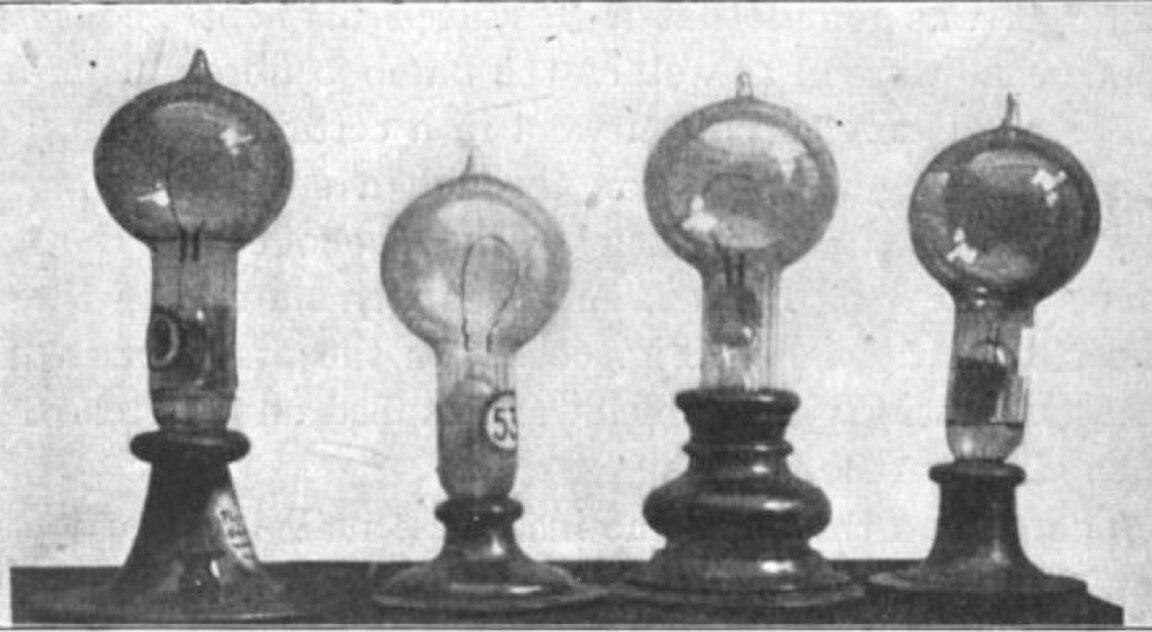

The Carbon Accident: How Edison’s Light Bulb Experiment Holds Secrets for Modern Technology
What if one of America’s most famous inventors accidentally created “the wonder material” of the 21st century during his tireless pursuit of something else entirely? This isn’t science fiction; it’s the provocative conclusion emerging from cutting-edge research revisiting Thomas Edison’s iconic lightbulb experiments. While celebrated for illuminating the world, Edison might have unknowingly produced graphene, a revolutionary nanomaterial scientists struggled to isolate until 2004 – earning Andre Geim and Konstantin Novoselov the Nobel Prize in Physics. This rediscovery, detailed in ACS Nano, illuminates not just Edison’s ingenuity but suggests hidden gems in forgotten historical research, urging us to peer into the past with modern scientific tools.
Deciphering Graphene’s Miraculous Potential
Composed purely of carbon atoms locked in an incredibly strong, two-dimensional hexagonal honeycomb lattice, graphene is the thinnest material humans have ever encountered. Its unique atomic structure endows it with a suite of extraordinary properties:
- Unmatched Strength: Estimated to be 200 times stronger than steel.
- Exceptional Conductivity: Conducts electricity significantly better than copper and heat better than any other known material.
- Optical Transparency: Absorbs only about 2.3% of visible light, making it nearly transparent.
- Flexibility: Can bend and flex without breaking, crucial for flexible electronics.
- Impermeability: Its dense atomic structure تهران at how large was the gain? prevents even helium atoms from passing through.
These properties fuel its potential across diverse fields: ultra-fast charging batteries, highly efficient solar cells, next-gen transistors, sensitive biosensors, revolutionary water filtration membranes, flexible touchscreens, and even stronger composite materials. Its discovery marked a paradigm shift in material science.
Edison’s Filament Quest: Persistence Pays Unexpected Dividends
Edison’s journey wasn’t paved with instant success. While he didn’t invent the idea of incandescent light, earlier bulbs suffered crucially from short lifespans and impractical power demands, hindering commercialization. His famous approach involved relentless experimentation. He systematically tested hundreds of materials for the crucial filament:
- Initial attempts used carbonized cardboard and compressed lampblack (soot), but they burned out rapidly.
- He explored natural fibers like hemp and palmetto cane, with similarly disappointing results.
- The breakthrough came with carbonized bamboo. This filament could endure over 1,200 hours powered by a manageable 110-volt source, making commercial viability feasible.
This trial-and-error process yielded the world-changing lightbulb


