
Beyond the Hype: Why Econet’s New SmartSuite Might Be Your Only Realistic Internet Choice in Zimbabwe
Is Zimbabwe’s internet landscape a dazzling array of options or a frustrating exercise in broken promises? For many, the choice isn’t about finding the best connection, but rather the one that actually works where they live. The recent launch of Econet’s SmartSuite Fixed Wireless Access (FWA) packages, replacing the familiar SmartBiz bundles, throws this harsh reality into sharp relief. While bringing six new data plans to the table, SmartSuite’s arrival reignites the critical debate: how does Zimbabwe’s telecom giant stack up against rivals like Liquid, TelOne, Utande, Dolphin, Powertel, and the elusive Starlink? The raw truth? SmartSuite won’t win any awards for being the cheapest, the fastest, or offering the most data. But for a vast majority of Zimbabweans struggling with connectivity, its true power lies in sheer, unrivalled accessibility within the fixed wireless access Zimbabwe market.
Demystifying the SmartSuite Shift: What’s New on the Table?
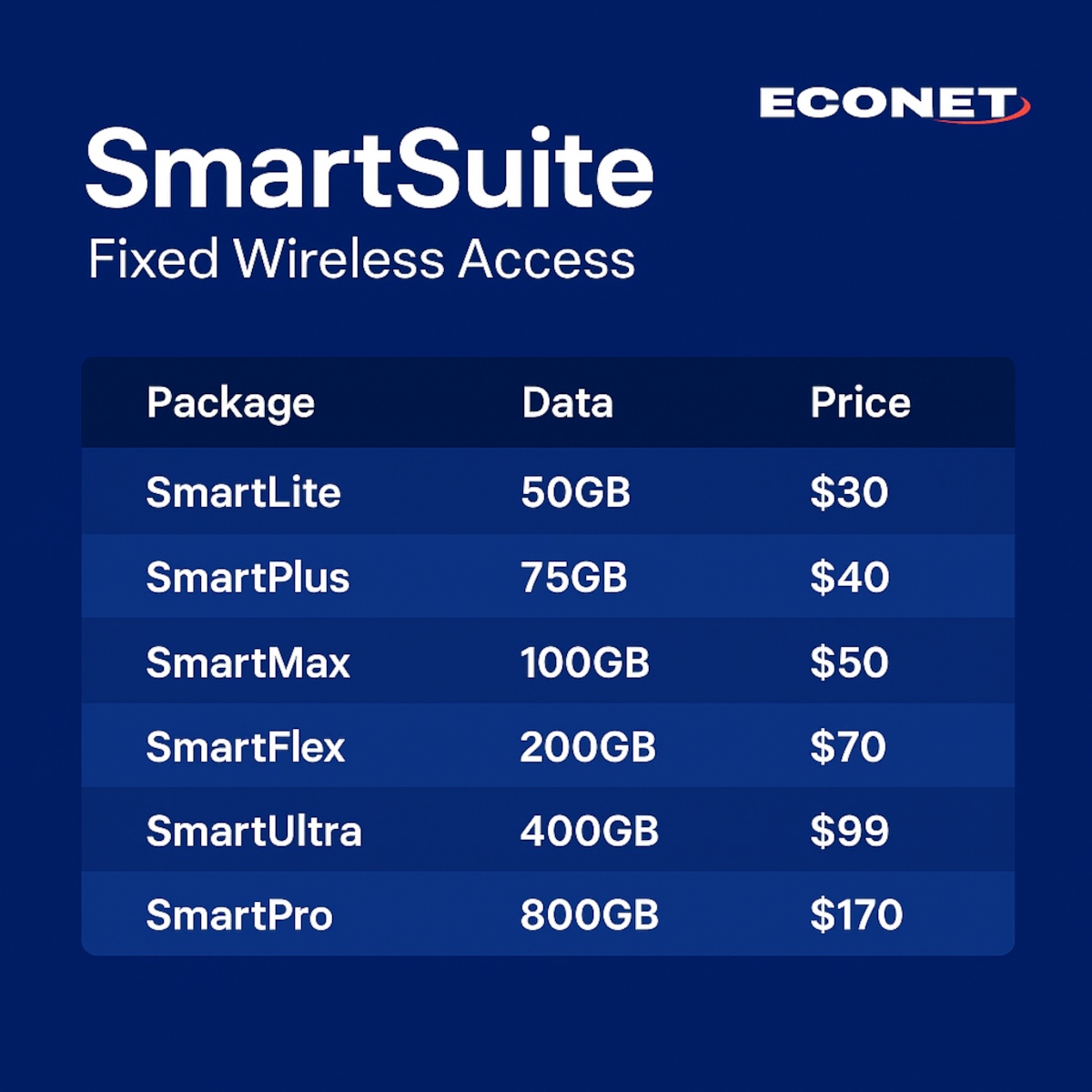
Econet’s SmartSuite officially signals the end of the SmartBiz era, a collection of bundles that elicited both loyalty and frustration. This new generation focuses firmly on home and business Fixed Wireless Access (FWA) using LTE (4G) and even 5G where available. Key characteristics define SmartSuite:
- Location Locked: Your connection is geo-locked to the address you register. Forget about moving the router elsewhere for consistent service.
- Hardware Requirement: You’ll need a compatible 4G/5G CPE router. Econet offers this starting around $48, but you can also purchase and use your own certified device.
- The Unbeatable Edge – Coverage: This is SmartSuite’s undeniable strength. Leveraging Econet’s extensive nationwide mobile network footprint, SmartSuite offers the widest coverage of any dedicated FWA product in Zimbabwe. If your phone gets Econet signal, chances are high you can access SmartSuite internet at home.
The new pricing tiers provide varying levels of data allowances, aiming to cater to different usage needs, replacing the older structure with six fresh options.
The Competitive Arena: How Does SmartSuite Measure Up Across Zimbabwe?
To understand SmartSuite’s position, we must scrutinize the alternatives within Zimbabwe’s fixed internet ecosystem. Let’s break down key contenders:
Liquid Home (FibroniX & WibroniX)
Liquid Telecom’s offerings are compelling, split between FibroniX (fixed fibre) and WibroniX (LTE-based FWA, similar to SmartSuite).
- FibroniX Pay-As-You-Go:
- $43: 100GB (with 15+15 rollover bonus)
- $60: 100GB + 100GB Netflix
- $65: 150GB
- $75: 150GB + 150GB YouTube
- WibroniX Pay-As-You-Go:
- $50: 100GB + 100GB bonus
- $99: 250GB + 250GB bonus
- FibroniX True Unlimited:
- $99/month: Unlimited data at speeds up to 75Mbps (promotional peaks up to 500Mbps possible)
- Availability: Significant limitation. FibroniX is confined to affluent suburbs and established commercial areas. WibroniX coverage, while wireless, is also restricted, primarily to specific urban zones where Liquid has dedicated infrastructure.
TelOne’s Broadband Blitz (LTE Blaze & Fibre)
Zimbabwe’s fixed-line incumbent offers both LTE and Fibre options.
- TelOne LTE (Blaze Series):
- $20: 75GB + 5GB YouTube + 25GB Netflix
- $25: 150GB + 15GB YouTube + 50GB Netflix
- $50: 500GB + 50GB YouTube + 100GB Netflix
- $75: Unlimited Data
- Pros: Attractive mid-tier bundles with streaming bonuses.
- Critical Con: Extremely limited LTE coverage footprint, confined to select neighbourhoods.
- TelOne Fibre Broadband:
- $40: 40Mbps Unlimited
- $60: 60Mbps Unlimited
- $90: 90Mbps Unlimited
- Pros: Strong value-for-money on unlimited plans with decent guaranteed speeds.
- Critical Con: Physical fibre rollout is notoriously slow; availability is “very restricted” only to areas where infrastructure exists, bypassing most suburbs and nearly all rural regions. Like Liquid FibroniX, it suffers from severe accessibility issues (TelOne).
Utande: The Corporate Contender
Utande targets a niche, primarily corporate and high-income residential market.
- $100/month: Unlimited data at speeds up to 50Mbps (Latest known offer)
- Potentially historical offers (availability unclear):
- $15: 25GB
- $25: 50GB
- $35: 75GB
- $49: Unlimited (Starter Max – Likely discontinued)
- Availability: Highly limited “select high-density business zones and premium suburbs.” Utande’s footprint is minuscule compared to national providers.
Dolphin: Expanding Niche Player
A smaller provider making moves, primarily in Harare.
- LTE Unlimited: $55/month, up to 20Mbps
- Fibre Unlimited: $70/month, up to 50Mbps (includes free router)
- Availability: Currently limited (“still small”), but actively expanding within Harare. Coverage outside major urban centres is non-existent.
Powertel: The Budget Unlimited Option (with Caveats)
ZESA’s telecom arm offers a compelling base price point for those it serves.
- $30/month: Unlimited Data
- Pros: Unbeatable headline price for unlimited access within the Zimbabwean market.
- Critical Cons:
- Speeds fluctuate heavily based on network congestion (“vary depending on network load”).
- Service quality has a history of inconsistency.
- Availability is patchy; limited to specific areas where its network operates reliably. When available and performing well, however, it’s unmatched value.
Starlink: The Game-Changer with High Barriers
Elon Musk’s satellite solution offers immense potential but faces significant hurdles in Zimbabwe.
- Hardware Cost: $200+ (Mini) or $389 (Standard kit) + ~$23 shipping.
- Monthly Subscription:
- Lite: $30/month (Unlimited, deprioritized data – speeds reduced during congestion)
- Standard: $50/month (Unlimited, prioritized data)
- The Harare Workaround: With standard residential capacity sold out in most cities, some resellers like Shona Prince facilitate access via $85/month Roaming plan. This unofficial method bypasses the activation freeze but lacks guarantee and potential long-term viability.
- Availability & Reality:
- Performance: Excellent in areas with active terminals (50-250Mbps).
- Coverage: Technically excellent nationwide via satellite (Starlink Coverage Map).
- Accessibility: Dire. Majority of urban areas are “sold out” for standard activations. Roaming plans are expensive, unofficial, and could be cut off unexpectedly. Regulatory clarity is also emerging, potentially impacting unofficial roaming routes.
The Essential Crossroads: Price, Data, and Geographic Reality
Cutting through the marketing, the core decision for Zimbabwean consumers hinges on the intersection of these three factors. Here’s a stark comparison showcasing SmartSuite’s position:
| Provider | Best Unlimited | Best Mid-Tier Deal | Speed Range | Availability |
|---|---|---|---|---|
| Econet SmartSuite | $170 → 800GB | $50 → 100GB | LTE Speeds (Varies) | Widest LTE Coverage Nationwide |
| Liquid Home | $99 → Unlimited FibroniX | $60 → 200GB+ (w/ Netflix/etc.) | Up to 75Mbps+ | Limited (Rich suburbs/commercial) |
| TelOne Fibre | $60 → 60Mbps Unlimited | $40 → 40Mbps Unlimited | 40–90Mbps | Very Limited (Fibre footprint only) |
| TelOne LTE | $75 → Unlimited | $25 → 150GB (w/ bonuses) | LTE Speeds (Varies) | Few Select Suburbs |
| Utande | $100 → Unlimited | – | Up to 50Mbps | Very Limited (Premium areas) |
| Dolphin | $70 → Fibre Unlimited | $55 → LTE Unlimited | 20–50Mbps | Limited (Expanding in Harare) |
| Powertel | $30 → Unlimited | – | Varies (Often Low) | Limited (Specific Areas) |
| Starlink | $30 Lite / $50 Std → Unlimited | $85 Roaming → Unlimited | 50–250Mbps | Sold Out Urban (Official), Roaming only |
The Unavoidable Verdict: Accessibility Trumps All
The data reveals a clear, albeit uncomfortable, pattern:
- SmartSuite: The Champion of Reach: Its deployment relying on Econet’s ubiquitous mobile network grants it a decisive edge. For countless Zimbabweans outside affluent urban centres or without direct fibre lines in their streets, this LTE-based fixed wireless access Zimbabwe option isn’t just convenient; it’s often the only viable fixed-line substitute available. No other FWA or fibre provider comes close to its geographic spread.
- Liquid & TelOne: The Value Kings… if You Qualify: Liquid’s $99 FibroniX unlimited fibre and TelOne’s $60 for 60Mbps unlimited fibre represent incredible value propositions and performance. However, their Achilles heel is cripplingly limited availability. For most potential users, these remain tantalizing mirages just beyond reach.
- Starlink: The High-Speed Fantasy: While offering revolutionary speed and true unlimited data via satellite, Starlink’s current Zimbabwe experience is mired in high upfront costs, official capacity constraints (“sold out”), and reliance on expensive, unofficial grey market roaming solutions (e.g., $85/month via resellers). Its potential is sky-high, but practicality remains grounded for most.
- The Fragmentation Stalemate: Zimbabwe’s internet market suffers from severe fragmentation. Premium services cluster in wealthier, well-serviced areas. Rural and lower-income urban communities remain underserved by fibre and niche players. This fragmentation entrenches inequality in digital access.
Navigating the Practical Terrain
For the average household deciding:
- Beyond the Price Tag: While that $30 Powertel unlimited plan looks fantastic on paper, its viability depends entirely on whether it’s offered where you live and if the network consistently delivers usable speeds. Scrutinize coverage maps and user feedback for your specific location.
- Data Caps Matter: If your household streams videos, works from home, or downloads frequently, capped plans like SmartSuite’s base 100GB or TelOne’s 150GB LTE bundle might prove insufficient, forcing top-ups or lasting days offline near the month’s end. Liquid’s and TelOne’s unlimited fibre options solve this… if available.
- The Speed vs. Stability Trade-off: While Starlink promises blazing speeds, its reliance on sometimes inconsistent grey-market solutions introduces risk. Fibre offers stability, LTE-based services like SmartSuite and WibroniX offer a balance depending on local network congestion. Cheaper options like Powertel sacrifice consistency for cost.
The Bottom Line: SmartSuite’s Unwanted Crown
Econet’s SmartSuite isn’t revolutionary. Its data allowances can feel restrictive compared to true unlimited fibre, and it lacks headline-grabbing speeds. It doesn’t compete on price with Powertel or low-tier fibre. Yet, in the complex reality of Zimbabwe’s connectivity landscape, accessibility is the ultimate currency. For millions residing outside premium zones or waiting indefinitely for fibre trenches, SmartSuite’s broad LTE coverage provides a crucial lifeline – a stable home connection where previously only unreliable mobile data or prohibitively expensive satellite existed. It wins not on merit, but on sheer presence. It’s the internet provider many Zimbabweans will reluctantly adopt by mere geographic default rather than active preference. Until Starlink becomes readily accessible nationwide or TelOne/Liquid dramatically accelerate their fibre deployment beyond exclusive enclaves, Econet’s SmartSuite will likely remain the default backbone of home internet for the majority. Is the connectivity gap you face defined by cost or merely coverage? Join the conversation below!


