
Democratizing Quantum Sensing: The “Uncut Gem” Project Brings Quantum Technology to the Masses
Are you ready to harness the power of quantum mechanics for just $50? While the world grapples with the complexities and potential of quantum computing, a different facet of quantum technology – quantum sensing – is becoming increasingly accessible. The “Uncut Gem” project, unveiled at Defcon’s Quantum Village, is breaking down barriers and putting the power of quantum sensors into the hands of hackers, researchers, and enthusiasts alike. This article explores this groundbreaking project, its potential applications, and the democratization of quantum technology it represents.
Unlocking Quantum Potential: The Affordable Quantum Sensor
Quantum sensors represent a powerful class of devices capable of detecting minute variations in magnetic and electrical fields. These sensors enable incredibly precise measurements, underpinning technologies like atomic clocks [^1^], which are essential for accurate timekeeping and synchronization. However, until recently, access to quantum sensing technology was limited by high costs and specialized knowledge.
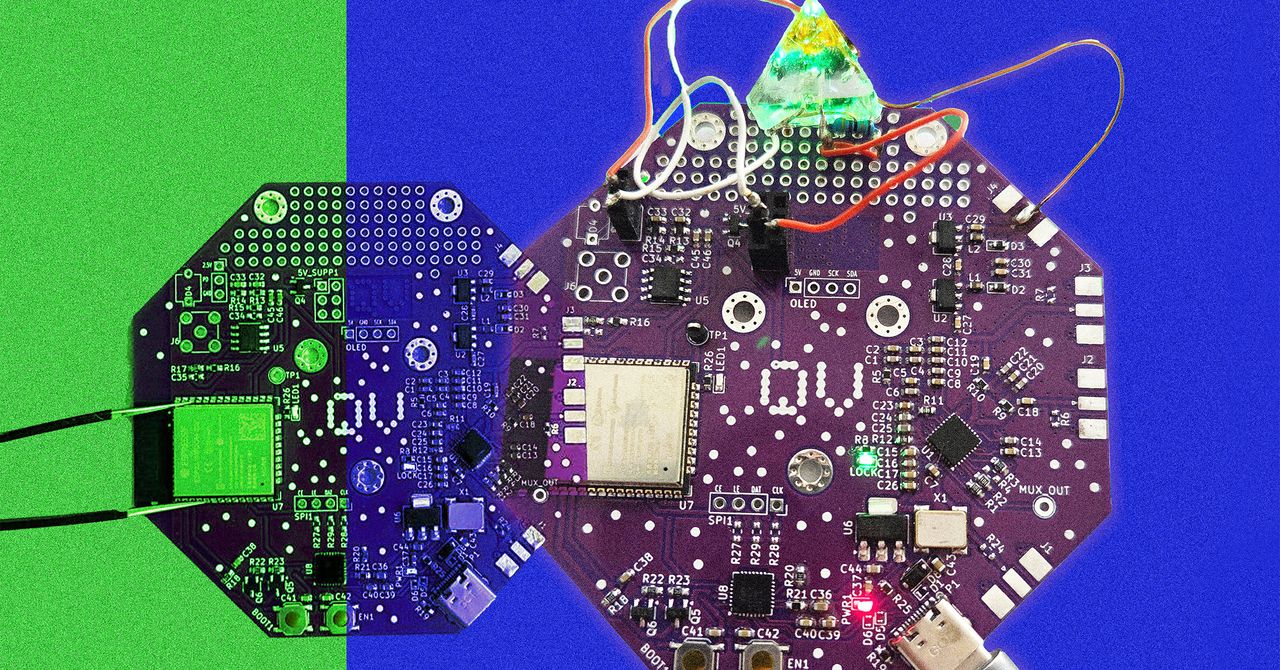
The “Uncut Gem” project, spearheaded by Victoria Kumaran and Mark Carney, aims to change that. By leveraging open-source design and affordable components, they’ve created a quantum sensor that can be assembled for a fraction of the cost of traditional systems. The initial design cost between $120 and $160, but the latest version is projected to cost only $50, making it accessible to a wider audience.
The Heart of the Matter: Nitrogen-Vacancy Diamonds
At the core of the “Uncut Gem” sensor lies a special component: a nitrogen-vacancy (NV) diamond ^2^. These are synthetic diamonds containing nitrogen atoms that have replaced some of the carbon atoms in the crystal lattice, creating atomic-scale defects. These defects give the diamond unique quantum properties that enable it to be used as a highly sensitive sensor.
- Structure and Properties: NV diamonds contain nitrogen atoms that substitute carbon atoms in the diamond lattice. This creates a “vacancy” – a missing carbon atom – next to the nitrogen atom.
- Quantum Sensitivity: The NV center in the diamond exhibits quantum mechanical properties, making it highly sensitive to changes in magnetic and electrical fields.
The beauty of the project lies in its utilization of synthetic diamonds, specifically the “cheapest off-cuts” available. This clever approach significantly reduces the cost of the sensor without sacrificing its functionality.
Building Your Own Quantum Sensor: Open Source and Accessible
The “Uncut Gem” project is more than just hardware; it’s a complete ecosystem built on open-source principles. Schematics, code, and documentation are publicly available, allowing anyone to replicate, modify, and improve the design. This collaborative approach fosters innovation and accelerates the development of quantum sensing technology.
Potential Applications of Low-Cost Quantum Sensors
The accessibility of affordable quantum sensors opens up a world of possibilities across various fields.
Revolutionizing Medical Technology
One of the most promising applications of quantum sensors is in medical imaging. Kumaran suggests the possibility of building “portable MRI-style devices that can be used in all different countries.” Traditional MRI machines are bulky, expensive, and require significant infrastructure. Quantum sensors, on the other hand, could enable the development of smaller, more portable, and affordable imaging devices, bringing advanced diagnostics to underserved communities.
- Portable MRI alternatives: The high sensitivity of quantum sensors could allow for smaller, less energy-intensive devices capable of imaging biological tissues and organs.
- Targeted Drug Delivery: Quantum sensors could potentially be used to track the delivery of drugs to specific locations within the body, improving treatment efficacy and reducing side effects.
Alternative Navigation Systems: Quantum Inertial Sensing
Quantum sensors can also be used to develop alternative navigation technologies that are independent of GPS. These systems rely on tracking electromagnetic wave interference and measuring acceleration with extreme precision. The US Space Force, for example, is testing high-performance quantum inertial sensors for space applications [^3^].
In a world increasingly reliant on GPS, the development of alternative navigation systems is crucial. Quantum sensors could provide a robust and reliable backup in the event of GPS failures or targeted jamming.
- GPS Independence: Quantum inertial sensors offer a potential solution for navigation in environments where GPS signals are unavailable or unreliable, such as indoors or underwater.
- Enhanced Accuracy: Quantum sensors can provide more precise measurements of acceleration and orientation compared to traditional inertial measurement units (IMUs).
Beyond the Headlines: Other Potential Uses
Beyond medical imaging and navigation, quantum sensors have a wide range of other potential applications, including:
- Materials Science: Analyzing the magnetic properties of materials at the nanoscale.
- Environmental Monitoring: Detecting trace amounts of pollutants in air and water.
- Fundamental Research: Exploring fundamental physics phenomena at the quantum level.
- Security Applications: Identifying and locating hidden objects or detecting counterfeit materials.
Democratization and Innovation: A New Era for Quantum Technology
The “Uncut Gem” project is not just about building a low-cost quantum sensor; it’s about democratizing access to cutting-edge technology and fostering innovation. By making quantum sensing more accessible, the project empowers individuals and communities to explore its potential and develop novel applications.
Davide Gessa, an independent researcher, has been actively testing the “Uncut Gem” schematics and code, contributing to the project’s development and validation. This collaborative approach exemplifies the spirit of open-source hardware and the power of community-driven innovation.
- Comparison of Quantum Sensor Accessibility:
| Feature | Traditional Quantum Sensors | “Uncut Gem” Quantum Sensor |
|---|---|---|
| Cost | High (thousands to millions of dollars) | Low ($50 – $160) |
| Complexity | Complex, requiring specialized expertise | Relatively simple, DIY-friendly |
| Accessibility | Limited to research institutions | Open-source, available to anyone |
| Customization | Difficult, often proprietary designs | Highly customizable, open-source |
People Also Ask:
- How does a quantum sensor work? Quantum sensors utilize the principles of quantum mechanics to detect subtle changes in physical quantities like magnetic fields, electric fields, or temperature. They often rely on quantum phenomena like superposition and entanglement to achieve high sensitivity.
- What are the limitations of the “Uncut Gem” sensor? As a low-cost and open-source project, the “Uncut Gem” sensor may have limitations in terms of performance and accuracy compared to commercially available quantum sensors. However, its affordability and accessibility make it a valuable tool for education, experimentation, and prototyping.
- How can I get involved in the “Uncut Gem” project? The project is open to contributions from anyone interested in quantum sensing. You can find the schematics, code, and documentation online and contribute to the project through testing, development, and community support.
Conclusion: The Future of Quantum Sensing is Open
The “Uncut Gem” project is a significant step towards democratizing quantum technology. By providing an affordable and accessible quantum sensor, it empowers individuals and communities to explore the potential of this exciting field. From medical imaging to alternative navigation, the applications of quantum sensing are vast and transformative.
The project underscores the importance of open-source hardware and community-driven innovation in accelerating technological progress. As the “Uncut Gem” project continues to evolve, it has the potential to unlock new possibilities and reshape our understanding of the quantum world.
What applications of low-cost quantum sensors excite you the most? Comment below and share your thoughts!
[^1^]: National Institute of Standards and Technology (NIST). (n.d.). Time and Frequency Division – Atomic Clocks. Retrieved from https://www.nist.gov/pml/time-and-frequency-division/time-and-frequency-division-atomic-clocks
[^3^]: U.S. Space Force Tests Quantum Inertial Sensor. (n.d.). Retrieved from (Replace with actual link when available from US Space Force)
Sources & Further Reading:
Original article at www.wired.com


