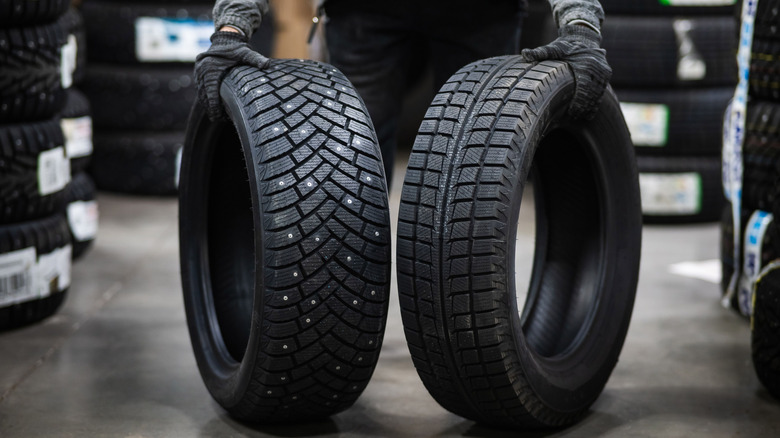

The Hidden Costs of Cheap Tires: Why Budget Brands Crash in Satisfaction Ratings
Is saving a few hundred bucks on tires worth risking your safety and peace of mind on the road? Most drivers dread tire shopping – it’s expensive, complex, and choosing wrong can have serious consequences. Relying on brand reputation alone isn’t enough. Consumer Reports customer satisfaction surveys reveal a stark truth: Several well-known budget tire brands are consistently leaving drivers deeply unhappy. Understanding why highlights that initial purchase price is just one factor in the true cost of tires.
The Frustrating Reality of Tire Purchasing
Beyond the hefty tire purchase sticker shock, investing in new rubber involves significant trust. Owners depend on tires for critical safety functions – maintaining traction on slippery roads, responsive handling during emergencies, and predictable braking distances. When tires fail to deliver these fundamentals after a substantial investment, dissatisfaction runs passionately high. This frustration stems from tires being a rare automotive purchase where consumers directly feel the impact of performance (good or bad) every single time they drive, influencing perceptions far more than, say, engine components. Trusted sources like Consumer Reports (CR) illuminate this friction point through comprehensive evaluations. Rather than relying solely on controlled lab tests, CR delves into real-world experiences屬於 by surveying thousands of tire owners across four crucial satisfaction metrics: all-season tire performance, winter/snow traction, summer dry/wet grip, and all-terrain capability – focusing directly on how tires perform in daily use.
Rankings Revealed: The Brands Steering Toward Disappointment
According to CR’s analysis, the pillars of tire satisfaction are wet/dry grip, ride smoothness, long tread life, and handling predictability.一聲 The data unambiguously pinpointed the tire brands consistently failing to meet customer expectations across multiple categories. These results transcend isolated complaints and represent widespread patterns validated statistically.
- All-Season Agony:
Uniroyal tireslanded firmly at the bottom of the customer satisfaction ratings for all-season tires – arguably the most common replacement category. Otherlow satisfaction performersin this vital segment included Sumitomo, Kelly Tires, and Dunlop. Drivers reported shortcomings in wet-weather handling and premature tread wear as key pain points. - Winter Woes Compounded: Unfortunately for Uniroyal (owned by Michelin), their ranking woes weren’t limited to all-season tires. They also claimed the lowest spot in
winter tire customer satisfaction, a category where premium performance carries profound safety implications. They were joined in the critical “Red” rating zone by Sumitomo, Kelly, Hercules, GT Radial, Dunlop, and notably, BF Goodrich – a Michelin subsidiary often perceived as a performance-oriented brand. - Summer Tire Letdowns: Sumitomo emerged as the worst-rated
summer tire brandfor customer satisfaction. These tires are designed specifically for warm conditions and performance driving; poor satisfaction here highlights failures in delivering responsive handling, dry/wet grip, or noise/vibration refinement expected during summer months. - All-Terrain Underperformance: The dissatisfaction extended to
off-road tire territory. Sumitomo once again anchored the bottom of CR’s All-Terrain tire satisfaction list – performing poorly across rugged and highway conditions. This seals Sumitomo’s dubious distinction as the least-satisfying brand overall in the CR survey across all four categories. While appealing at checkout, thesediscount tire brandsoften deliver frustration mile after mile.
Why Budget Brands Fall Short: The Performance Gap
The recurring presence of Uniroyal, Sumitomo, Kelly, and Dunlop in the “Red” CR ratings across categories points to systemic issues often associated with cheaper tires:
- Material Compromises: Budget brands frequently use lower-cost, shorter-life compounds to hit price points. This directly impacts
tread wear lifespan, a top satisfaction factor. Premium brands invest more in high-silica compounds and polymers for longevity and grip. ([Compound Technology Research – ScienceDirect](https imágenesx://www.sciencedirect.com/topics/engineering/rubber-compounding)). - Engineering & Testing Shortcuts: Developing a tire that excels in wet braking, dry handling, rolling resistance, noise, and comfort requires immense R&D investment. Budget brands often prioritize meeting minimum standards rather than exceeding them.
- Manufacturing Consistency: Variance in curing times or material blending can lead to
premature tire failure, uneven wear, or excessive noise/vibration – major dissatisfaction drivers. - The Reliability Factor: Longer wear and fewer defects directly correlate with customer counteractiveness.
Top Performers: Where Satisfaction Hits the Road
CR’s satisfaction beacon shines brightest on Michelin tires. It was the only brand surveyed to achieve the highest “Light Green” satisfaction rating across all four categories: All-Season, Winter/Snow, Summer, and All-Terrain. This consistency demonstrates Michelin’s ability to


