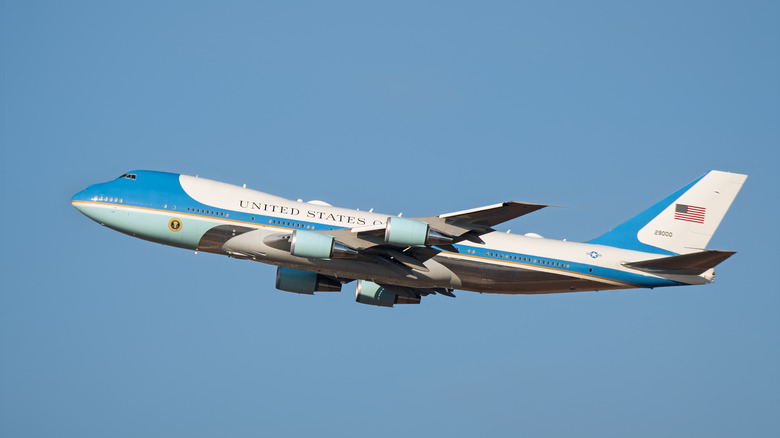

Soaring Delays: Why America’s Next Air Force One Remains Grounded Ask yourself: when was the last time you saw Air Force One streak across the sky? Those iconic aircraft safeguarding the President are engineering marvels, but beneath their gleaming livery lies a mounting problem – they’re aging rapidly. Originally delivered in 1990, the current VC-25A fleet is operating far beyond its intended lifespan. Compounding this challenge is a years-long saga of delays plaguing their replacements, the VC-25B program, forcing the U.S. Air Force into unforeseen stopgap measures. This Air Force One delay signifies more than just scheduling headaches; it raises critical questions about national transportation readiness and the complex realities of modern aircraft procurement amidst Boeing’s broader industrial turbulence.
The Monumental Task: Engineering the VC-25B Flying Fortress
The VC-25B program is tasked with delivering two successors capable of performing the most critical airlift mission on Earth.
- Beyond Surface Similarities: While based on the Boeing 747-8 airframe, transforming it into Air Force One is a monumental undertaking. These aren’t merely VIP jets; they’re airborne command centers engineered for absolute global security.
- Unmatched Security & Survivability: Modifications include classified communications suites hardened against electromagnetic pulse (EMP) threats, advanced missile defense countermeasures, secure encrypted networks linking to global command structures, and likely comprehensive nuclear shielding.
- Significant Capability Upgrades: Boeing confirms the VC-25B will possess:
- Enhanced Range & Endurance: Vital for extended overseas missions without refueling.
- Greater Cabin Space: Accommodating staff, security, press, and mission-specific personnel far beyond commercial configurations.
- Radically Updated Avionics & Navigation: Foundational for navigating contested airspace and communication resilience (Critical Technology Areas, Congressional Research Service Report).
- A Pricey Promise: The initial $3.9 billion fixed-price contract signed in 2018 locked Boeing into delivering two bespoke aircraft at that cost – a deal turning increasingly difficult.
The Stopgap Squadron: Qatar, Lufthansa, and a Flying Fleet Gap
With VC-25B delivery pushed to 2028 – potentially bypassing the presidential administration it started under – aging VC-25As urgently needed augmentation. Enter Plan B:
- The Qatar Gift: Responding directly to early delays during the Trump administration, a government-to-government arrangement secured a Boeing 747-8 formerly flown by Qatar Airways. This aircraft is currently undergoing extensive modifications, though adapting a commercial frame is intricate and time-consuming.
- The Lufthansa Purchase: To further bolster aging VC-25A capabilities, the U.S. Air Force proactively contracted to acquire two additional Boeing 747-8 aircraft directly from German flag carrier Lufthansa (today). Like the Qatar plane, these need near-complete reconstruction internally.
- Transformation Requirements: Converting these jets involves far more than paint:
- Full mission communications/security suite integration.
- Structural reinforcement for critical systems.
- Custom interiors for security zones, command areas, medical facilities, and presidential quarters.
- Comprehensive airframe inspection and component lifecycle analysis. Both acquired jets are slated for delivery by end-2026, providing interim transport capability ahead of VC-25Bs.
| Comparison: VC-25A vs. VC-25B & Interim Fleet |
|---|
| Feature |
| Basis |
| In Service Since |
| Key Advantages |
| Primary Limitation |
| Procurement Source |
Boeing’s Storm Clouds: How Broader Woes Impact Air Force One
The Air Force One delays aren’t isolated incidents. They unfold against a backdrop of significant turbulence within Boeing:
- 737 MAX Crisis Fallout: Years spent re-certifying the MAX after fatal crashes drained resources, damaged reputation, and intensified FAA scrutiny across programs (Boeing 737 MAX Groundings, Wikipedia).
- Persistent Quality Control & Production Challenges: Reports of manufacturing defects, foreign object debris, and assembly line inconsistencies in commercial programs (including the 787 and 737) have plagued deliveries and eroded customer confidence. Scrutiny naturally extends to military platforms.
- Fixed-Price Contract Pressure: Agreed pre-pandemic/pre-inflation surge, the $3.9 billion price tag locks Boeing into absorbing unforeseen cost overruns exacerbated by supply chain disruptions and unanticipated complexities modifying highly classified systems. Significant financial losses have already been reported on the program in Boeing SEC filings.
- Talent & Expertise Strain: Maintaining deep expertise for such specialized modifications while juggling crises elsewhere poses a major workforce challenge.
When Glacial Pace Meets Geopolitical Needs
Setbacks with Air Force One highlight deeper systemic issues:
- Over-Reliance Risk: Depending heavily on Boeing creates vulnerability when one contractor faces extended challenges for critical national asset infrastructure.
- Classified Complexity Tax: Integrating cutting-edge, secretive mission systems requires immense skill. Unexpected hurdles inevitably cause delays in tightly sealed environments.
- Fleet Longevity Concerns: Continuously pushing decades-old VC-25As increases maintenance demands and potential points of failure, raising costs and operational risks.
- Timeline Irony: Aiming VC-25B delivery for 2028, six years late, means jets intended potentially for a President elected after Obama (design initiation) or Trump (contract signing) might arrive mid-term or towards the end of Joe Biden’s successor’s second term – missing administrations entirely.
Navigating the Waiting Game
The Majesty of Air Force One endures, symbolized by aircraft tailored for unparalleled security and command tasks. Yet pressure mounts beneath aging wings extended by complex stopgap measures plagued by intricate modification paths. Significant delays crafting successors stem from immense technical hurdles layered onto Boeing’s internal recovery efforts under enormous fixed-cost pressures. Seeing these next-generation VC-25Bs finally take flight remains critical for modernizing presidential air transport capability. We rely on evergreen VC-25As and modified interim fleet jets bridging the gap amid protracted challenges shaping aerospace realities beyond patriotic paint schemes. What impact do you perceive Boeing’s extended struggles having on vital defense programs? Share your insights below.


