
Beyond Chinatown: How Apple TV’s Sci-Fi Twist Rewrote Detective Fiction Forever
What separates groundbreaking television from algorithmic sludge? Amidst streaming platforms cancelling shows faster than viewers can press ‘play’, Apple TV+ has emerged as Hollywood’s boldest creative lab. From the psychological labyrinths of Severance to the android angst of Murderbot, Apple bets on originality over algorithms. Nowhere is this gamble clearer—or stranger—than in Sugar, Colin Farrell’s neo-noir detective saga that mutates mid-season into genre-defying sci-fi. Welcome to the frontier of streaming innovation.
Apple’s Sci-Fi DNA: Cultivating Unconventional Worlds
Apple TV+ didn’t merely adopt sci-fi—it redefined it. Unlike competitors prioritizing familiar franchises, Apple built its identity around high-concept, visually lush originals:
- Foundation (Asimov’s galactic saga, budget ~$45M/season)
- Silo (dystopian mysteries beneath a toxic Earth)
- Invasion (global alien threat told through intimate vignettes)
This strategic focus emerges from data: A 2023 Parrot Analytics report shows sci-fi/drama hybrids drive 37% higher audience demand for Apple than Netflix’s comparable offerings. By commissioning narratives weaving existential questions with visceral storytelling, Apple transformed niche genres into appointment viewing – proving audiences crave substance over safety.
Deconstructing Sugar: LA Noir Through a Retro Lens
On the surface, Sugar radiates classic noir aesthetics. Detective John Sugar (Farrell) prowls Los Angeles’ rain-slicked streets, chasing the vanished granddaughter of legendary film producer Jonathan Siegel (James Cromwell). The homage runs deeper than trench coats and Venetian blinds:
- Visual Language: Noir iconography brims via chiaroscuro lighting, obscured angles mimicking The Big Sleep, and a jazz-blues soundtrack.
- Character Archetypes: The alcoholic, haunted PI; corrupt oligarchs; femmes fatales with razor-sharp wit.
- Setting as Character: LA’s glittering decay echoes Chinatown, exposing elitism and exploitation.
Yet showrunner Mark Protosevich (screenwriter of I Am Legend) laces this authenticity with uncanny details. Sugar speaks 47 languages impeccably. Bullet wounds vanish after secret injections. Alcohol flows without intoxication. These quirks feel like noir embellishments—until Episode 6 detonates expectations.
The Supernova Twist: Alien Revelations Reshape Noir
“We don’t learn this conclusively until Episode 6… Apple allowed producers to blindside fans.”
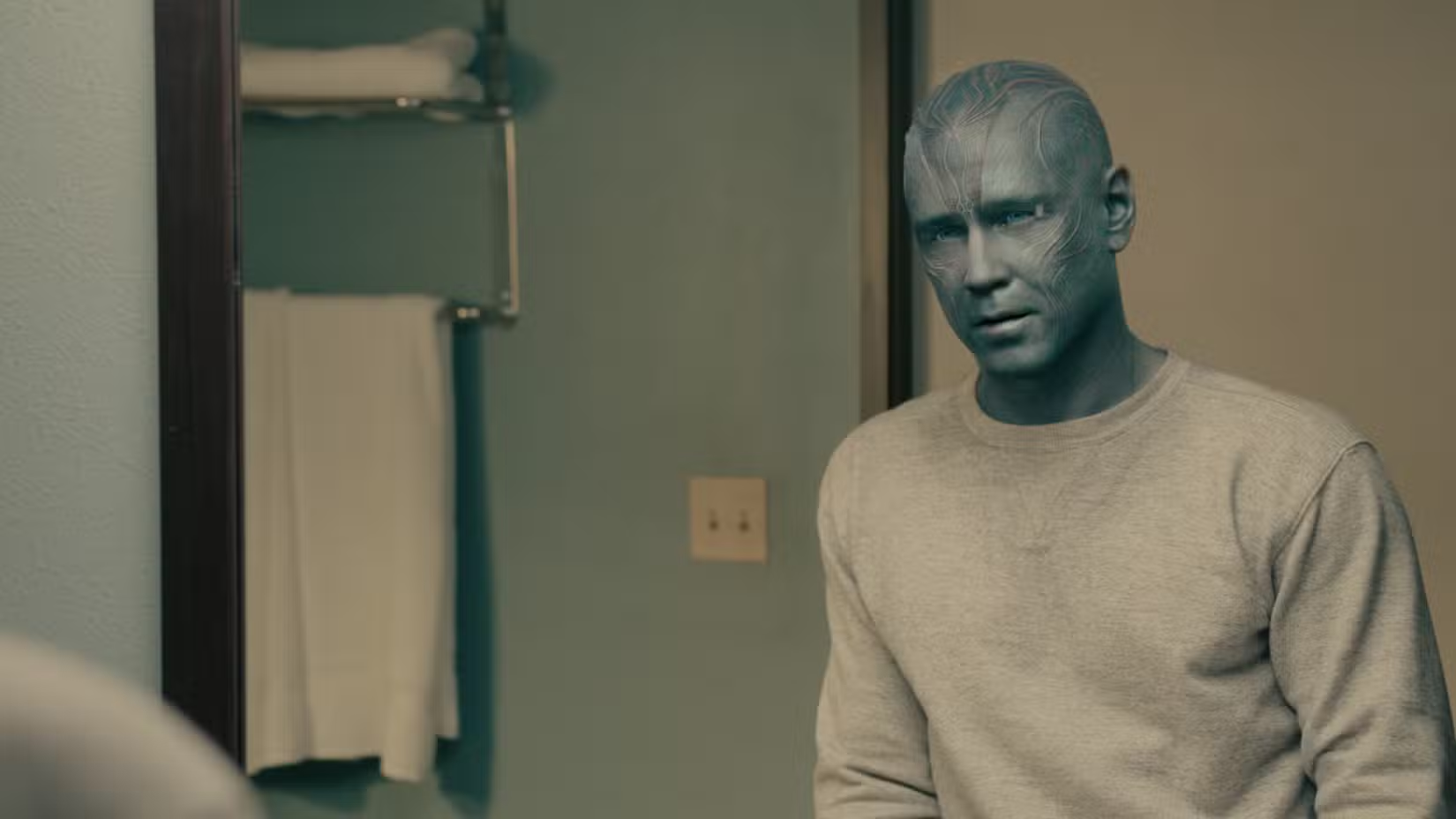
Midway through Season 1, Sugar reveals he’s an extraterrestrial observer studying humanity through detective films. This isn’t a throwaway detail—it rebuilds the narrative’s foundation:
- Genre Synthesis: Sugar monitors humans via Chinatown or L.A. Confidential lenses, explaining his theatrical mannerisms (“Forget it, Jake…”).
- Delayed Revelation Impact: Releasing weekly (unlike Netflix’s binge drops) amplified suspense. Audiences stewed for weeks analyzing clues pre-reveal.
- Ethical Underpinnings: Sugar’s mission reframes missing-person cases—does “observing” demand he intervene against trafficking rings?
The twist exemplifies “narrative courage.” As The Guardian noted, few mainstream shows pivot genres post-premise (Source: TV Tropes Subversions). Sugar’s evolution resurrects noir’s themes—moral ambiguity, institutional rot—through sci-fi’s limitless metaphors.
| Traditional Noir vs. Sugar’s Genre Fusion |
|———————————————–|———————————–|
| Classic Noir | Sugar (Post-Twist) |
| Human corruption as core conflict | Alien perspective on human flaws |
| Contained urban mysteries | Intergalactic stakes beneath LA streets |
| Gritty realism | Surreal sci-fi tech/powers layered in reality |
Rewriting Genre Rules: What Comes After an Alien Detective?
Detective stories traditionally thrive on formula: crime > investigation > revelation. Sugar dissolves these boundaries. Episode 6’s reveal empowers creators to ask: What if Benedict Cumberbatch’s Sherlock decoded crimes via telepathy? What if Mrs. Marple solved murders with Q-like gadgets? Suddenly, noir becomes boundless.
Meirelles (director of City of God) uses alien POV to critique Silver Age Hollywood’s myths. Sugar’s misunderstood humanity—mirrored in exploited trafficking victims—suggests society’s “villains” aren’t monsters, but systems commodifying dignity. As Sugar confesses: “I came to understand your pain… and it is beautiful.”
Sipping From the Future: Season 2 & Beyond
Season 1 ends with Sugar grounded on Earth, battling enemies within Siegel’s cabal—and potentially, his own kind. Season 2 promises deeper mythos, yet poses challenges:
- Plot Evolution: Maintaining noir rhythms amid sci-fi escalation
- Thematic Exploration: Can Sugar reconcile observer/participant ethics?
- Audience Growth: Balancing dedicated fans with wider sci-fi appeal
Apple renewing Sugar despite modest viewership confirms its ethos: Prestige means prioritizing vision over vanity metrics. With Farrell’s soulful performance anchoring chaos, Season 2 could cement Sugar as television’s most radical detective saga.
The Apple Effect: Risk as Brand Identity
Why does “off-the-wall strange” thrive here? Apple leverages its scale (and $1B+ annual content budget) to court auteurs shunned elsewhere. Sugar embodies its advantages:
- Low Cancellation Risk: Just 17% cancel rate vs. Netflix’s 48% in 2023 (Source: Variety)
- A-List Talent Freedom: Farrell cited Apple’s “artistic trust” in interviews
- IP Patience: Slow-burn successes like Ted Lasso prove longevity pays
As audiences tire of algorithm-driven reboots, Apple answers with emotional originality. Sugar isn’t just TV—it’s a challenge: Dare something new.
The most shocking twist in Sugar wasn’t Colin Farrell sipping whiskey as an alien—it was Apple TV+ resurrecting creative storytelling in risk-averse times. This neo-noir chimera proves experimentation, when executed with precision, transcends niche appeal to become zeitgeist. Forget streaming wars; Apple fights for imagination. Where should inventive auteurs journey next? Share your radical genre fusions below!


