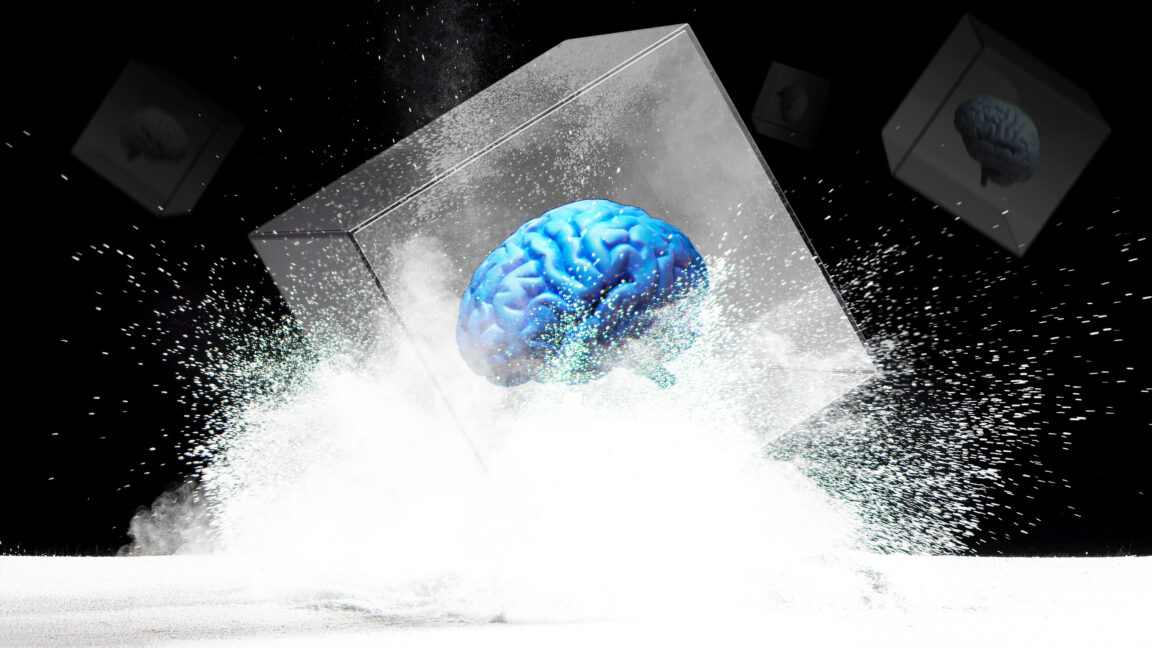

The Great AI Wake-Up Call: Why 2025 Changed Everything
Did the AI bubble finally burst? By mid-2025, venture capitalists had poured over $425 billion into AI startups since 2023, yet market analysts warned of an imminent storm. In a landscape saturated with grandiose claims of artificial general intelligence (AGI) and civilizational transformation, that year became a brutal reckoning. No longer was AI hailed as an oracle; instead, it faced scrutiny as a deeply flawed—and expensive—tool. This pivotal shift forced investors, developers, and users to confront a harsh truth: the AI market correction was overdue, driven by unsustainable hype and infrastructural realities.
The Impending Crash: Anatomy of an AI Bubble
The frenzied pursuit of AI dominance created a precarious ecosystem. A “winner-takes-most” mentality saw trillion-dollar tech giants and scrappy startups alike making astronomical bets. Consider the numbers:
- Over 300 new AI application-layer startups emerged in 2024 alone, chasing fragmented niche markets.
- Infrastructure costs soared, with training a single large language model (LLM) requiring up to $100 million in compute resources (IEEE Spectrum, 2024).
- Valuations defied logic: Pre-revenue AI firms routinely commanded $1B+ unicorn status despite unproven use cases.
As Stanford’s 2025 AI Index Report noted, this gold-rush mentality ignored basic economics. Markets can’t sustain hundreds of competitors offering similar chatbot or image-generation services. When early leaders like OpenAI and Anthropic tightened monetization, smaller players faced cannibalization. The resulting carnage wasn’t subtle: Q3 2025 saw 27 major AI startups fold, while others desperate for cash sold assets for pennies on the dollar. The bubble didn’t just deflate—it ruptured pretense.
Silent Soldiers of Progress: When AI Started Seeing (And Hearing)
Amid the financial turmoil, genuinely transformative advances flew under the radar. Video synthesis models took monumental leaps:
- Google’s Veo 3 pioneered synchronized sound generation, creating videos indistinguishable from live footage.
- Wan’s open-source 2.5 model allowed indie filmmakers to produce professional-grade content, democratizing Hollywood-tier tools.
These innovations underscored AI’s latent potential—free from AGI prophecies. Filmmakers used Wan to slash post-production costs by 60%, while investigative journalists leveraged Veo to reconstruct crime scenes for courtroom evidence. Yet these weren’t “magic” solutions; they were predictable evolutions of narrow systems. Unlike viral demos of previous years, their impact was measured in practical outcomes, not apocalyptic forecasts.
Tools, Not Oracles: The Reality Check Hits
If 2023 promoted AI prophecy, 2025 became its cold shower. Why? Four seismic wake-up calls exposed techno-optimism as reckless:
-
The Collapsed Reasoning Mystique: Studies revealed advanced models like Anthropic’s Claude still struggled with inferential logic. When CDC trialed lab analytics AI in outbreak simulations, error rates exceeded 40% for non-linear scenario planning. LLMs optimized for pattern recognition aren’t thinkers—they’re elaborate interpolators.
-
Training Data Reckoning: Copyright lawsuits froze key datasets. After rulings favored artists in Andersen v. Stability AI, vendors scrambled to purge billions of infringing vectors. For example, Midjourney wiped 34% of its training data overnight, degrading output quality. The simple economics: Ethically sourced datasets are 3-5x costlier to compile (Brookings Institution, 2024).
-
The Anthropomorphism Trap: Replika.ai’s mental health crisis—where users reported depression after “relationships” with companions—forced WHO guidelines for emotional dependency (World Health Organization). Tools faking empathy create measurable harm.
-
Infrastructure Burn: Training Gemini 6 reportedly consumed 1.7 gigawatt-hours—equivalent to powering 100,000 homes monthly. As regulators pushed carbon taxes, scaling became a game of physics, capital, and politics.
Accountability Replaces Awe: Measuring What Matters
This disillusionment fueled pragmatic transformation:
| Previous Focus (2023-24) | 2025 Focus | Real-World Impact |
|---|---|---|
| Speculative AGI timelines | Reliability metrics | Healthcare AI audits cut diagnostic errors by 22% |
| Disruption narratives | Integration strategies | Supply chain firms boosted profits 15% via predictive logistics |
| VC fundraising prowess | Unit economics scrutiny | Startups prioritizing profitable workflows survived downturn |
Market leaders pivoted hard. Microsoft rebranded Copilot as a “productivity co-driver” ditching theatrics for enterprise case studies. DeepMind openly published failure analyses, something unthinkable during AI’s hype zenith. Success meant clearing smoke to expose actual fire.
Beyond Prophecy: The Unromanticized Future
Progress didn’t halt; it refocused. Open-source communities launched initiatives like BLOOM Consequence to assess harm pre-deployment. Stability-bound profits will necessitate ethical pragmatism—“can we build it?” evolves into “should we deploy it?”
The Dawning Machine Era: Humanity’s Next Move
The AI market correction unveiled a core truth: these aren’t sentient wonders but sophisticated utilities requiring oversight. Businesses now prioritize uptime over sci-fi promises, while regulators draft tough frameworks balancing innovation against societal risks. What exploded was hubris—not the tech itself. Tools endure. The real transformation? Ours.
What defines your AI expectations now—reliability or revolution? Weigh in: Can ethical, profitable models redefine entire industries without leaving mass casualties? Share your take below.


