
The Silent Revolution: How Sports AI is Rewriting the Rules for Africa’s Hidden Football Talent
Introduction
Imagine a teenager in Zimbabwe hammering a stunning 30-meter strike during a school match. A moment of pure brilliance, raw talent shining through. Now ask yourself: How many of these electrifying performances vanish into thin air, witnessed only by a handful on a dusty pitch? Billions tune in to watch superstars like Zimbabwe’s own Marshall Munetsi in the Premier League, yet countless African prodigies remain invisible, their potential forever untapped. This persistent visibility gap has stifled dreams and wasted potential for generations. The game-changer? Sports AI Africa. This pioneering technology—already filming Zimbabwean Premier Soccer League (ZPSL) matches—is now transforming high school fields into digital talent showcases. Its mission: to ensure no future Munetsi goes unseen, linking local brilliance with global opportunity in ways previously unimaginable.
The Agonizing Visibility Gap: African Talent Trapped in Oblivion
For decades, African football’s painful paradox has been the abundance of raw talent stifled by a crippling lack of exposure. Scattered across remote schools and communities, young players smash records, demonstrate sublime skill, or simply show flashes of innate brilliance – all without documentation. As the source anecdote poignantly illustrates, moments like a comically miskicked anthill or a sublime goal often live and die as fleeting local folklore. Traditional scouting networks rarely penetrate this grassroots layer, requiring prohibitive time, travel, and resources. Even dedicated domestic academies can’t monitor every dusty field. This isn’t just inconvenient; it’s a systemic failure wasting generational talent. Players with genuine potential – “good enough to play, at least in France,” as the source laments – fade into obscurity, their careers over before they’ve truly begun, purely because “someone has to see you” and no one did. Talent remains trapped in a geographical and technological black hole.
Unveiling the Solution: Sports AI Africa Descends on the Pitch
Enter Sports AI Africa, a technological disruptor operating under the radar until recently. Having successfully deployed its systems within the Zimbabwe Premier Soccer League, the company is now setting its sights on the crucible of future stars: high schools. Unlike grandiose promises or pilot projects, Sports AI is already operational. Schools across Zimbabwe are actively using the platform:
- Key Capabilities: Livestreaming matches in real-time.
- Accessibility: Providing full recordings accessible on-demand.
- Archive: Building video libraries dating back to previous years.
This isn’t speculation; it’s live technology enabling anyone with internet access to watch school-level football right now. The platform instantly converts a local match into a globally accessible event.
Technology Decoded: The AI-Powered Camera Changing Everything
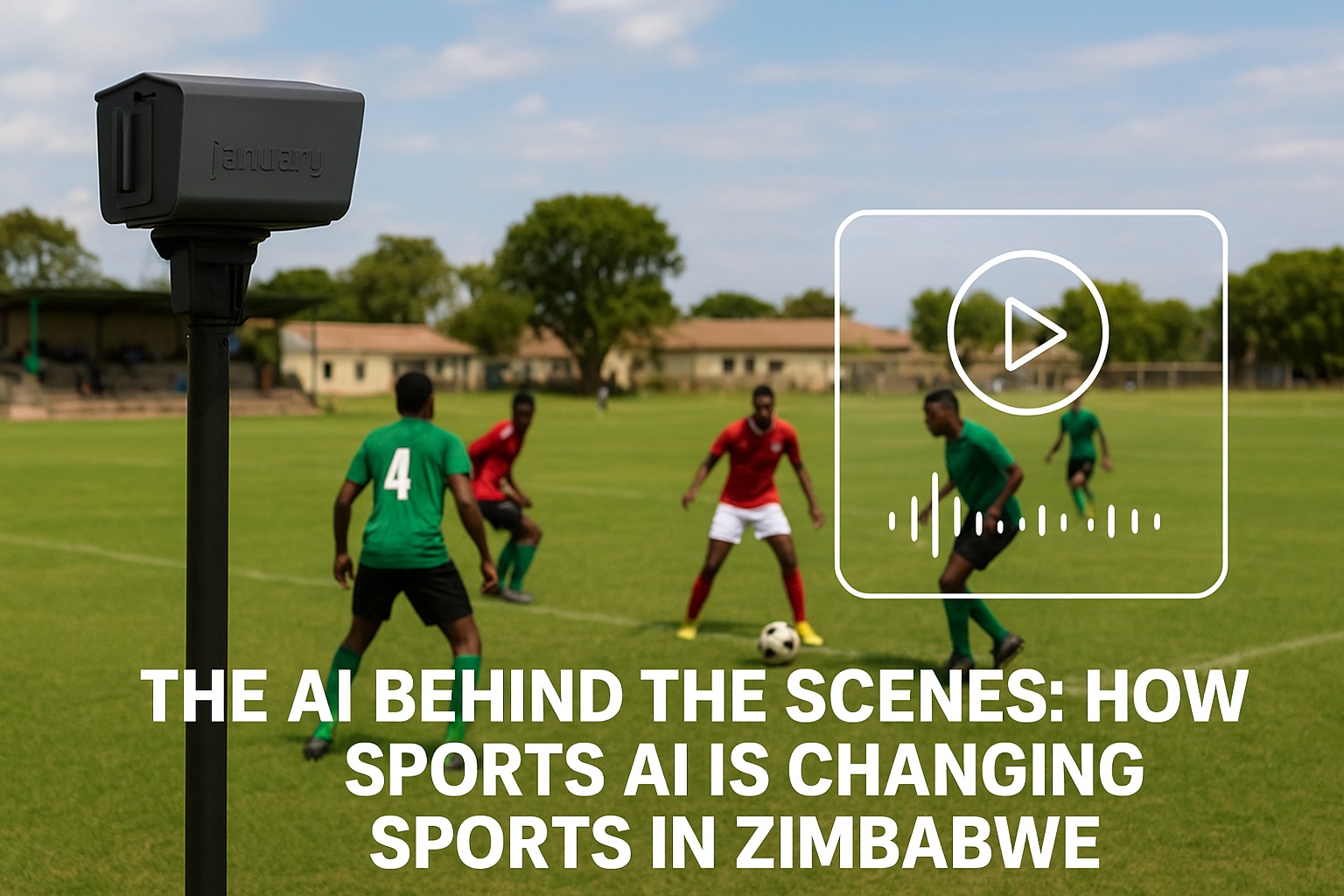
The magic lies in Pixellot’s automated sports production system, exclusively distributed in Africa by Sports AI Africa. Forget complex setups requiring camera crews and vans; the system revolves around a single, intelligent camera unit mounted in an elevated position. Its AI algorithms are the workhorse:
- Automatic Tracking: Sensors and software detect the ball and player movements, seamlessly panning and zooming to follow the action frame-by-frame.
- Smart Production: Real-time generation of instant replays and key highlights without human intervention sidesteps the need for an expensive broadcast truck.
- Streamlined Delivery: Footage is automatically encoded and uploaded to the cloud for livestreaming or storage.
This technical marvel transforms any field—even one with “in-need-of-a-trim grass”—into a broadcast-ready arena, democratizing production quality previously reserved for elite leagues.
| Feature | Traditional Broadcast at Amateur Level | Sports AI with Pixellot | Advantage |
|---|---|---|---|
| Setup Complexity | High (Multiple cameras, operators, truck) | Low (Single automated camera) | Radical Cost & Effort Reduction |
| Real-Time Action | Limited coverage, often unreliable | Consistent, AI-tracked coverage | Guaranteed Game Capture |
| Highlight Reels | Manual, time-intensive editing needed | AI-generated automatically | Instant Player Showcase Creation |
| Access Cost | Prohibitively high for schools | $10 per term subscription | Unprecedented Affordability |
Tangible Impact: Empowering Players, Parents, and Scouts
Sports AI Africa isn’t just about technology; it’s about creating tangible pathways:
- For the Player: That bullet from 30 yards? It’s now immortalized. Players can easily clip their standout moments into professional highlight reels. These aren’t just for bragging rights; they’re critical tools for scholarship applications (US colleges are voracious talent seekers), trial invitations, or proving ability to skeptical scouts. “Yes, I really did score that goal” is now provable.
- For the Parent & Community: Juggling work and school sports is a near-impossible feat for many parents. Sports AI Africa shatters this barrier. With a subscription costing just $10 per term (approx. 4 months), parents can stream matches live on their smartphones or watch recordings at their convenience. Crucially, this affordability makes it accessible beyond just privileged “executive” families.
- For the Scout & Coach: The global talent search just became hyper-efficient. Agents and academies spanning Europe, North America, and beyond can now discover Zimbabwean gems remotely. A scout receives a notification about a promising striker in Gweru, watches his game footage instantly, and initiates contact—all without boarding a plane. As highlighted by the International Centre for Sports Studies (CIES Football Observatory), data and video analytics are increasingly pivotal in global talent identification.
Proven Blueprint: Lessons from South Africa’s SuperSport Schools Phenomenon
Skeptics might dismiss this as niche technology. Look south. SuperSport Schools, powered by the same Pixellot technology distributed by Sports AI Africa, has ignited a revolution in South African youth sports. Their staggering metrics speak volumes:
- 1.2 million registered users.
- 11 million views in the past year alone.
- Over 50,000 hours of sport streamed (nearly 48,000 hours live).
- Year-on-year user growth approaching 50%.
Remarkably, some school matches have outperformed professional broadcasts in viewership. Why? It taps into a powerful desire: audiences crave local, relatable heroes. People want to watch their children, neighbors, and community standouts, not just distant global icons. Crucially, the platform complements, not cannibalizes, live attendance: roughly 40% watch live, while 60% engage on-demand – often parents replaying a game they attended. This model demonstrably works at scale, providing a powerful case study for Zimbabwe and beyond.
The Bigger Picture: Talent + Opportunity + Visibility = Africa’s Sporting Future
Every Premier League kickoff renews dreams across Africa. Yet, for too long, the equation has been incomplete. Zimbabwean players, like many across the continent, possessed talent and seized opportunity on the local pitch, but lacked the critical third element: visibility. This meant their potential died in obscurity. Sports AI Africa completes this formula. By embedding professional-grade broadcasting into the foundational levels of the game – school sports and the domestic league (ZPSL) – it ensures the next generation’s skills won’t be lost to the dust.
The implications are profound:
- Meritocracy: Selection for academies or national teams becomes more evidence-based, reducing bias.
- Inspiration: Seeing peers on platforms like Sports AI motivates younger players, validating that their efforts can be seen globally.
- Economic Pathways: Football offers vital economic opportunities; enhanced visibility increases chances of securing contracts or scholarships abroad. Academics like those at Loughborough University’s School of Sport, Exercise and Health Sciences (Loughborough University Research) consistently emphasize sport’s role in socio-economic development.
This isn’t just about spotting the next Marshall Munetsi. It’s about systematizing talent discovery, making African football development more efficient, equitable, and globally connected. It turns local potential into tangible, global possibility.
Conclusion
The echo of a final whistle on a Zimbabwean school field no longer signals the end of a dream. Thanks to Sports AI Africa and its affordable, AI-powered broadcasting revolution, moments of raw talent are no longer fleeting ghosts. They are permanent records, accessible to scouts and accessible to parents, fueling scholarships and professional careers. By tackling the historic scourge of invisibility head-on, this technology bridges the cavernous gap between dusty local pitches and the hallowed turf of the Premier League. The heartbreaking reality of unseen brilliance – the “anthill moments” – is being replaced by a future where every flick, every tackle, every thunderous strike has the potential to be witnessed by the world. Africa’s football talent pool is finally stepping into the global spotlight. What’s your take? Can AI-driven visibility truly level the playing field for Africa’s next generation of football stars? Share your insights in the comments below!
Sources & Further Reading:
Original article at www.techzim.co.zw


