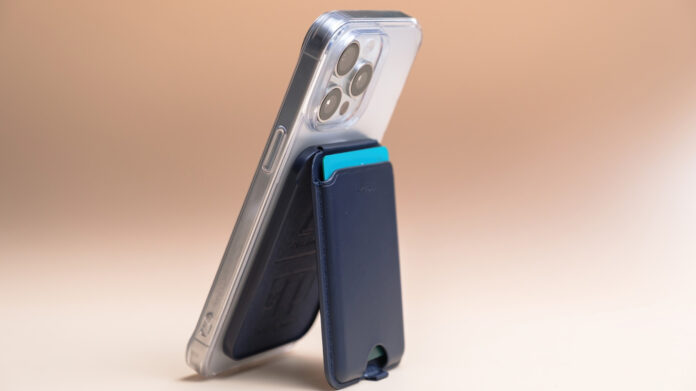

The Magnetic Charging Showdown
Remember when MagSafe felt like a gimmick? Apple introduced it on the iPhone 12, borrowing the same branding from its magnetic MacBook chargers. The idea was simple: add a ring of magnets around the wireless charging coil so accessories snap into perfect alignment. Six years later, that “gimmick” has reshaped the entire mobile accessory market.
Where MagSafe Came From
The magnetic connection isn’t new. Apple used MagSafe on MacBooks for years—that satisfying *click* when the charger connected, and the peace of mind that a tripped cable wouldn’t yank your laptop off the table. When the iPhone 12 arrived in 2020, Apple adapted that same principle for wireless charging.
The problem it solved was real: standard Qi charging was frustrating. Phones had to sit perfectly centered on a pad, and even a slight misalignment meant slow charging or no charging at all. MagSafe’s magnet ring forced perfect coil alignment every time, letting Apple push wireless speeds from 7.5W to 15W.
Enter Qi2: The Universal Standard
In 2023, the Wireless Power Consortium (WPC)—the group that maintains the Qi standard—announced that Apple had donated MagSafe’s magnetic alignment technology as the foundation for a new standard: Qi2. This wasn’t just a handshake; it meant any Qi2-certified charger would work with MagSafe iPhones, and vice versa.
The key distinction: MagSafe remains a proprietary Apple brand with its own certification program. Qi2 is the open standard built on the same magnetic alignment principle. For consumers, this is good news—you’re no longer locked into Apple’s ecosystem for magnetic charging.
Speed Wars: 15W, 25W, and Beyond
When the iPhone 12 launched, 15W MagSafe charging was the ceiling. Fast forward to 2026, and the iPhone 17 Pro series supports 25W over the latest MagSafe revision. Meanwhile, Qi2.2 (the current spec) also enables 25W wireless charging on devices like the Google Pixel 10 Pro XL and Samsung Galaxy S26 Ultra (with a magnetic case).
The practical takeaway: if you’re buying a magnetic charger today, don’t just look for “MagSafe” or “Qi2” branding. Check the wattage rating. A 25W Qi2 charger will fast-charge your iPhone 17 Pro just as well as a 25W MagSafe one. The logo matters less than the number.
Physical Compatibility Still Matters
There’s one catch: magnets align coils, but they don’t solve physics. A MagSafe battery pack designed for the iPhone 17’s camera bump might not sit flush on a Pixel 10 Pro with its horizontal camera bar. The charging will still work, but the fit might be awkward. Always check dimensions, especially for snap-on power banks and wallet attachments.
The Bottom Line
MagSafe and Qi2 are functionally the same technology—magnetic alignment over Qi coils. Apple got there first and built an ecosystem; the WPC standardized it for everyone else. In 2026, you can mix and match freely as long as you verify the wattage rating matches your phone’s maximum supported speed.
Shopping tip: Ignore the branding. Look for “25W” (or whatever your phone’s max wireless speed is) and a form factor that fits your device. That’s the only spec that actually matters.


