
The End of an Era: OnePlus Exits the US and European Markets
If you’ve been following the smartphone world for the past decade, you know the name OnePlus. It wasn’t just another Android manufacturer—it was the rebel. The upstart that crashed the flagship party with a phone that cost half as much as a Samsung or an Apple but delivered almost everything enthusiasts craved. Now, that story has reached its final chapter. The company has confirmed it will no longer sell new products in the United States and Europe, leaving existing users with ongoing software support but no new hardware to look forward to.
The announcement, which surfaced in mid-2026, didn’t come with much fanfare. But for the Android faithful in North America, it hit hard. Because OnePlus wasn’t just another option in the carrier store. It was the phone you bought when you wanted something—and someone—different.
A Market Already Shrinking
Let’s be honest: the US Android market was already a tight space before OnePlus pulled the plug. Samsung dominates with its Galaxy S and Z Fold lines. Google’s Pixel lineup has carved out a loyal, if modest, niche. Motorola exists, mostly on the budget end. And that’s about it. Walk into any carrier store and you’ll see the same three or four names on display, all offering variations of the same glass slabs wrapped in similar aluminum frames.
OnePlus sat in a sweet spot between those giants. It wasn’t trying to out-Samsung Samsung on volume or out-Google Google on AI. Instead, it offered something the others seemed to forget: character. Every OnePlus device from the original “Flagship Killer” through the OnePlus 15 had a certain personality baked into its design, its software, and even the way it felt in your hand.
The Magic Was in the Materials
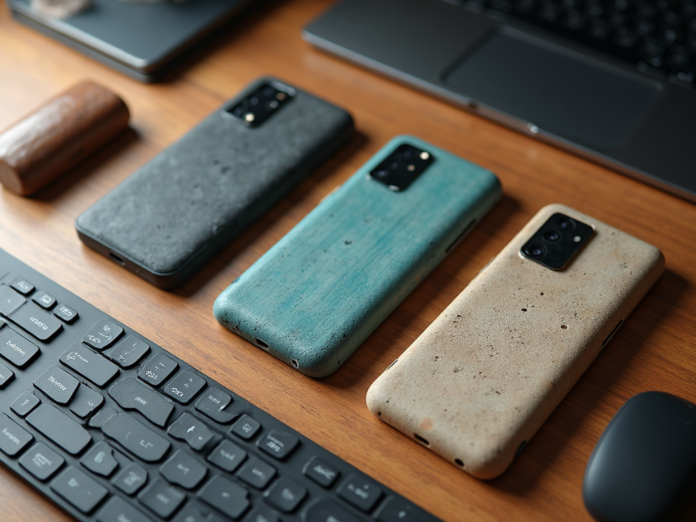
Think back to the OnePlus One. While every other flagship was sliding into your palm on a polished glass back that doubled as a fingerprint magnet, the One Plus One introduced the Sandstone finish. It was a revelation. The textured back was grippy without being rough, understated without being boring. It felt like running your fingernail over fine sandpaper—satisfying in a way that cold glass never could be.
Then came the bamboo. The OnePlus X arrived with a ceramic body and a special edition that featured real bamboo wood paneling. In a sea of identical glass rectangles, OnePlus was doing something genuinely daring. They were treating the smartphone as a tactile object, something you wanted to hold and touch, not just stare at. The StyleSwap covers let you change the entire personality of your phone with a snap-on backpanel. Want a denim texture today? Swap it in. Want carbon fiber for the weekend? Done.
This wasn’t just cosmetic gimmickry. It was a philosophy. While Apple and Samsung focused on tightening tolerances and shaving millimeters, OnePlus asked a deeper question: what does a phone actually feel like? And they answered by threading texture into the very DNA of their devices.
What We Lose
With OnePlus gone from the US and Europe, the Android landscape becomes more homogenous. Samsung makes excellent phones, but they’re predictable—each year brings an incremental camera upgrade and a slightly faster chip, all wrapped in the same glass sandwich Google perfected with the Pixel. Google’s design language shifts year to year but stays firmly in the “premium minimalism” camp. No one is experimenting with materials the way OnePlus did.
The loss isn’t just about nostalgia for a Sandstone back or a bamboo panel. It’s about what those choices represented: a company willing to treat the smartphone as more than a computing appliance. It’s the difference between buying a piece of furniture from IKEA and buying one from a craftsman. Both will hold your coffee mug, but only one makes you smile every time you set it down.
For US consumers, the remaining choices in the Android space come down to a handful of Samsung Galaxy models, a Pixel or two, and whatever Motorola puts into the mid-range aisle. The variety that made Android interesting—the weird experiments, the design risks, the material innovations—is shrinking.
Remembering the Highlights
Going back through the OnePlus catalog feels like flipping through a smartphone museum. The OnePlus One launched with CyanogenMod and a price that made flagship buyers wince. The OnePlus 3 brought Dash Charge, which charged faster than anything from the competition. The OnePlus 5T refined the bezel-less display before the term was mainstream. The OnePlus 7 Pro featured a pop-up camera for a truly uninterrupted screen. The OnePlus 10 series introduced Hasselblad partnership for camera tuning. And all the way through, the design language evolved but never lost that distinctive touch—the alert slider, the textured power button, the feel of the frame in your hand.
Even the OnePlus 15, the last model to land on US soil, carried that DNA forward. It wasn’t the best camera phone on the market. It didn’t have the longest battery life. But it had something intangible: a sense of identity. You knew why you bought it.
The Road Ahead
OnePlus hasn’t shut down entirely. The company continues to operate in other markets, particularly India and parts of Asia where it maintains a strong presence. And existing devices in the US and Europe will continue to receive software updates for their promised lifespan. But the absence of new hardware means the brand will slowly fade from the American consciousness.
For now, if you’re holding a OnePlus phone in 2026, cherish it. You’re carrying one of the last truly interesting Android devices in a market that’s becoming more uniform by the day. The Sandstone may be gone, but the philosophy it represented—that a phone should feel as good as it works—is worth remembering.
The Android market in the US just got a little more boring. And that’s a loss we should all take seriously.


