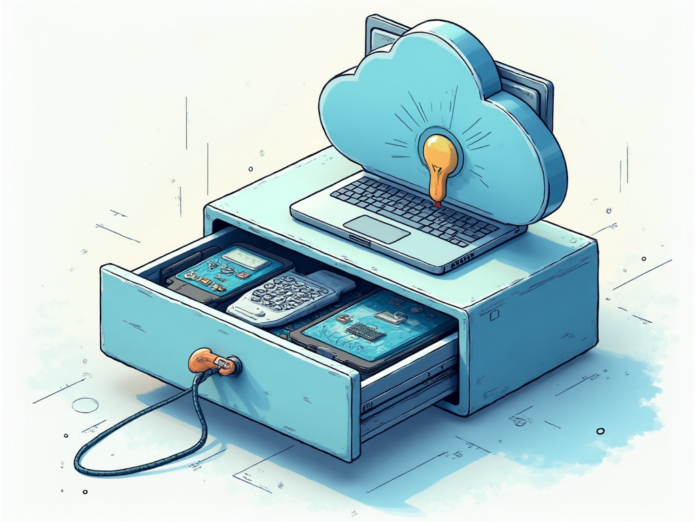

What if that drawer full of old smartphones could power a data center? That’s not a hypothetical anymore. Researchers at Google and UC San Diego have done exactly that — turning 2,000 discarded Pixel phones into a fully functional cloud computing platform. The experiment proves what tech enthusiasts have long suspected: yesterday’s flagship is today’s server hardware.
From Junk Drawer to Server Rack
The process is surprisingly methodical. Researchers removed the motherboards from 2,000 retired Pixel phones, stripped away batteries, displays, and cameras — components unnecessary for computing tasks — and installed a lightweight Linux distribution. The stripped-down boards were then organized into clusters of 25 to 50 devices each, slotted into standard datacenter trays as if they were always meant to be there. What emerged was a computing platform that looks nothing like a server and performs very much like one.
Real-World Performance Numbers
The results speak for themselves. The repurposed phone cluster matched the throughput of an Asus RS720A server rack — not bad for hardware that was headed for a recycling bin. On a smaller scale, a cluster of 20 phones can support a class of 75 students running cloud-based workloads. Scale up to the full 2,000 units, and you get a computing platform capable of serving up to 100 courses simultaneously. For educational institutions and research labs working with tight budgets, that’s transformative.
The Environmental Angle
Here’s the part that makes this more than a clever experiment. With an estimated 5.3 billion phones discarded every year, e-waste is one of the fastest-growing environmental challenges of our time. Most of those phones have perfectly functional processors, memory, and storage — components that require significant energy and resources to manufacture. Repurposing them as server infrastructure offers a viable, scalable path for reducing electronic waste while delivering real computing power at a fraction of the cost of new hardware.
The phone in your pocket right now is more powerful than the servers that ran the early internet. Maybe its second life hasn’t even started yet.


