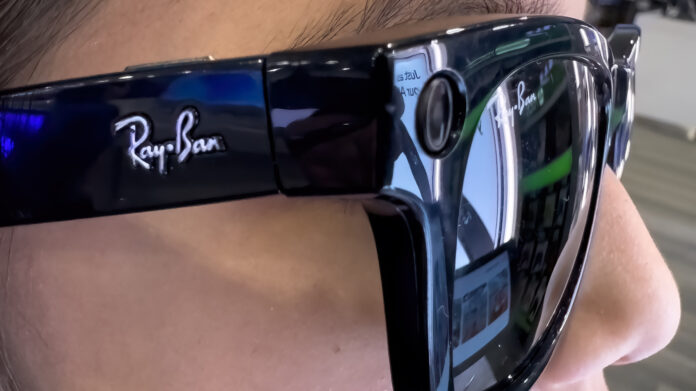

Smart glasses have gone from sci-fi fantasy to everyday reality. They translate conversations in real time, beam turn-by-turn directions into your line of sight, and let you capture moments hands-free. But with that convenience comes an uncomfortable question that no one seems to have a good answer for: how do you know if someone wearing them is recording you?
Pennsylvania is stepping up with a legislative answer. House Bill 2603, introduced by state representative Joe Ciresi with co-sponsors Liz Hanbidge, Dan Williams, and Carol Hill-Evans, proposes a straightforward solution: every smart glasses or wearable recording device sold or used in the state must have a visible recording indicator — a light that activates whenever audio or video capture is underway.
What the Bill Actually Says
The language is precise. The bill defines the indicator as “a light or device on a wearable recording device that indicates that the device is capturing sound or video.” Here’s what it would actually do:
- Smart glasses and similar wearables cannot be manufactured or sold in Pennsylvania unless they include this indicator
- No workaround or aftermarket accessory may disable the indicator
- Recording audio or video while the indicator is inactive becomes a prohibited act
- Both manufacturers and end-users would be held accountable
In effect, HB 2603 closes a gap in Pennsylvania’s existing wiretapping and electronic surveillance statutes — laws written long before anyone imagined a camera built into a pair of glasses.
Why This Moment Matters
Smart glasses currently exist in a strange regulatory twilight. Your phone has an obvious recording signal — that bright red dot in the corner of the screen that everyone recognizes. But smart glasses capture the same content with no visible cue at all. A tap on the frame or a quiet voice command is all it takes.
This isn’t theoretical. Meta’s Ray-Ban Smart Glasses, Xreal Air, and a growing list of competitors can snap photos and roll video without bystanders having any clue. The Pennsylvania bill cuts straight to the heart of that asymmetry: if the device is recording, you should know.
Where This Fits in the Broader Legal Picture
Smart eyewear is following a path we’ve seen before — technology racing ahead while the law tries to catch up. Autonomous vehicles faced the same dynamic a few years ago, and we’re seeing it again with wearable cameras and microphones.
What makes Pennsylvania’s approach notable is its restraint. Rather than banning recording wearables in certain spaces or requiring consent for every capture, HB 2603 goes for a transparency-first approach. The light solves the knowledge problem without dictating what people can or can’t record.
What It Means for the Industry
If HB 2603 becomes law, the ripple effects won’t stop at Pennsylvania’s borders. State-level tech regulations often set de facto national standards — California’s vehicle emissions rules and New York’s data privacy law are prime examples. Manufacturers like Meta and Xreal would likely build recording indicators into all units rather than maintain separate SKUs for one state.
The good news is that the fix isn’t complicated. A small LED that fires whenever the camera or microphone is active is a trivial hardware addition. Some devices already have them, though they’re often tiny, poorly positioned, or easy to block. The bill would require them to be unmistakable.
What Happens Next
House Bill 2603 is still in the early legislative stages. It needs to clear committee, pass both chambers of the Pennsylvania General Assembly, and receive the governor’s signature before taking effect. Privacy advocates are watching closely, and tech industry groups are expected to weigh in on both sides of the debate.
Regardless of how this specific bill fares, the trajectory is clear. The era of unregulated wearable recording is coming to an end. Whether through legislation like this or through voluntary industry standards, the principle is gaining traction: if you’re recording, the people around you deserve to know.
The Takeaway
Pennsylvania’s proposed law is an elegant middle ground. It doesn’t vilify smart glasses or try to put the genie back in the bottle. Instead, it mandates something simple and reasonable: transparency. If you’re capturing audio or video, everyone in your vicinity should be aware of it.
It’s a small requirement with big implications — and it might just become the template for how we handle wearable recording technology everywhere.


