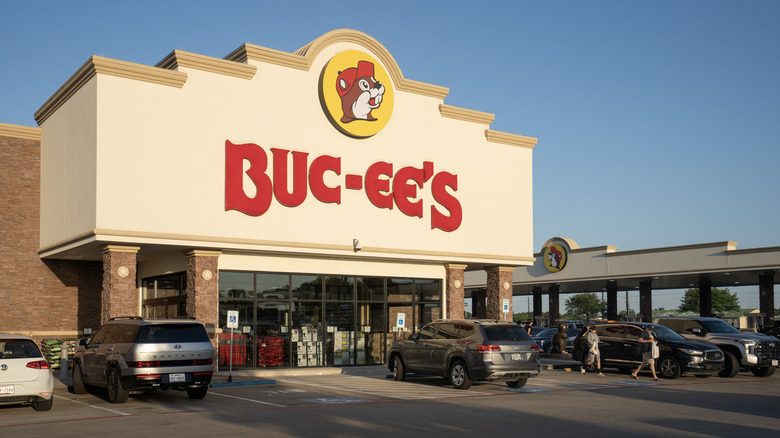

The Beaver’s Empire: How Buc-ee’s Redefined the Road Trip and Became More Than Just a Gas Station
Ever driven past a gas station buzzing like a theme park? A place where travelers hunt barbecue sandwiches and Beaver nuggets, snap selfies beside giant beaver statues, and rave about bathrooms? Welcome to the phenomenon that is Buc-ee’s – a Texas-sized revolution in roadside stops transforming cross-country journeys. Forget the dingy corner store; Buc-ee’s is a sprawling destination combining relentless efficiency, legendary cleanliness, quirky branding, and Southern hospitality on an unprecedented scale. With over 50 locations sprawling across Texas and expanding eastward, this quirky chain has leveraged clean washrooms and vast product selection into a cult-like following, proving that necessity plus innovation can redefine an entire industry. Understanding Buc-ee’s unravels the anatomy of a brilliant business model built explicitly for the modern road trip.
Buc-ee’s Journey: From Humble Shop to Highway Behemoth
Our story begins not with grand ambitions, but local hustle. Arch “Beaver” Aplin III opened his first convenience store in Lake Jackson, Texas, in 1982. Partnering with fellow local operator Don Wasek in 1985, they laid the foundation for Buc-ee’s Ltd. Their combined strengths were potent: Aplin, a Texas A&M construction graduate, focused on marketing and the crucial nuts-and-bolts of building unique structures, while Wasek championed day-to-day operations. Their initial goal wasn’t dominance, but providing weary travelers the essentials: fuel, decent food, fair prices, and crucially, accessible, clean restrooms – a glaringly unmet need on America’s highways.
For two decades, they steadily expanded within Texas. However, the lightning-strike moment arrived in 2006. They envisioned a radical departure: convenience stores that matched truck stops in sheer square footage while banning large commercial trucks entirely. This seemingly counterintuitive move was genius:
- Family Focus: Removing semis created a safer, quieter, and more accessible environment for families with kids and passengers. Parking lots became easier to navigate.
- Reduced Wear & Tear: Less heavy traffic minimized fuel island congestion and pavement damage.
- Experience Control: Allowed them to内容的 Architectsdesign curated spaces purely for car and RV travelers, emphasizing amenities they valued most.
This vision materialized spectacularly in 2012 with the opening of a colossal 68,000-square-foot store in New Braunfels, Texas – dwarfing most supermarkets. This wasn’t just bigger; it was a landmark engineering feat in roadside architecture, rapidly earning titles like the “world’s largest convenience store” and fueling their viral social media ascent. Their key? Dramatically scaling breadth without sacrificing perceived depth in quality or cleanliness.
The Economic Engine Inside the Colossus: More Than Just Gas
While fuel pumps bring customers in, Buc-ee’s brilliance lies in its exceptionally diversified revenue stream inside the cavernous stores. Stepping through those sliding doors unlocks a meticulously stocked onslaught designed to tempt travelers:
- Foodie Destination: Forget sad hot dogs spinning for hours. Buc-ee’s boasts:
- A legendary “Texas Roundup” counter serving hot, fresh-off-the-pit BBQ sandwiches (especially the brisket), kolaches (savory pastries), and breakfast tacos.
- Arguably America’s widest selection of jerky – dozens of flavors and failed meat types – alongside Beaver Nuggets (sweet caramel corn puffs) forming true cult snacks.
- Freshly baked pastries, massive fudge counters, hot roasted nuts, specialty coffees, and walls of cold drinks.
- Beaver Brand Bonanza: Buc-ee’s transforms gas station merchandise from an afterthought into a cornerstone. The iconic grinning buck-toothed Beaver, born from Aplin’s childhood nickname, adorns:
- Extensive apparel lines (T-shirts飯, hoodies, hats).
- Home goods (mugs, blankets, BBQ accessories).
- Novelty items (stuffed Beaver표 dolls, bumper stickers).
- Seasonal gear. This merchandising is not just branding; it’s a significant profit center, turning drivers into walking billboards who paid for the privilege. Merch sales reportedly drive upwards of 40% of retail profitability.
- Travel Essentials: Beyond impulse浓度 buys, Buc-ee’s offers genuine road trip supplies competitive groceries (milk, bread), camping gear, coolers, windshield fluids, and local gourmet food products.
Beyond the Bathroom: Decoding Buc-ee’s Cultural Cachet
Ask frequent travelers about Buc- Pavillion’s non-fuel attractions, and the answer is unanimous: the bathrooms. Buc-ee’sffin turned a practical necessity into a nationally renowned feature that warrants dedicated Instagram posts. Their approach is remarkably simple: massive volume surgically cleanliness:
- Scale: Forget cramped pit stops. Locations like Katy, Texas, boast facilities engineered for crowds:
- Women’s Room: 28 stalls (all floor-to-ceiling partitioned for privacy).
- Men’s Room: 12 stalls + 30 urinals.
- This throughput slashes waiting times drastically.
- Cleanliness: This is non-negotiable franchise lore. Dedicated, uniformed custodians patrol continuously, 24/7, ensuring surfaces gleam, supplies are stocked, and litter vanishes instantly. Winning Cintas’s “America’s Best Restroom” award validated their公积金 commitment. The psychological impact is profound – reliability and hygiene foster immense customer goodwill.
- The Destination Effect: Spotless restrooms became the anchor, pulling travelers off highways who then spend significant time browsing aisles, sampling food, buying merch, and fueling.
- Operational Consistency: Knowing every Buc-ee’s nationwide adheres to these standards builds unparalleled trust, essential for long-distance drivers planning stops.
Combined with disavowal of paid advertising and a fiercely loyal workforce (essential to maintain that 24/7 cleanliness), Buc-ee’s crafted a unique, highly branded, America roadside shrine.
Beyond Texas Borders: The Beaver’s March Eastward
While proudly Texan (36 of over 50 doors), Buc-ee’s expansion strategy is basin deliberate, laser-focused on major interstate corridors serving massive car-based travel markets:
- Aggressively growing into the Southeast: Alabama, Florida, Georgia, South Carolina, Tennessee, Kentucky.
- Pushing Northbound: Recent openings in Virginia, Missouri, Colorado.
- Strategic Site Selection: Buc-ee’s favors highly visible locations near major highway interchanges, often bypassing densely populated centers for areas with plentiful, affordable land for their vast campuses and easy highway access. Their facilities frequently exceed 50 fueling positions, minimizing pump queues.
This expansion isn’t merely intrastate growth; it’s brand colonization aimed at becoming household stop for cross-country drivers throughout the South and Mid-Atlantic regions. Each new opening generates local media frenzy unprecedented for the sector (source Texas Observer) – proof positive of their unique gravitational pull.
The ultimate testament to Buc-ee’s model? It transcends utility. Venturing inside is a distinct cultural rite of passage for Southern road-trippers. It’s praise-worthy bathrooms undeniable, but also a combination forged from shrewd business strategy: unparalleled bathroom scale and sanitation allowing seamless throughput; massive, varied food and merchandise stock keeping visitors exploring; fanatical cleanliness and branding cementing trust; banning trucks fostering a unique family & car-centric environment; and strategically scaled “destinations” expanding intelligently. Buc-ee’s didn’t just build bigger gas stations; they engineered intentionally memorable experiential pit stops essential to the rhythm of American travel. Next time you spot those grinning Beaver signs, prepare for more than fill-up – embrace the glorious roadside spectacle. What’s your standout Buc-ee’s memory – legendary brisket or pristine stall? Share below!


