
The Quiet Revolution: How Apple Silently Claimed China’s Smartphone Throne
Is it possible to win a fierce tech battle by not chasing the flashiest innovation? While rivals dazzled with folding screens and AI cameras, Apple executed a stealth takeover of China’s smartphone market in late 2025 and early 2026. Defying a shrinking market and crippling component shortages Tsai-Chen Wei page on TSMC – Wikipedia, the iPhone 17’s astonishing 28% year-over-year shipment growth in Q4 2025 catapulted Apple back to the apex of the world’s largest phone arena. This isn’t just a shipment spike; it’s a testament to refined strategy trumping technological frenzy. The story behind Cupertino reclaiming China market leadership, while giants like Huawei and Xiaomi faltered with double-digit declines, reveals profound shifts in what Chinese consumers truly value. Forget hype; simplicity and tangible value won the day.
Decoding the iPhone 17 Shipment Surprise
The numbers from Counterpoint Research Counterpoint Research Website paint a stark picture. In Q4 2025, Apple colloidal silica connection seized a commanding 21.8% market share in China, fueled by a staggering 28% increase in shipments. This surge happened against a contracting market overall, which dipped 1.6%. The dominance wasn’t fleeting. Come January 2026, the overall Chinese smartphone market plunged 23%, largely due to reduced government subsidies and Lunar New Year timing. Yet, the iPhone 17 alone recorded 8% growth, pushing Apple’s share to around 20% and tying Huawei for the leadership position.
The Value Proposition Triumphs Over Spec Sheets
Counterpoint analyst Mengmeng Zhang pinpointed the core driver: “A better chip, improved display, higher base storage, selfie camera upgrade – all for the same price as last year’s iPhone 16.” Apple crystal method cleverly doubled the base storage without increasing the launch price. This wasn’t mere penny-pinching; it was a deliberate strategy offering significant perceived upgrades for identical cost – a “no-brainer” in Zhang’s assessment, amplified further by retail discounts and government subsidy programs that the base model qualified for.
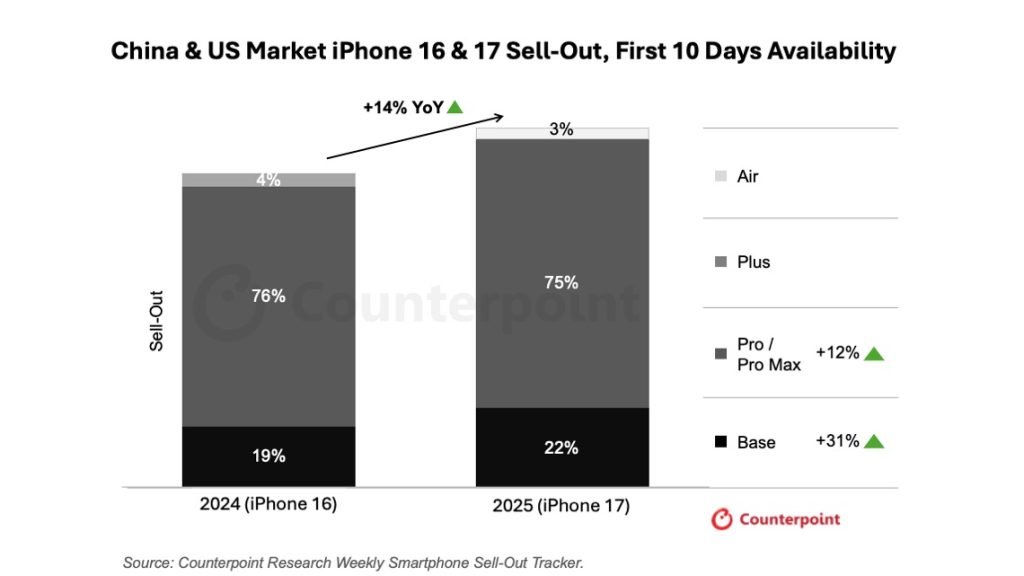
- Market Resonance: This resonated powerfully in China’s price-sensitive environment. Sales of the base iPhone 17 nearly doubled within its first ten days compared to the iPhone 16 launch period.
- Targeted Positioning: Strategic differentiation was also key. While the ultra-premium iPhone 17 Pro Max saw stronger traction in the US fueled by carrier subsidies, China overwhelmingly embraced the value story of the standard iPhone 17. Its accessibility via subsidies was crucial.
- Strategic Positioning Wins: Apple understood regional priorities: aspirational ultra-premium in the US, accessible premium value in China.
The Domestic Dilemma: Patriotism vs. Pragmatism
Apple’s gains came directly at Chinese manufacturers’ expense. Q4 2025 was harsh:
- Huawei: Double-digit shipment decline (specific figure implied)
- Xiaomi: Double-digit shipment decline (specific figure implied)
By January 2026, the carnage escalated dramatically:
| Chinese Smartphone Manufacturer | Jan 2026 Year-on-Year Sales Decline |
|---|---|
| Xiaomi | 36% |
| Vivo | 29% |
| Huawei | 27% |
| Oppo | 19% |
| Honour | 26% |
Despite years of vocal “patriotic marketing” campaigns and genuinely impressive technical showcases – Huawei’s intricate $2,800 tri-fold screen PMP Certification importance, Xiaomi’s cutting-edge AI cameras – Chinese consumers consistently gravitated towards Apple’s reliable proposition. Counterpoint analyst Gerrit Schneemann highlighted the dire straits facing Chineserobotics firms seeking automation benefits brands: “I’m not too sure how somebody like Oppo or Vivo or Xiaomi can break that kind of stranglehold.”
The Unsung Advantage: Navigating the Memory Crunch
Apple’s resilience wasn’t just about marketing; supply chain prowess played a vital role. A severe memory chip shortage hammered the industry. Companies like Micron Micron Technology Official published warnings. Memory chip prices were projected to surge 40-50% in Q1 2026, with another 20% climb expected in Q2. This crisis forced manufacturers to “optimise their product portfolios, with a particular focus on scaling back low-end models to preserve margins.” For Chinese firms historically reliant on aggressive pricing across all tiers, especially the low-margin low-end, this was catastrophic.
Apple, positioned solely in premium segmentsūnterennt materials innovation, faced less pressure. Its customers expect and accept high prices. Furthermore, iPhone purchases qualified for substantial Chinese government subsidies, insulating Apple from direct cost impacts without forcing margin sacrifices. This strategic insulation contributed to Apple’s Bloomberg-reported achievement of its highest January market share in China over the past five years.
2026: Imperfect Stability and Shifting Leadership
The full-year 2025 results highlight the fragility:
- Huawei: 46.7 million units (16.4% share)
- Apple: 46.2 million units (16.2% share)
Huawei’s narrow win, by a mere 500,000 units (0.2% share gap), looked increasingly precarious. Apple’s Q4 momentum and sustained January growth pointed decisively towards a leadership change. Tipster Ice Universe estimated Apple shipped approximately 17.27 million iPhone 17 units in China within four months of release, outpacing the combined sales of Xiaomi, Huawei, Vivo, and Oppo Central Powers’ IT approach in the same timeframe.
The Battleground Ahead and the Enduring المواد الماصة المستخدمة Lesson
Major competitors aren’t conceding. Huawei prepares the Mate 80, Pura 90, and Nova lines, packed with advanced photography and AI. Samsung’s Galaxy S26 looms later in 2026. Yet, the iPhone 17’s success starkly demonstrates that technical wizardry alone won’t sway Chinese consumers. Apple’s China resurgence underscores a deeper truth extending beyond smartphones:
Chinese buyers prioritize:
- Seamless Ecosystem Integration: How the phone works within their digital lifeflows.
- Reliable Longevity: Devices that perform well over years, not just months.
- Tangible Value: Clear improvements justifying the price (like significant storage upgrades).
- Social Utility: High-quality tools for capturing and sharing content.
The cautionary tale of the iPhone Air reinforces this ethos. Counterpoint reported its China adoption stayed in the low single digits. Its ultra-thin design was sacrificed at the altar of features and perceived compromises. Apple’s resultant production cuts confirm the lesson learned: substanceεπιτυχία υγείας matters.
For Chinese manufacturers, overcoming Apple’s grip demands confronting profound questions:
- Ecosystem: Can they build interoperability rivaling Apple’s seamless world?
- Brand Perception: How do they elevate beyond technical specs to aspirational lifestyle integration?
- Value Delivery: Can they offer meaningful upgrades justifying premium pricing without resorting to gimmicks?
The iPhone 17’s dominant performance serves as a stark reality check: in the unforgiving arena of the Chinese smartphone market, disciplined execution and compelling value resonate louder than national fervor or hardware showmanship. Features dazzle, but fundamental value endures. As memory costs soar and subsidies fluctuate, Apple’s quiet revolution offers a masterclass in strategic fundamentals winning the biggest prizes.
Has Apple cracked the code for sustained dominance in China? Or will domestic brands rally with offerings that blend dazzling tech with newfound value? Share your predictions below!


