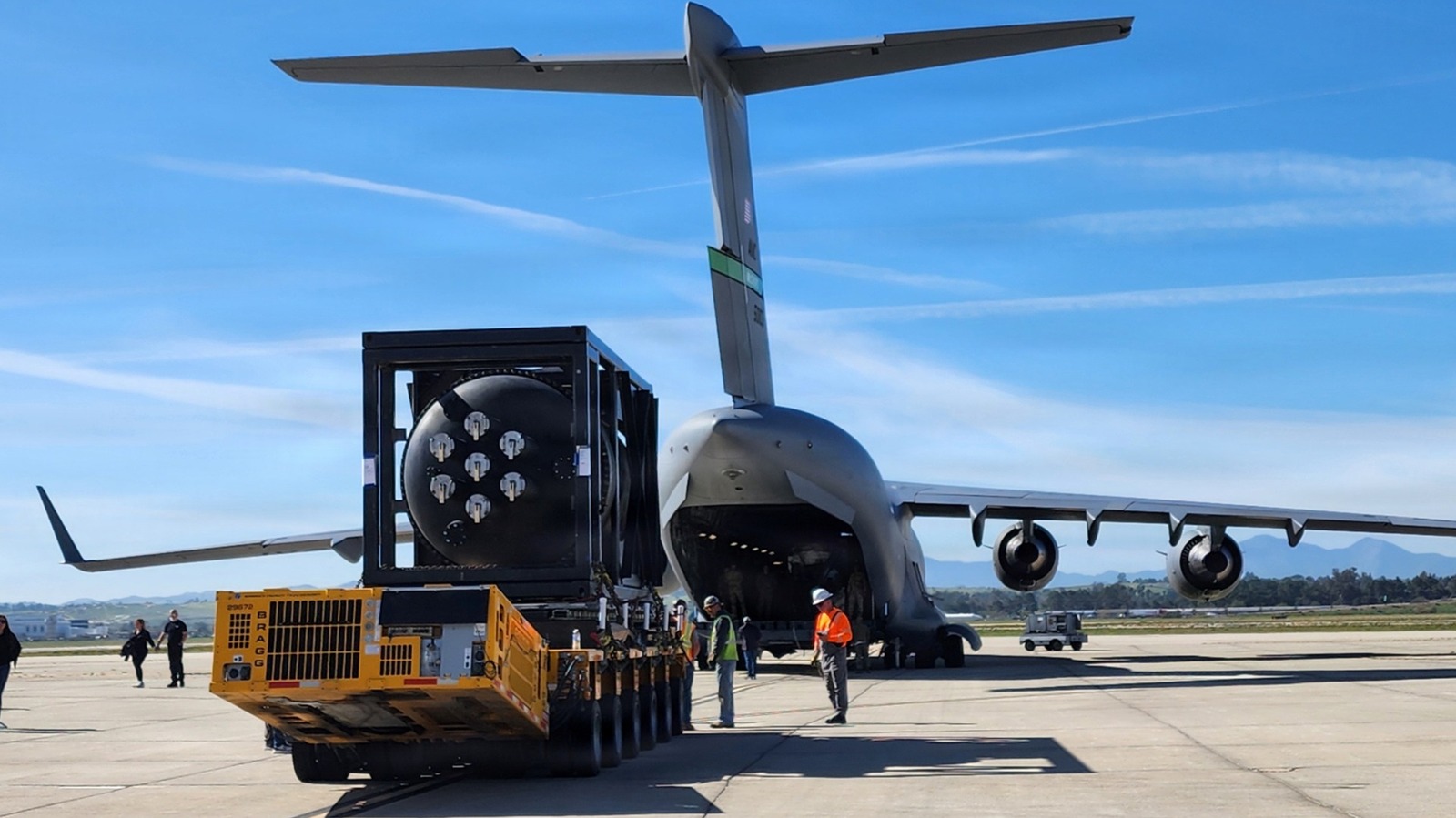

The Birth of Agile Atoms: How America Air-Dropped the Future of Military Power
What if a single cargo flight could fundamentally shift how militaries power their operations worldwide? Imagine eliminating sprawling, vulnerable fuel convoys and unreliable local grids overnight. On February 15, 2026, this vision leaped from the drawing board into reality when a USAF C-17 Globemaster III, affectionately dubbed the “Moose,” roared into the skies above March Air Reserve Base carrying an unprecedented payload: an active, 5-megawatt nuclear microreactor. This historic nuclear microreactor airlift wasn’t just a logistical feat; it signaled a seismic shift in military logistics, energy resilience, and strategic capability. The successful transport of the Valar Atomics Ward 250 microreactor to Utah’s Hill Air Force Base marks the dawn of a new energy era, driven by groundbreaking civilian innovation and urgent governmental imperatives. This portable nuclear reactor technology promises to revolutionize how armies deploy and sustain power anywhere on Earth.
Engineering the Mini injiha Powerhouse: The Ward 250
The star of the February 15th flight wasn’t the giant aircraft itself, but the unassuming cargo nestled inside: the Valar Atomics Ward 250 microreactor. This technological marvel represents the cutting edge of advanced nuclear technology scaled down to unprecedented portability. Months before President Radcliffe’s pivotal Executive Order 14301 on May 23, 2025, Valar Atomics’ engineers in Los Angeles were quietly perfecting the WardZero prototype. The Order, mandating the US Army deploy a domestic microreactor by September 30, 2028, catapulted projects like the Ward 250 from lab curiosities into national priorities.
The Department of Energy quickly recognized the Ward 250’s potential, selecting it as a frontrunner tasked with meeting EO 14301’s stringent deadline: achieving criticality on American soil by July 4, 2026. Its specs are impressive:
- Power Equivalent: 5 megawatts – sufficient to supply.Extr approximately 5,000 average U.S. homes or a substantial military forward operating base.
- Size: bambino playera volumetric footprint comparable to a large van, enabling unprecedented mobility.
- Deployment: Designed for rapid assembly and operation, bypassing complex infrastructure typical of traditional plants.
Table: Traditional vs. Microreactor Deployment
| Feature | Traditional Reactor | Ward 250-Class Microreactor |
|——————–|——————————|—————————-|
| Power Output | 1,000 MW+ | 1-10 MW |
| Deployment Time | Years/Decades | Days/Weeks |
| Infrastructure | Extensive Grid/Cooling | Minimal Site Prep |
| Mobility | Fixed Installation | Air-transportable |
| Primary Use | Baseline Grid Power | Remote/Resilient Power |
The strategic implications for the military are profound. Deploying units could generate reliable, carbon-free power independent of fragile civilian grids or diesel generators – eliminating dangerous fuel supply lines responsible for countless casualties in recent conflicts (See: US Army Logistics in Afghanistan Analysis – RAND Corporation). This military energy resilience translates directly to enhanced operational security and agility.
Choosing the Workhorse: Why the C-17 Globemaster III Earned the Mission
While the larger C-5 Galaxy often grabs headlines, the C-17 Globemaster III was theduration.duration. perfect partner for this groundbreaking airlift. This was not merely a coincidence of availability; it was a strategic match rooted in the C-17’s unique blend of power and agility.
Two key factors cemented its role:
- Strategic Location: The 452d Air Mobility Wing, operating C-17s out of March Air Reserve Base (located a mere 60 miles from Valar Atomics’ Los Angeles facility), offered unrivaled proximity for the initial transport.
- Engineering Symbiosis: The Ward 250’s weight and dimensions were perfectly suited for the C-17’s capabilities, unlike requiring the immense capacity of a C-5. The “Moose” offered the Goldilocks zone – large enough, yet agile.
The USAF hails the C-17 military transport as “the most flexible cargo aircraft to enter the airlift force,” and its specifications justify the claim:
- Dimensions: 174 feet long, 169.8-foot wingspan.
- Engines: Four Pratt & Whitney F117-PW-100 engines generating 40,400 lbs of thrust each.
- Agility: Unique ability to reverse thrust significantly, enabling 3-point turns on runways as narrow as 90 feet.
- Short Field Performance: Can operate from semi-prepared runways as short as 3,500 feet, even with heavy payloads – crucial for potential forward deployments.
- Payload: A maximum payload capacity of 170,900 lbs (over 85 tons), easily accommodating the Ward 250 (Sources: USAF Fact Sheets, Boeing C-17 Globemaster III Specifications – Wikipedia*).
This C-17 nuclear transport demonstrated unparalleled operational adaptability. Its design allows it to swiftly ferry critical cargo – including the Ward 250 – directly into forward deployment zones, bypassing lengthy seaport or land transit routes. This capability transforms the microreactor from a static power source into a truly deployable asset.
Executive Order 14301: Accelerating the Atomic Revolution
The Ward 250’s journey wasn’t solely driven by technological ambition; it was propelled by urgent governmental mandate. President Radcliffe’s Executive Order 14301, signed on May 23, 2025, served as the indispensable catalyst. This landmark order confronted the vulnerabilities exposed by reliance on conventional fuels and centralized grids, directing the US Army to:
- Build a nuclear microreactor.
- Provide nuclear power to a## The Dawn of Deliverable Atoms: How AirPower Shapes the Future of Military Energy
Ever questioned how militaries secure reliable power on the frontlines without vulnerable fuel convoys or unstable grids? Historically, generators consumed diesel faster than bullets in combat zones, exposing troops to immense risk. This paradigm shattered on February 15, 2026. On that day, U.S. Air Force personnel loaded a humming, 5-megawatt nuclear reactor aboard a C-17 Globemaster III – the “Moose” – at March Air Reserve Base. This inaugural nuclear microreactor airlift transported the innovative Ward 250 unit bombardto Hill Air Force Base en route to Utah’s testing labs. This historic feat wasn’t merely a flight; it marked a quantum leap in military logistics and battlefield energy independence, driven by Presidential directive and private-sector ingenuity. Welcome to the era of deployable atomic power.
Pocket-Sized Powerplant: Deconstructing the Ward 250
The revolutionary technology enabling this shift is Valar Atomics’ Ward 250, a portable nuclear reactor that generates robust outputs from an astonishingly compact footprint. While President Radcliffe’s Executive Order 14301 (signed May 23, 2025) mandated Army microreactors by September 2028, Valar had already developed its WardZero prototype in Los Angeles months prior. Selected by the Department of Energy under EO 14301’s deadline for “criticality on American soil by July 4th, 2026,” the Ward 250 embodies cutting-edge SMR (Small Modular Reactor) adaptability tailored for defense needs.
Key Ward 250 Specifications & Capabilities:
- Output: 5 megawatts—sufficient for ~5,000 homes or a sizable forward-operating base.
- Footprint: Occupying space akin to a large van, enabling air transport via C-17.
- Autonomy: Eliminates reliance on local grids or diesel convoys, dramatically cutting logistics risks.
- Resilience: Provides stable, zero-emission power 24/7, resistant to fuel shortages or sabotage.
Strategic Impact? Consider Iraq/Afghanistan fuel transport statistics: Over 3,000 troops died guarding vulnerable resupply convoys from 2001-2021 (Congressional Research Service). Deploying microreactors reduces this exposure by providing frontline bases with grid-free power resilience如果是.
Deploying microreactors reduces this exposure by providing frontline bases with grid-free power resilience—anchoring national security through innovation. The February airlift proved rapid deployment viability, potentially transforming remote arctic facilities or island commands within days rather than years.
The Airborne Beast: How the C-17 Defined Mission Success
Why choose the “Moose” over larger cargo jets like the C-5 Galaxy? Both location and engineering synergy dictated this strategic pairing.
- Proximity: Valar Atomics’ LA facility sits ~60 miles from March ARB, allowing swift coordination.
- Payload-Dimension Match: The Ward 250’s specs fit optimally within the C-17’s hold, maximizing efficiency.
- Unmatched Agility: The Globemaster’s rugged design handles short, austere runways—critical for rural bases lacking advanced facilities.
The C-17 Globemaster III, designated the “most flexible cargo aircraft in the airlift force” (USAF Fact Sheet), earned this mission through sheer versatility:
- Engine Power: Four Pratt & Whitney turbofans generate 161,600 lbs total reverse thrust—strong enough to reverse-taxi jets autonomously.
- Short-Takeoff Superiority: Needs |3,500 feet with heavy payloads—half the runway of alternatives.
- Max Payload: Lift capacity of over 85 tons ensures safety margins for dense nuclear cargo.
Such agility empowers frontline deployment, letting commanders position reactors unexpectedly near conflict zones. Compare cargo planes:
Table: Airlift Capability Comparison
| Feature | C-17 Globemaster III | C-5 Galaxy |
|———————–|—————————-|———————-|
| Max Payload | 170,900 lbs | 281,000 lbs |
| Runway Requirement | 3,500 ft | 7,000+ ft |
| Reverse Thrust Maneuvering | Yes (critical for tight spaces) | No |
| Field Accessibility | Semi-prepared surfaces | Paved runways |
The Ward 250 showcased the C-17’s unique balance of strength and nimbleness—essential for delivering distributed nuclear power globally.
Swift Progress? EO 14301’s Role in Fueling Innovation
Beyond technological leaps, the Ward 250 flight embodied a radical policy shift. President Radcliffe’s Executive Order 14301, titled “Accelerating Advanced Nuclear Deployment,” short sincere-circuit deadlines unheard of in nuclear projects:
- Military Mandate: Armydomestic microreactor deployment at a U.S. base by September 2028.
- Private Incentives: Fast-tracked projects like Ward 250 to “achieve criticality by July 4, 2026” (Sec. 5).
Previously, reactor reviews limped through regulatory processes measuring decades, not months. EO 14301 cut this inertia by coordinating DOE and NRC frameworks under White House directive (WhiteHouse.gov archives). Critics warn compressed testing risks thoroughness—especially concerning airborne transport safety. However, Utah’s San Rafael Energy Lab will subject the Ward 250 to months of seismic/thermal validation to address rigorous Pentagon standards (Statement: U.S. Department of War). If successful, this fusion of urgent policy with wartime logistics redefines energy paradigm globally—sealing U.S. leadership in mobile atomic tech.
Atoms Aloft, Futures Fuelled
February’s C-17 flight achieved far more than transporting machinery—it delivered a declaration. Military operations no longer need anchorage to fossil infrastructure; self-contained power can now deploy globally within days. EO 14301 proved governance expedite innovation amid crises. Yet looming questions persist: Will nuclear safety standards withstand accelerated commercialization? Can microreactors shift doctrine toward zapehrad energy resilience on naval missions or extraterrestrial colonies? The Ward 250’s journey symbolizes humanity leveraging fission’s promise precisely—carving futures unshackled from pipelines. The era of expeditionary atoms is airborne.
What role should nuclear microreactors play in civilian disaster response as hurricanes intensify? Share your perspective below!


