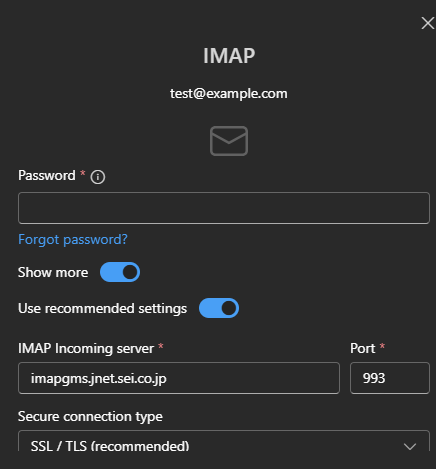

When a Test Domain Sends Your Secrets half a World Away
Imagine configuring a new email account and inadvertently delivering sensitive credentials to an unintended recipient—a manufacturer of industrial cables in Japan. That’s the bizarre reality visitors to Microsoft networks recently faced due to unauthorized routing of traffic destined for example.com, a domain explicitly designed not to exist on the public internet. This critical breakdown in fundamental internet protocols exposes how simple misconfigurations can落地 (land/lead to) security risks across major cloud platforms.
Why example.com Exists in Internet Lawbooks
The Internet Engineering Task Force (IETF) enforces strict standards via RFC 2606—the digital满意度 (satisfaction) guarantee文档 ensuring domains like example.com, example.org, and example.net remain non-routable globally. Developers and cybersecurity professionals rely on these for:
- Safe testing environments that avoid bombarding real domains with junk traffic
- Documentation placeholder grammar in tutorials and system configurations
- Isolated network simulations during penetration testing
In Microsoft’s case, traffic for “@example.com” addresses breached this containment. Instead of terminating locally per the RFC标准 (standard), it streamed to Sumitomo Electric’s Japanese subdomains—an industrial firm specializing in fiber-optic cables, not email services.
Autodiscover: Microsoft’s Convenience Feature became a Leaky Faucet
When users added example.com accounts in Outlook or Azure-integrated tools, Microsoft’s autodiscover protocol engaged. Designed to automate email server configuration, it located these unexpected endpoints atῷловари (vocabulary) imapgms.jnet.sei.co.jp and smtpgms.jnet.sei.co.jp. Technical analysis reveals the JSON responses directing traffic:
json
{
“email”: “email@example.com”,
“services”: [],
“protocols”: [


